


 | Today's Date:




Trump Administration Plan to Sell Federal Public Lands Draws Fierce Backlash
The Trump administration has unveiled a plan to sell federal public lands to states, tribes and local governments, a sweeping shift that would shrink the federal estate for the first time in about 50 years and reshape how the United States manages the one-fifth of the country it owns.
The proposal sits inside the Interior Department's new 28-page five-year strategic plan, released on Tuesday, November 10, 2026, which says the department will "work to decrease the size of the federal estate by offering to states, localities and Tribes the opportunity to purchase federal lands." It names no parcels, no acreage and no timetable — only a direction that has already drawn fierce pushback, including from a Republican former Interior secretary.
Key Points
- The Interior Department's five-year plan, released November 10, 2026, says it will offer states, localities and Tribes the chance to buy federal lands.
- It breaks with about 50 years of precedent limiting federal land sales; the first Trump administration's plan never mentioned sales, swaps or disposal.
- Interior oversees more than 750,000 square miles — about 20 percent of US land, some 640 million acres — through the Bureau of Land Management, National Park Service, Fish and Wildlife Service and Bureau of Reclamation.
- The $900-million-a-year Land and Water Conservation Fund would stop expanding the federal footprint and instead buy access easements on private land.
- Republican Rep. Ryan Zinke, a former Interior secretary, said he "remains firmly opposed to the sale or transfer of public lands" and would vote against it.
What Happened
The 28-page plan covers fiscal years 2026 through 2030 and sets the department's priorities for the next five years. Its land language is blunt: the department will work to shrink the federal estate by selling land to states, localities and Tribes, to focus on what it calls "nationally significant federal lands." The plan does not say which lands count, and officials gave no details on which lands could be sold, how much is involved, where it is or when any sale might happen.
The plan also calls for strategic land transfers and exchanges to support greater energy production, with a portion of sale proceeds going back to buyers for conservation elsewhere. Together, the moves steer the department toward development and disposal, not the acquisition and preservation that have defined federal land policy for half a century.
Background: Fifty Years of Keeping Federal Land Federal
The plan breaks with about 50 years of precedent. Since the 1970s, federal policy has largely limited land sales, treating the public estate as something to be held for the nation rather than sold off. The first Trump administration's own Interior plan never mentioned land sales, swaps or disposal — a silence that makes the new embrace of sales all the more striking.
The scale is enormous. Interior oversees more than 750,000 square miles — about 20 percent of all US land — plus vast mineral reserves, managed through four agencies: the Bureau of Land Management, the National Park Service, the Fish and Wildlife Service and the Bureau of Reclamation. Secretary Doug Burgum has called the federal lands a "balance sheet" and pushed for more development. That question has already reached the courts — the Supreme Court recently cleared a border wall through Big Bend National Park in Texas.
The plan also rewrites the role of the Land and Water Conservation Fund, which receives $900 million a year. Long used to buy land for parks and refuges, it would no longer expand the federal footprint, but instead pay for access easements on privately owned land.
Sell Federal Public Lands: What Could Be Sold — and What Cannot
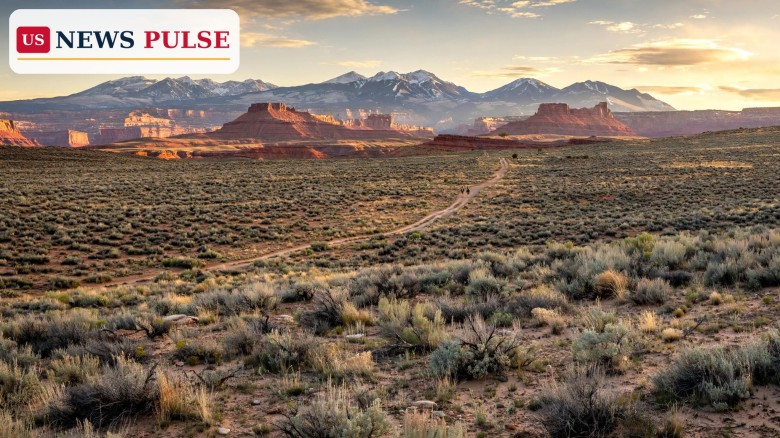
No one outside the department knows which lands are in play, because the plan names none. The most likely candidates are the vast Bureau of Land Management holdings across the West — grazing land, desert and rangeland that already host energy leases and mining claims. National parks, wilderness areas and monuments carry stronger protections, and the plan's language about keeping "nationally significant" lands suggests the most iconic places are meant to stay federal.
Whether the secretary can act alone is uncertain. Large-scale sales would almost certainly need Congress, and the plan binds no future administration. It is a statement of intent — and a test of whether lawmakers, including Republicans like Zinke, will let it become law.
Reactions and Quotes
The sharpest pushback so far has come from inside the president's own party. Representative Ryan Zinke of Montana, who led Interior in the first Trump administration, said he "remains firmly opposed to the sale or transfer of public lands" and would vote against it. As a former secretary and a Westerner, he speaks for a Republican tradition that treats public land as a birthright, not an asset to be sold.
Hunting and conservation groups also moved quickly to oppose the plan, warning it would shut out the hunters, anglers and hikers who use public land. Burgum has framed the estate as a "balance sheet" and argued more of it should be put to productive use — a view that now has a written departmental strategy behind it.
Why It Matters
One-fifth of the United States is federal land, and the plan puts its future in question. For millions of Americans, public land is where they hunt, fish, hike and camp — often for free. Selling parcels could close off access, fragment wildlife habitat and shift management costs onto state budgets that may not want them.
It also matters for energy and the climate. The same plan that would sell land pushes transfers to expand energy production, while redirecting conservation money toward easements on private land — a smaller, more developed federal estate, and a precedent future administrations could reverse or extend.
What Happens Next
The plan is a strategy document, not a law, so nothing will be sold tomorrow. Watch whether the department publishes a list of candidate parcels, whether the White House seeks legislation from Congress, and whether Zinke's opposition grows into a wider Republican revolt. Conservation groups are likely to challenge any sale in court. For now, the administration has said where it wants to go — the fight over whether it gets there starts now.
Frequently Asked Questions
What did the Interior Department propose?
Its five-year plan offers states, localities and Tribes the chance to buy federal lands, shrinking the estate to focus on "nationally significant" lands.
How much federal land is there?
More than 750,000 square miles — about 20 percent of the United States, including some 640 million acres — plus vast mineral reserves.
Which lands could be sold?
The plan does not say. Bureau of Land Management holdings in the West are likeliest, while national parks and iconic lands carry stronger protections.
Can the secretary sell public lands without Congress?
It is uncertain. Large-scale sales would almost certainly need Congress, and the plan binds no future administration — so for now it is a statement of intent.
What happens to the Land and Water Conservation Fund?
Its $900 million a year would no longer buy land to expand the federal footprint, but would instead pay for access easements on privately owned land.
Leave a Comment