


 | Today's Date:

Trump May Stay Out of 2028 Race, Praises Rubio as Strong Successor Pick
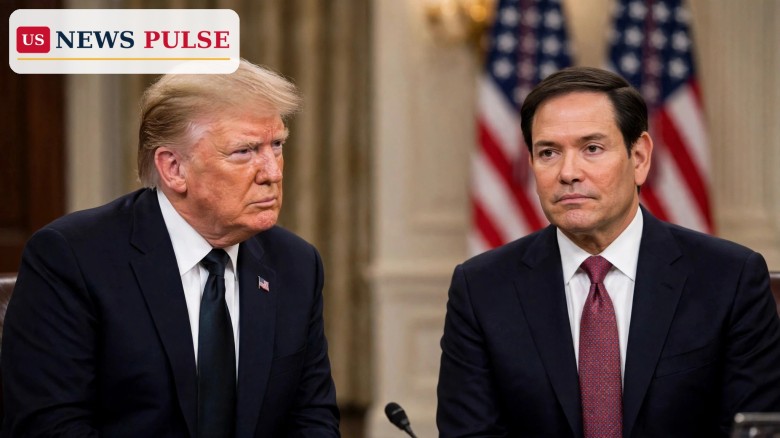
President Donald Trump has signalled he may stay out of the 2028 Republican succession race, telling CBS's 60 Minutes that he is "probably" not going to endorse a successor — and then praising Secretary of State Marco Rubio as a strong contender besides Vice President JD Vance.
In the interview, which aired on Sunday, November 8, 2026, correspondent Ross Douthat asked Trump directly whether he would back a candidate to succeed him when his second term ends. "Probably. Not necessarily," Trump replied, before adding: "Maybe I'm better off not getting involved."
Key Points
- President Donald Trump told CBS's 60 Minutes he may not endorse a successor in 2028, saying "maybe I'm better off not getting involved."
- Asked who he would consider besides Vice President JD Vance, Trump praised Secretary of State Marco Rubio as "great" and doing "a fantastic job."
- Trump said several senators were excellent candidates for the nomination, but he did not name them.
- Trump said his endorsement would carry major weight, noting his "endorsement capacity has been very strong."
- The president also said the MAGA movement can continue after he leaves office, calling it "basically common sense."
What Happened
The exchange came in Trump's wide-ranging 60 Minutes interview, his first major sit-down since the midterms.
Trump's answer was deliberately ambiguous. "Probably. Not necessarily," he said, before returning to the question on his own terms: "Maybe I'm better off not getting involved." The hesitation is striking because Trump has spent a decade as the party's kingmaker, and his endorsement has decided primaries from Senate races to governor's contests.
When Douthat asked who Trump would consider besides Vance, the president turned to his top diplomat. He praised Rubio, describing him as "great" and saying he was doing "a fantastic job" running the State Department, and added that several senators were excellent candidates — but he declined to name any of them.
Trump also said his deportation policy "might be too tough," said he would make the same decision again on Iran, and backed AI guardrails — covered in our full report on the 60 Minutes interview.
Background: The 2028 Race Takes Shape
Trump cannot seek a third term under the 22nd Amendment, so the 2028 Republican presidential primary will be the first open contest for the party's nomination in more than a decade. The early state contests begin in early 2028, but the jockeying for donors, endorsements and attention is already under way.
Vice President JD Vance is widely regarded as the leading contender. As Trump's running mate in 2024 and vice president since January 2025, Vance has the closest claim to the MAGA mantle. But he has never run a national campaign of his own, and his standing will be tested the moment other ambitious Republicans enter the race.
Rubio, 55, is the other obvious name. The former Florida senator ran for president in 2016, finishing third behind Trump and Senator Ted Cruz, and he has rebuilt his standing as Trump's secretary of state, the administration's public face on Iran and Ukraine. His praise from Trump will be read in Washington as a meaningful signal, even if it falls well short of an endorsement.
Trump 2028 Endorsement: Why Staying Out Matters
A Trump endorsement in the 2028 Republican primary would be the single most valuable asset any candidate could hold. His backing has swung primaries across the country, and in a Republican electorate that still adores him, his word could settle the nomination before a single vote is cast.
That is precisely why staying out matters. By refusing to pick a successor now, Trump keeps every ambitious Republican competing for his favour — and keeps himself at the centre of the party's future even as his presidency enters its final two years.
There is a political logic to neutrality as well. The midterm results have left the party searching for answers, and Trump partly blamed the losses on "bad messaging" in the same interview, saying: "We couldn't get the word across." An early endorsement could deepen the party's divisions at a moment when it is trying to recover. Waiting lets the field sort itself out.
Reactions and Quotes
Trump's own words are the story so far, and the White House has not added to them. But the president's confidence in the movement he built was unmistakable. Asked whether MAGA could continue after he leaves office, he replied: "I think so, because MAGA is basically common sense."
The praise for Rubio was equally deliberate. Calling his secretary of state "great" and saying he was doing "a fantastic job" puts Rubio in rare company, and the timing — days after the midterms and more than a year before the primaries begin — will not be lost on Rubio's supporters or his rivals.
For Vance, the interview was a reminder that his position as heir apparent is assumed, not assured. Trump named him first, as the obvious alternative to himself, but then spent the rest of the exchange talking up Rubio and unnamed senators. Neither man has declared a 2028 candidacy.
Why It Matters
The 2028 Republican nomination is the biggest open question in American politics, and Trump's answer — or refusal to answer — will shape it. His endorsement could clear the field for one candidate or ignite a free-for-all. His neutrality, if it holds, would make 2028 the most competitive Republican primary since 2016, when Trump himself emerged from a crowded field of seventeen candidates. Whoever wins will face a Democratic Party energised by its midterm victories and eager to reclaim the White House.
What Happens Next
Nothing in Trump's remarks suggests an endorsement is imminent. The president is expected to keep his options open deep into 2027, watching how Vance, Rubio and the unnamed senators perform before deciding whether to intervene.
Rubio's next moves will be watched closely. As secretary of state he is at the centre of the administration's diplomacy with Iran and the run-up to talks on Ukraine. Candidates will likely begin formally organising for 2028 in the second half of 2027.
Frequently Asked Questions
Did Trump rule out endorsing a 2028 successor?
No. He said "probably. Not necessarily" and added "maybe I'm better off not getting involved." He left the door open while signalling he may stay neutral.
Who did Trump praise as a possible successor?
Besides Vice President JD Vance, Trump singled out Secretary of State Marco Rubio, calling him "great" and saying he was doing "a fantastic job."
Can Trump run for president again in 2028?
No. The 22nd Amendment limits a president to two elected terms. The 2028 Republican primary will choose his successor as the party's nominee.
When does the 2028 Republican primary begin?
Early state contests are in early 2028; candidates are expected to begin organising in the second half of 2027.
What else did Trump say in the 60 Minutes interview?
He said his deportations "might be too tough," said he would make the same decision again on Iran, and backed guardrails for artificial intelligence.
Related coverage: our full report on Trump's 60 Minutes interview, Trump naming Stephen Miller chief of staff, and Rubio on the Iran talks.
Leave a Comment