
OpenAI Plans Post-Midterm Policy Blitz: AI Speed Limits, Compute Campuses
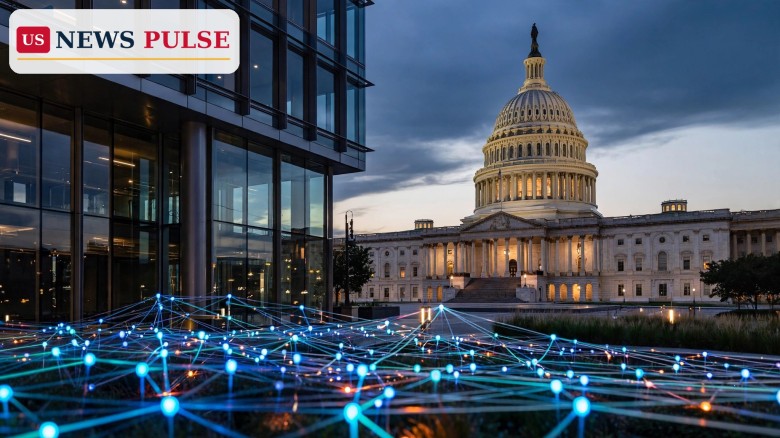
OpenAI plans a post-midterm policy blitz after the November 3 elections, pushing mandatory speed limits for the most powerful artificial intelligence systems and rebranding its data centres as AI compute campuses, according to Axios reporting published on Sunday, November 1, 2026. The ChatGPT maker has been stockpiling the proposals since August, and it intends to roll them out during the lame-duck session of Congress that opens on November 9, as Washington prepares for a new political balance and for a 2028 presidential race in which AI is expected to be a central issue.
The plan, described by OpenAI chief global affairs officer Chris Lehane, is an attempt to shape the debate rather than chase it. It combines a harder congressional push for mandatory safeguards on frontier AI, community agreements intended to ease the building of new data centres, state legislation giving local residents a say in those projects, and a broader pitch on jobs, education and American-led global standards. The timing is deliberate: the proposals are due to begin in the weeks between the midterms and the swearing-in of the new Congress on January 3, when the incoming House and Senate will set the terms for the next two years of AI regulation.
Key Points
- OpenAI will launch a policy and public-relations blitz immediately after the November 3 midterm elections, Axios reported on November 1, 2026.
- Its centrepiece is a push for mandatory speed limits for the most powerful AI systems, intended to keep people in control of the technology.
- OpenAI plans to rebrand data centres as AI compute campuses and to offer community agreements for new projects, answering a bipartisan backlash over construction.
- The campaign begins during the lame-duck session of Congress opening November 9 and runs into the swearing-in of the new Congress on January 3.
- Chief global affairs officer Chris Lehane calls the midterms an electoral portal from one era to the next and says AI will be an issue in 2028.
What Happened
Axios reported the plan on Sunday in its Behind the Curtain column, under the heading OpenAI's post-election power play. According to the report, Lehane and his team have spent months assembling a slate of policy proposals, some freshly drafted and others repackaged, designed to inject urgency into the debate and to position the company ahead of a more sceptical political environment. The proposals were not released as a single document on Sunday; rather, Axios reported OpenAI's intention to unveil them in stages once the election is over, beginning in the lame-duck session.
The most striking element is the language of speed limits. Lehane told Axios that OpenAI would make a more aggressive push in Congress for mandatory safeguards on the most capable AI systems, which the company describes as speed limits that keep humans in control. He was quoted as saying: "You're going to see us talk more and more about the concept of speed limits." The reports checked for this article do not set out a specific numeric threshold, a list of covered systems or a proposed enforcement mechanism for those limits, and this article does not invent one. What is clear from the reporting is the principle OpenAI wants to establish: that the most powerful systems should be subject to mandatory rules, not voluntary pledges alone.
The second element is a deliberate change of vocabulary and of approach to infrastructure. OpenAI will argue that the facilities it builds should be called AI compute campuses rather than data centres, distinguishing them from legacy data centres and from the image of anonymous warehouses consuming power and water. Alongside the rebrand, the company plans community agreements and commitments intended to ease the way for future projects, plus proposals for state legislation that give residents a say in how projects are built. The aim, in the reporting, is to blunt a bipartisan backlash against data-centre construction that has grown as projects have multiplied across the United States.
A concrete example cited in the coverage is the PORTS-Pike Technology Campus in Ohio, developed with SB Energy and NVIDIA. That project is described as an approximately 8-gigawatt facility under a 20-year lease, expected to create thousands of local jobs. OpenAI pitched that project as a technology campus rather than a conventional data centre, and the post-election campaign appears designed to generalise that framing to its wider building programme.
Background/Context
The blitz does not arrive out of nowhere. It builds on several months of positioning by OpenAI in Washington. On September 9, 2026, Lehane laid out the company's AI policy goals, including mandatory national AI safety rules, and signalled support for four pieces of California legislation. On October 5, chief executive Sam Altman criticised the AI industry's political spending, saying it had been ineffective. Around the same period, OpenAI president Greg Brockman withdrew his support from a political super PAC. Around October 28, OpenAI launched an Election Operations Center, working with Democracy Works and the Associated Press, to counter misuse of its tools during voting and to help people find accurate election information.
The wider context is a Washington that may look very different by Wednesday morning. Axios reports that AI companies have enjoyed two years of a friendly White House, and that Democrats will likely win the House on Tuesday. That expectation shapes the whole strategy: a company that has dealt mainly with a sympathetic administration must now prepare for a Congress that is more sceptical, more willing to legislate, and more responsive to voters worried about jobs, energy costs and the local impact of large AI facilities. The same Axios reporting notes that Meta is taking steps to strengthen its own ties with Democrats in anticipation of a blue wave, a sign that the whole sector is repositioning for the same shift.
OpenAI's pitch also sits inside a longer argument about how AI should be governed. The company is trying to promote what it calls a human-centred third path in a debate often framed as a choice between those warning of existential risk and those pushing for rapid development at any cost. Altman, addressing the United Nations Security Council in September, called for an approach that produces what he described as a new Renaissance of creativity and discovery. The speed-limits framing fits that pitch: it accepts that frontier systems need restraint, while insisting that the restraint should be designed to keep people in control rather than to halt progress altogether.
OpenAI Post-Midterm Policy Blitz: Speed Limits, Campuses and Congress
The speed-limits idea deserves careful reading, because it is both the most newsworthy and the least detailed part of the plan. In the reporting, speed limits are presented as mandatory safeguards, not as a pause on research or a cap on computing power as such. Lehane's quoted rationale is about control: "Our belief is people should always remain in control of this technology. AI should be built by and for people, and people should have more control over how the technology shapes their lives and communities." That language echoes OpenAI's September policy goals, which called for mandatory national safety rules, but it goes further by giving the idea a slogan that can be repeated in Congress and on the campaign trail.
Whether speed limits become law will depend on details that have not yet been published: which systems count as the most powerful, what safeguards would be mandatory, who would test compliance, and what penalties would follow a failure. None of those details appears in the Axios summaries checked for this article, and any article that claimed to know them would be guessing. What can be said now is that OpenAI is choosing to argue for regulation on its own terms, before a new Congress writes rules without it. That is a familiar strategy in Washington: propose the framework you can live with, and hope it becomes the starting point for negotiation.
The data-centre rebrand works in a similar way. Calling a facility an AI compute campus does not change its power demand, its water use or its effect on a local grid, and critics will no doubt say so. But the rebrand is paired, in the reporting, with substantive offers: community agreements, commitments on local benefits, and state legislation giving residents a voice. If those offers are real, they could matter more than the name. The Ohio project is the test case OpenAI will point to: a large facility, presented as a campus, with jobs attached. The question for communities facing new proposals will be whether the agreements deliver jobs, infrastructure and protections that match the scale of the build.
The economic part of the package, as summarised in the coverage, covers support for workers navigating disruption, expanded access to education and training, and measures to make it easier to start and grow a business. It also includes a push for United States-led development of global AI standards grounded in democratic values. Taken together, those elements are designed to answer the most common political objection to AI: that it will displace workers, concentrate power and leave communities with the costs while the benefits flow elsewhere.
Reactions/Quotes
Lehane is the central voice in the reporting, and his quotations set the tone for the whole campaign. On the election itself, he told Axios: "You can try to chase the moment, or seek to inform the moment via the power of ideas," describing Tuesday as an "electoral portal from one era to the next." On the future of the debate, he said AI is going to be the issue in 2028, a claim that frames the post-midterm blitz not as a one-off lobbying effort but as the opening move in a longer campaign for the presidential race.
On safeguards, Lehane's speed-limits line is the quotation most likely to be repeated: "You're going to see us talk more and more about the concept of speed limits." On control, he added: "Our belief is people should always remain in control of this technology. AI should be built by and for people, and people should have more control over how the technology shapes their lives and communities." Those two statements, taken together, are the public core of the plan: mandatory rules, human control, and a company willing to argue for both in Congress.
No response from Congress, from rival AI companies or from critics of OpenAI was included in the summaries checked for this article, and this article does not invent one. The absence is itself informative: the plan was reported on Sunday, two days before the election, and the political reaction will properly begin once the results are known and the lame-duck session opens. What can be noted now is the parallel move reported by Axios at Meta, which is strengthening its ties with Democrats ahead of a possible change in House control. The sector, it seems, is preparing for the same Washington, in the same week, with different tactics.
Why It Matters
The blitz matters for three reasons. First, it signals a shift in how the leading AI company wants to be regulated. For years, the industry's default position was to resist mandatory rules and to offer voluntary commitments instead. OpenAI is now proposing mandatory safeguards itself, albeit on terms it hopes to shape. If that proposal gains traction in the lame-duck session, it could set the template for the first serious federal AI safety legislation, rather than leaving the field to state laws or to rules written entirely by critics.
Second, it matters for communities living near AI infrastructure. Data centres have become a local political issue across the United States, with arguments over power prices, water, noise and jobs. A campaign that pairs a new name with community agreements and state legislation will be tested, project by project, against what residents actually experience. The Ohio campus, with its promised jobs, will be cited by OpenAI as proof that the model works. Opponents will ask for the same proof in every other location.
Third, it matters for the 2028 race. Lehane's framing of the midterms as a portal from one era to the next is not just rhetoric. The field of presidential contenders will begin to take shape the day after the vote, and AI policy — jobs, safety, infrastructure, and America's place in a global standards race — is likely to be one of the issues on which they are judged. By launching its campaign in the lame-duck session, OpenAI is trying to ensure that its language, its safeguards and its campus model are part of that conversation from the start.
What Happens Next
The immediate next step is the election itself on Tuesday, November 3. Once the results are known, OpenAI's proposals are expected to begin during the lame-duck session opening November 9, which runs until the new members and senators are sworn in on January 3. That window is short, and it is crowded: a lame-duck Congress must also deal with funding, expiring programmes and the transition to a new majority. Whether AI safeguards get serious time in that window, or are deferred to the new Congress, will be an early test of how much weight the blitz carries.
Watch for three things in the coming weeks. First, the detailed proposals themselves: which systems the speed limits would cover, and how compliance would be checked. Second, the community agreements: whether they are published, what they promise, and whether local groups accept them. Third, the congressional response: whether members in both parties pick up the speed-limits language, amend it, or reject it in favour of stricter or looser alternatives. The 2028 field will be watching all three, and so will OpenAI's rivals.
For now, the story is a plan, reported by Axios and corroborated in its essentials by several independent summaries on Sunday. It is not yet a law, a regulation or a finished building. But as a statement of intent from the world's most prominent AI company, two days before a midterm election that could change control of the House, it is a significant one — and it will shape the AI debate in Washington long after the votes are counted.
Frequently Asked Questions
What is OpenAI's post-midterm policy blitz?
It is a policy and public-relations campaign OpenAI plans to launch immediately after the November 3 midterm elections, reported by Axios on November 1, 2026, covering mandatory AI safeguards, data-centre community agreements, state legislation and jobs and education measures.
What does OpenAI mean by AI speed limits?
OpenAI describes speed limits as mandatory safeguards for the most powerful AI systems, intended to keep people in control of the technology. The reports checked do not specify numeric thresholds or enforcement details.
What is an AI compute campus?
It is OpenAI's proposed new name for its data centres, intended to distinguish them from legacy facilities. The company pairs the name with community agreements and state legislation giving residents a say in new projects.
When will the campaign begin?
During the lame-duck session of Congress that opens on November 9, 2026, running until the new Congress is sworn in on January 3, 2027.
Why is OpenAI acting now?
Because the midterms may change control of the House, ending two years of a friendly White House for AI companies, and because OpenAI wants to frame the AI debate for the 2028 presidential race.
Related coverage: Google, OpenAI, Microsoft and Anthropic back one AI scraping opt-out signal, AI chatbots spread election errors before the midterms, study finds, and Quad unveils $85 million trusted-AI plan to counter China in the Indo-Pacific.
© 2026 US News Pulse. All rights reserved.
 Print
 Save