
Springsteen Backs El-Sayed in Michigan Senate Race: 'I'm in His Corner 100%'
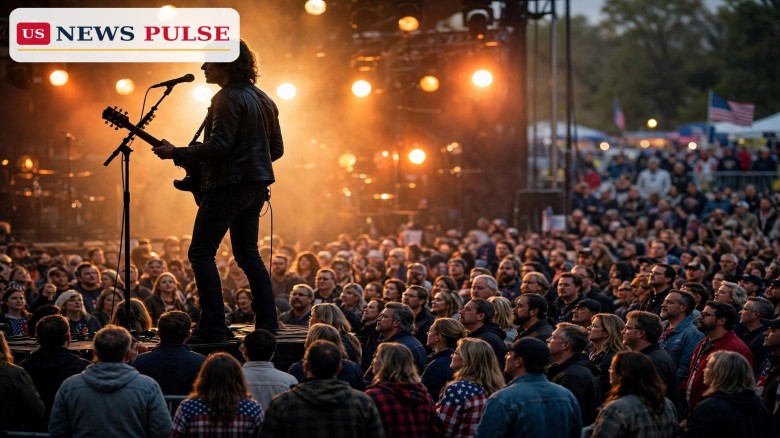
Rock legend Bruce Springsteen endorsed Michigan Democratic Senate nominee Dr. Abdul El-Sayed on Monday, November 2, 2026, one day before Election Day, throwing one of American music's most famous voices behind a candidate in a race that could help decide control of the U.S. Senate. In posts on X and Instagram, the 77-year-old singer, known worldwide as "The Boss," said he was backing El-Sayed "100%," framing the contest against Republican former Representative Mike Rogers as a fight for the Constitution itself.
The endorsement arrived at a moment of unusual turbulence in Michigan's Senate race. Just 24 hours earlier, El-Sayed's former Democratic primary opponent, Representative Haley Stevens, stunned her party by endorsing Rogers, after saying she was no longer welcome in El-Sayed's campaign. Springsteen's intervention — rare for a singer who, according to reports on Monday, has never publicly backed a candidate for an office other than president — gave Democrats a high-profile counterweight in the race's final hours, and it landed as El-Sayed's campaign reported a surge of small donations.
Key Points
- Bruce Springsteen endorsed Democratic Michigan Senate nominee Abdul El-Sayed on Monday, November 2, 2026, in posts on X and Instagram, saying: "That's why I'm in his corner 100%."
- Springsteen called El-Sayed "a fighter for our American Constitution" and "a fighter for our American Democracy," and criticised what he called "the corrupt, lawless and anti-American leadership currently in the White House."
- The endorsement came a day after Representative Haley Stevens, who lost the August Democratic primary to El-Sayed, endorsed Republican Mike Rogers on Sunday, November 1.
- El-Sayed, 42, an epidemiologist and former Detroit health official, faces Rogers, 63, on Tuesday, November 3, in one of the most closely watched Senate contests in the country.
- Recent public polls have generally put El-Sayed ahead, by margins ranging from one point to about seven points, and prediction markets on Monday priced him at about a 79% implied chance of winning.
What Happened
Springsteen's message was short, direct and unmistakably political. Posted in white lettering over a black background on Instagram and shared on X, it read in full: "Dr. El-Sayed is a fighter for our American Constitution, he's a fighter for our American Democracy, and he's a fighter against the corrupt, lawless, and anti-American leadership currently in the White House. That's why I'm in his corner 100%."
The endorsement was reported on Monday afternoon by the Asbury Park Press, Springsteen's home-state paper in New Jersey, and quickly picked up across the country. It was, by several accounts, a departure for the singer: he endorsed Democrat Kamala Harris in the 2024 presidential race, but he has never publicly backed a candidate for an office other than president before. That history is part of why the post travelled so fast — it was not a routine celebrity endorsement, but a deliberate break with his own practice, in the final hours of a Senate race his party cannot afford to lose.
Springsteen is a longtime friend of former President Barack Obama, who has been campaigning for El-Sayed in the run-up to Tuesday's vote. The singer has also been a vocal critic of President Donald Trump for years, including over the use of his song "Born in the U.S.A." in Trump's 2016 campaign, and in a 2019 interview he described the stewardship of the nation as having been "thrown away to somebody who doesn't have a clue as to what that means." Monday's post continues that criticism in sharper language than he has used about a Senate candidate before.
Background and Context
El-Sayed, born on October 31, 1984, to Egyptian-American parents in Southeast Michigan, is an epidemiologist who studied at Oxford University as a Rhodes scholar and at Columbia University, then served as executive director of the Detroit Health Department and most recently led the Wayne County Department of Health, Human and Veterans Services. He won the August Democratic primary with 48.5% of the vote, defeating Stevens, and has run as an unapologetic progressive, with policies reported to include abolishing ICE, Medicare for all and wealth taxes on billionaires — positions that have made him both a hero to the party's left and a target for centrists worried about electability in a swing state.
Rogers, a former U.S. Representative, is running as the Republican nominee in a state Trump carried in the 2024 presidential election. The race is one of 35 Senate seats being contested on Tuesday, with Democrats needing a net gain of at least four seats to take control of the chamber from a Republican majority that currently stands at 53-47. Michigan is therefore not a sideshow: it is one of a handful of states where the Senate majority could plausibly change hands.
The Stevens episode has dominated the race's final weekend. Stevens, 43, had pledged to support El-Sayed after losing the primary, but on Sunday she appeared with Rogers at Perfecting Church in Detroit, praised his support for Black-owned businesses, and then posted a two-minute endorsement video. "As you may have seen, our Democratic nominee for U.S. Senate, Abdul, said I was no longer welcome in his campaign and that he should stay away, and he's right," she said. "And that's why I am endorsing Mike Rogers for the United States Senate today." President Trump celebrated the move on Truth Social, calling it "BIG," while Senate Democratic Leader Chuck Schumer, who had backed Stevens in the primary, called it a "despicable betrayal," and former House Speaker Nancy Pelosi wrote that Stevens had "chosen to dangerously betray Michigan families' healthcare, freedoms and future."
El-Sayed's campaign responded to the Stevens endorsement with a fundraising surge, raising $2.4 million in a single day — a figure US News Pulse reported earlier — and Springsteen's endorsement on Monday gave that surge a second, cultural jolt. The Muhammad Ali family had also endorsed El-Sayed before Election Day, adding another famous name to a campaign that has leaned heavily on high-profile support in its closing days.
Springsteen El-Sayed Endorsement: What the Polls Say
Polling in the final week has generally favoured El-Sayed, though the size of his lead varies considerably by pollster. A YouGov survey conducted October 26-29 put him ahead 51% to 47%; the Detroit News/WDIV survey of 600 likely voters put him at 51.4% to 45.1%; Mitchell Research put him at 51% to 44%; and a CNN survey conducted October 20-27 put him at 49% to 42%. The RealClearPolling average for late September to late October stood at 50.1% to 45.6% in El-Sayed's favour, while the lowest recent result, from InsiderAdvantage, had the race at 47% to 46%.
Prediction markets told a similar story on Monday. Polymarket priced El-Sayed at 79 cents — a 79% implied probability — against 22 cents for Rogers, and Kalshi priced him at 78 cents. El-Sayed had gained about two points on Polymarket over the weekend even after the Stevens endorsement, suggesting traders read that endorsement as noise rather than a turning point. None of that guarantees a result: Michigan polls have missed before, and the Stevens endorsement was aimed precisely at the voters — moderate Democrats and Black voters in Detroit, where a Detroit News/WDIV survey found 88% of likely Black voters backing El-Sayed — who could still move the race.
What Springsteen adds to that picture is not votes in any measurable sense, but attention and energy in the final 24 hours. Celebrity endorsements rarely move polls on their own, but in a race where both campaigns are fighting for turnout among younger and more progressive voters, a message from a working-class icon with a decades-long record of speaking about poverty, workers' rights and LGBTQ+ rights is designed to do something narrower and more useful: give El-Sayed's supporters a reason to feel that the cultural wind is at their backs, and give wavering Democrats a permission slip to stay with their party's nominee after a bruising weekend.
Reactions and Quotes
Springsteen's own words are the story. "Dr. El-Sayed is a fighter for our American Constitution, he's a fighter for our American Democracy, and he's a fighter against the corrupt, lawless, and anti-American leadership currently in the White House," he wrote. "That's why I'm in his corner 100%."
That framing — Constitution, democracy, and the current White House — mirrors how El-Sayed's campaign has presented the race: not as a conventional left-versus-right contest, but as a choice about democratic norms. It also echoes Springsteen's long history of using his music as a tool to comment on urgent social issues, from the working-class anthems that made him famous to his more recent, explicit criticism of Trump.
The reaction from the Stevens camp was, by Monday, already priced into the race. Her endorsement of Rogers, and the Democratic leadership's furious response to it, had set the terms of the final weekend: a party establishment trying to project unity, and a former primary rival breaking ranks in public. Springsteen's post does not resolve that tension, but it does give the party a different headline for the final day — a beloved American musician, rather than a Democratic defection, as the race's closing image.
Why It Matters
For Michigan voters, the endorsement is a reminder of how national this Senate race has become. A New Jersey rock star, a former president, a Democratic congresswoman crossing party lines and a Republican president celebrating her defection have all weighed in on a contest that will be decided by Michigan voters on Tuesday. That national attention reflects the stakes: if Democrats are to have any path to a Senate majority, they must hold seats like Michigan's while gaining ground elsewhere.
For the Democratic Party, Springsteen's endorsement matters because of what it signals about the party's internal argument. El-Sayed's victory in the primary was a win for the party's progressive wing over its centrist wing, and Stevens' endorsement of Rogers was the centrist wing's revenge. A figure as culturally central as Springsteen siding with El-Sayed — and doing so for the first time in a non-presidential race — is a signal to progressives that their candidate is not an outlier, but a mainstream Democratic standard-bearer in the eyes of at least one American icon.
For Rogers, the endorsement changes little directly. His path to victory has always run through moderate Democrats and independents disillusioned with El-Sayed's progressive platform, and through voters who see Stevens' endorsement as a credible signal. Springsteen's post will not move those voters. But it may help El-Sayed hold the voters he already has, and in a race polling in the low single digits at its tightest end, holding your own coalition is often enough.
What Happens Next
Voters go to the polls on Tuesday, November 3, with all 435 House seats, 35 Senate seats and governorships in 36 states on the ballot. Michigan's polls close in the evening Eastern time, and the Senate result is expected to be among the night's most closely watched, alongside the other competitive Senate races that will decide whether Republicans keep their 53-47 majority.
If El-Sayed wins, he would become America's first Muslim senator, and a leading figure in the progressive wing's argument that its candidates can win in the Rust Belt. If Rogers wins, it would be a major upset against the polling average, and a vindication for Stevens' gamble — and a blow to Democratic hopes of retaking the Senate. Either way, the Stevens endorsement and the Springsteen counter-endorsement will be remembered as the race's defining final-weekend drama. US News Pulse will follow the Michigan results as they come in on election night.
Frequently Asked Questions
Who did Bruce Springsteen endorse on November 2, 2026?
He endorsed Dr. Abdul El-Sayed, the Democratic nominee for the U.S. Senate in Michigan, in posts on X and Instagram, saying he was "in his corner 100%."
What exactly did Springsteen say about El-Sayed?
He called El-Sayed "a fighter for our American Constitution" and "a fighter for our American Democracy," and a fighter "against the corrupt, lawless, and anti-American leadership currently in the White House."
Has Springsteen endorsed Senate candidates before?
According to reports on Monday, he has never publicly backed a candidate for an office other than president before, though he endorsed Kamala Harris in the 2024 presidential race.
Who is El-Sayed running against?
Republican former Representative Mike Rogers, 63. The election is on Tuesday, November 3, 2026, and recent polls have generally put El-Sayed ahead by one to seven points.
Why did the endorsement come a day after Haley Stevens backed Rogers?
Stevens, who lost the August Democratic primary to El-Sayed, endorsed Rogers on Sunday, November 1, saying she was no longer welcome in El-Sayed's campaign. Springsteen's endorsement gave Democrats a high-profile counterweight in the race's final hours.
Related coverage: Democrat Haley Stevens endorses Republican Mike Rogers in Michigan Senate race, El-Sayed raises $2.4 million in one day after Stevens backs Rogers, Muhammad Ali family endorses El-Sayed in Michigan Senate race.
© 2026 US News Pulse. All rights reserved.
 Print
 Save