The Haley Stevens endorsement of Republican Mike Rogers stunned American politics on Sunday, November 1, 2026, when the Michigan Democrat announced she was backing the Republican nominee for the United States Senate over her fellow Democrat, Abdul El-Sayed, just two days before voters decide one of the races that could determine control of the chamber.
Stevens, who lost the Democratic primary to El-Sayed in August, appeared alongside Rogers at a service at Perfecting Church in Detroit on Sunday morning, then announced her decision in a video posted on social media. She said El-Sayed's campaign had told her she was no longer welcome, and that she agreed.
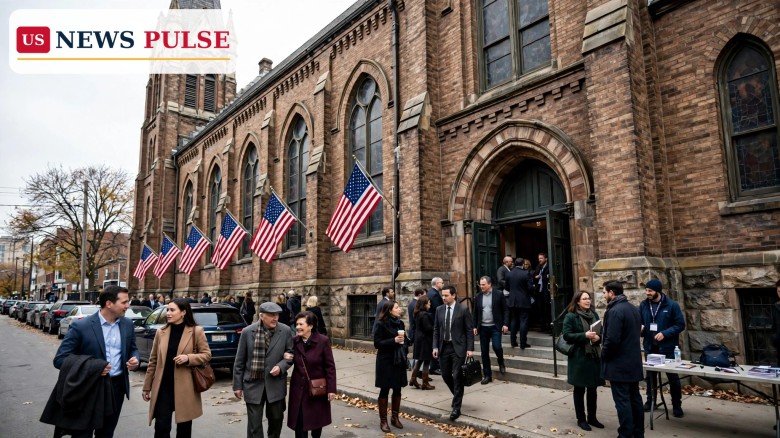
Stevens was at the service at Perfecting Church in Detroit with Rogers at around 11:20 a.m. on Sunday, USA Today reported, putting a bright new spotlight on her disagreements with El-Sayed in the final hours before Michigan's pivotal election. At 12:44 p.m. Eastern time, she endorsed Rogers at a press conference with him standing beside her, according to contemporaneous reporting.
In the video message released on Sunday, Stevens said: "As you may have seen, our Democratic nominee for US Senate, Abdul, said that I was no longer welcome in his campaign and that I should stay away. And he's right, and that's why I am endorsing Mike Rogers for the United States Senate today."
She added: "I don't belong in Abdul's campaign. I do not stand with Hasan Piker." Piker is a Twitch streamer whose appearances alongside El-Sayed have become a lightning rod in the campaign, drawing criticism over his comments about Israel and Jewish Americans. Stevens went on: "A dear friend of mine earlier today was saying today that education was on the ballot and she's absolutely right. What our students see, what our children see and who we are as Michiganders is not hate, and is not what we're getting out from our Democratic nominee right now."
At the press conference, Stevens said she remains a Democrat and expects the party to win a Senate majority on Tuesday, describing her endorsement as about Michigan and "just one vote that I am taking". She said she felt it "in her heart" when she woke on Sunday morning, and that people can disagree on politics but "still be friends". She also said she will return to private life when her term in Congress ends in early January, and that she supports Christina Hines, a Democrat, for the House seat she has held since 2019.
The endorsement is the climax of a feud that began in the Democratic primary and exploded in the final week of the general election campaign. El-Sayed, a former public health official from Ann Arbor, defeated Stevens for the Democratic nomination in August after a contentious primary. Reports put the margin at roughly one percentage point, about 48.5 percent to 47.5 percent, despite earlier polling that had suggested a wider El-Sayed lead.
Immediately after the primary, Stevens endorsed El-Sayed, saying she was proud to offer her support as he took on Rogers. She did not, however, appear with him on the campaign trail after a unity event shortly afterwards, and the relationship deteriorated through October.
The breaking point came in the last week of October. On October 28, Stevens's fiancé, Jason Turkish, a Jewish Democrat, told The Detroit News he would vote for Rogers, saying he had become convinced over three months that El-Sayed was an antisemite, citing what he described as an escalation in the nominee's rhetoric since the primary. Turkish, who described his choice as "putting country before party", had told Fox & Friends on Saturday that he is a "lifelong Democrat" voting for Rogers.
On October 30, Stevens issued an extensive statement calling on El-Sayed to condemn an advertisement from an outside political action committee, Rebellion PAC, which linked US military aid to Israel to rising grocery prices and which she characterised as antisemitic. El-Sayed said the advertisement "was not made by me" and said he disagrees with its contents, but accused Stevens of being "intent on relitigating a primary that ended three months ago". His campaign then asked Stevens to stay away from all remaining campaign events, saying she was "not affiliated in any way" with the campaign.
Stevens had been expected to campaign alongside El-Sayed and Representative Jim Clyburn of South Carolina at a separate church event on Sunday. Instead she appeared with Rogers. An automatic reply from Stevens's communications director confirmed a departure, stating: "Hello, as of November 1st I am no longer with the Office of Congresswoman Haley Stevens."
The Michigan seat is open because Senator Gary Peters, a Democrat, is retiring. Rogers is a former congressman and FBI agent who lost the 2024 Senate race by less than half a percentage point, and he is running against El-Sayed for a seat both parties see as essential to their hopes of controlling the Senate.
Republicans currently hold a 53-47 Senate majority, and all 435 House seats plus 35 Senate seats are on the ballot on Tuesday, November 3. Michigan is one of a handful of the most closely watched contests in the country. The RealClearPolitics average put El-Sayed ahead of Rogers by 3.5 percentage points, while a recent Marist poll reported by other outlets put El-Sayed at 50 percent to Rogers's 48 percent among likely voters.
Whether a cross-party endorsement two days before polling day moves votes is an open question, and CNN's Sunday analysis made exactly that point: it was an astounding move after days of a deepening rift, but it remains to be seen how it could affect the race so late in the game. What is not in doubt is its symbolic weight. A sitting Democratic congresswoman, and the defeated Democratic primary candidate, publicly backing the Republican in a toss-up Senate race is without recent precedent in a midterm campaign, and it instantly became the dominant story of the final weekend.
It also fits a wider pattern in the closing days of the campaign. Former President Barack Obama appeared with El-Sayed in Detroit on the first day of early voting, while President Donald Trump has repeatedly attacked El-Sayed at rallies. More than 51 million Americans had already voted by Saturday afternoon, passing the entire early vote from the 2022 midterms, according to the University of Florida's Election Lab, so the number of voters left to persuade in Michigan is smaller than it was a week ago — but in a race decided by a few points, even a small shift matters.
Senate Minority Leader Chuck Schumer, a New York Democrat, decried the move in a statement and said Senate Democrats were "united" in support for El-Sayed. He said: "Senate Democrats are united in our support for Abdul El-Sayed, because we know he will fight for the economic interests of working families in Michigan, unlike Mike Rogers, who is a tool of Donald Trump and billionaire donors."
Democratic Representative Debbie Dingell of Michigan said Michiganders "want leaders focused on making their lives more affordable". She added: "That's what they're talking about, not Congresswoman Stevens' continued efforts to get attention. If we are going to fight to improve the lives of working men and women in Michigan, we must stay focused on electing Democrats up and down the ballot, and that includes electing Abdul El-Sayed as Michigan's next senator."
Rogers had praised Stevens on Friday for calling on El-Sayed to denounce the outside group's advertisement, and for expressing concerns raised by Michigan Jewish voters. El-Sayed himself said on Saturday: "I would rather not distract from the key issues of this campaign," as he tried to return attention to the issues facing Michigan voters.
Former House Speaker Nancy Pelosi had also criticised El-Sayed on a podcast earlier in the week, calling his view that Israel has no right to exist as a Jewish state "wrong" and not reflective of congressional Democrats, though her team said she still backed the nominee. That intervention, like Turkish's endorsement on Saturday, showed how the dispute had already spread beyond the two campaigns before Stevens herself crossed party lines on Sunday.
For Michigan voters, the endorsement reframes the final two days of the campaign around character, trust and the Democratic Party's internal divisions, rather than the cost of living, health care and jobs that both campaigns say the election should be about. El-Sayed's team will now have to answer questions about a split inside his own party's establishment, while Rogers can present himself as a candidate with support that reaches across party lines.
For Democrats nationally, the timing is damaging. The party had been rallying around El-Sayed in the final weeks, with establishment figures travelling to Michigan to bolster the nominee after a guarded start. Stevens's defection gives Republicans a ready-made argument that even Democrats do not trust their own nominee, and it will be replayed in Republican advertising and on social media through Tuesday.
For Stevens herself, the move ends her congressional career on a note of open rebellion. She is not seeking re-election to the House, she is backing a Democrat for her own seat, and she insists she remains a proud Democrat. Her argument is that this is a matter of conscience about antisemitism and about what Michigan students see — not a change of party. Her critics in the party, led by Schumer and Dingell, argue that it is a distraction that helps the other side. Voters in Michigan will deliver the verdict on Tuesday.
Both campaigns now have two days of final rallies, canvassing and television advertising left. Trump is campaigning in Iowa and Kansas on Sunday, while the Michigan campaigns will make their closing arguments on Monday. Early voting is already well advanced, so the remaining undecided voters are few, but in a race polling within a few points, the final weekend's news can still matter.
The result on Tuesday night will be read in two ways: as a verdict on El-Sayed and Rogers, and as a verdict on Stevens. If El-Sayed wins, her endorsement will be remembered as a dramatic but ultimately inconsequential break. If Rogers wins narrowly, it will be remembered as the moment a Democratic primary rival handed him the race — and as a warning to both parties about what happens when a primary feud is left to fester into the general election.
Who is Haley Stevens? A Democratic Representative from Michigan who represents areas outside Detroit. She lost the Democratic Senate primary to Abdul El-Sayed in August 2026, then initially endorsed him before breaking with his campaign in the final week.
Why did she endorse Mike Rogers? She said El-Sayed's campaign told her she was no longer welcome and that she should stay away, and that she agreed. She also said she does not stand with streamer Hasan Piker, whose appearances with El-Sayed she and others have criticised, and she demanded El-Sayed condemn an outside group's advertisement she called antisemitic.
When is the Michigan Senate election? Tuesday, November 3, 2026. The seat is open because Democratic Senator Gary Peters is retiring, and the race could help determine which party controls the Senate.
Who is leading in the polls? El-Sayed leads narrowly: by about 3.5 points in the RealClearPolitics average, and 50 percent to 48 percent in a recent Marist poll of likely voters. Both margins are within the range where a late shift could change the outcome.
What did Democratic leaders say? Senate leader Chuck Schumer said Senate Democrats are "united" behind El-Sayed, and Representative Debbie Dingell said voters want leaders focused on affordability, not on Stevens's "continued efforts to get attention".
Related coverage: Michigan Senate Feud: El-Sayed Asks Stevens to Stay Away Before Final Vote and Nate Silver Senate Forecast Puts Democrats at 79 Before 2026 Midterms.
Leave a Comment



 | Today's Date: