
Musk Says Data Centers in Space Look Appealing as Midterm Sweep Hits AI Stocks
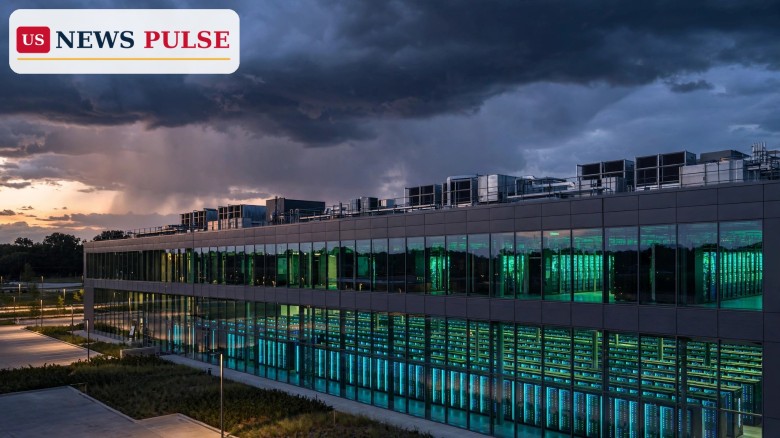
Elon Musk has joked that data centers in space are looking “pretty appealing right now”, after a Democratic sweep in the 2026 midterm elections sent artificial intelligence infrastructure stocks lower and voters backed limits on new data centres. The billionaire’s short post on X on Wednesday, November 4, 2026, captured a sudden change in the politics of the AI building boom, as an industry racing to add computing capacity now faces organised local opposition and a new Congress that may be less sympathetic to rapid expansion.
Key Points
- Elon Musk posted on X on November 4, 2026: “Data centers in space looking pretty appealing right now.”
- CoreWeave fell about 7%, Oracle about 4% and Nebius about 4% in overnight trading after the Democratic midterm sweep.
- Musk spent heavily to prevent the outcome, including roughly $212 million backing Texas Republican Ken Paxton, who lost to Democrat James Talarico.
- In Texas, Democrat Gina Hinojosa won the governorship campaigning for a data-centre moratorium, in a state holding an estimated 27% of planned US data-centre gigawatt capacity, according to Wells Fargo.
- Voters in central Ohio also rejected data centres in local ballot issues, including charter bans in Pataskala, Sunbury and Granville and a ban passing with about 77% in Urbana.
What Happened
Americans voted on Tuesday, November 3, 2026, in midterms that delivered control of both chambers of Congress to Democrats, according to projections reported after the polls closed. In overnight trading, Nasdaq-100 futures fell about 2.1% and S&P 500 futures fell about 1.2%, as investors reassessed technology and AI shares under a changed political landscape.
Within the AI infrastructure trade, the falls were sharper. CoreWeave, which rents out computing capacity for AI work, fell about 7%. Shares linked to SpaceX on Robinhood’s tokenised-share market fell about 6%. Oracle fell about 4% and Nebius fell about 4%. The moves were not a collapse, but they showed traders now see the election result as a new risk for a sector whose valuations rest on expectations of rapid, largely uninterrupted expansion.
Background/Context
The AI data-centre boom is one of the largest infrastructure buildouts in recent American history. Training and running advanced AI models requires vast computing power, housed in warehouse-sized buildings filled with servers, cooling systems and backup generators. Companies have announced hundreds of billions of dollars of investment, and utilities, developers and local governments have competed to attract the projects, promising jobs and tax revenue.
But the boom has also created friction. Data centres consume large amounts of electricity and water, and some rely on gas turbines that have drawn complaints about noise and air pollution. Their large, often windowless buildings can sit uneasily beside homes, schools and farmland, and residents in several communities have organised against projects they say were approved too quickly or with too little public input.
Data Centers in Space: A Joke With a Serious Backdrop
Data centers in space have been discussed for years as a futuristic idea. In space, solar power is abundant, cooling works differently, and land-use disputes disappear. A satellite-based data centre would not need a local water supply, would not sit next to a neighbourhood, and would not face a town council vote. For a company frustrated by local politics, the appeal is easy to understand.
The obstacles, however, are formidable. Launching servers into orbit is extremely expensive, and the weight of equipment, the need for radiation-hardened hardware, the difficulty of repairs, and limits on power and heat dissipation all make large-scale orbital computing impractical with current technology. Data centres on Earth benefit from cheap power, easy maintenance and fast fibre connections. None of those advantages transfers easily to orbit.
Reactions/Quotes
The only direct quote at the centre of the story is Musk’s own. On X, he wrote: “Data centers in space looking pretty appealing right now.” The post was short, but it was widely shared and reported, and it became the shorthand for the market and political reaction to the midterm results in the AI sector.
The market reaction was the other immediate response. Traders sold AI infrastructure shares in overnight trading, with CoreWeave, Oracle and Nebius all falling, and broader equity futures also lower. Those moves reflected a reassessment of risk, not a verdict on any single company. Investors had priced in a political environment broadly favourable to AI expansion; the election suggested that environment may become more contested, with more scrutiny of energy use, environmental impact and the pace of construction.
Why It Matters
The story matters because data centres are no longer just a technology issue; they are an energy issue, a land-use issue and now an electoral issue. The AI boom depends on building physical infrastructure at great speed and scale, and that infrastructure has to go somewhere. Where it goes, who pays for its power and water, and who bears its noise and emissions are political questions, and the midterms showed voters are prepared to answer them at the ballot box.
What Happens Next
In the short term, investors will watch for further market moves and for any statements from major AI and data-centre companies about their building plans. If the overnight falls extend into regular trading, they could pressure companies to slow spending or to emphasise efficiency and cleaner power. If they reverse, the election reaction may be seen as a brief repricing rather than a lasting shift.
Frequently Asked Questions
What did Elon Musk actually say?
On X on November 4, 2026, Musk posted: “Data centers in space looking pretty appealing right now.” It was a reaction to the Democratic midterm sweep and the fall in AI infrastructure stocks.
Why did AI infrastructure stocks fall?
In overnight trading, CoreWeave fell about 7%, Oracle about 4% and Nebius about 4%, while Nasdaq-100 futures fell about 2.1%. Investors reassessed the outlook for rapid data-centre expansion under a changed political landscape.
What happened in Texas and Ohio?
Democrat Gina Hinojosa won the Texas governorship campaigning for a data-centre moratorium, and Ken Paxton lost his Senate race to James Talarico despite reported Musk backing of roughly $212 million. In central Ohio, voters rejected data centres in several local issues, including bans in Pataskala, Sunbury and Granville and a ban passing with about 77% in Urbana.
Are data centres really going to space?
No. Orbital data centres face enormous cost, power, cooling, repair and connectivity obstacles with current technology. Musk’s post is widely read as a joke about how difficult building on Earth has become, not as a business plan.
Related coverage: CrowdStrike’s AI acquisitions, Apple Intelligence’s China launch, and xAI’s Mississippi homes buyout.
Image: A modern data centre at dusk. US News Pulse branded image.
© 2026 US News Pulse. All rights reserved.
 Print
 Save