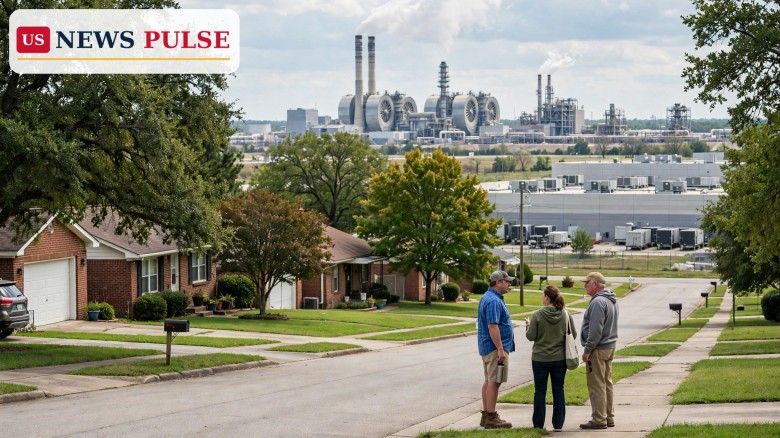
Elon Musk's artificial intelligence company is offering to buy up to 418 homes in a Mississippi neighbourhood — but only if the sellers agree never to join a lawsuit over the constant noise from the gas turbines powering its data centres. The xAI Mississippi homes buyout, reported by The Guardian and carried widely on Saturday, October 31, 2026, has turned a quiet suburb of Southaven into the latest front line in America's fight over the cost of the AI boom.
Agents working for the company have been going door to door in Colonial Hills, on the western edge of Southaven, just across the state line from Memphis, Tennessee. In a recording heard by The Guardian, one estate agent told a homeowner the target was 418 homes, with 18 homeowners already agreeing to sell. DeSoto County property records show that MZX Tech, the company subsidiary that runs the turbine site, has already bought five homes in the neighbourhood since October 9.
Residents of Colonial Hills began receiving visits from estate agents acting for MZX Tech in recent weeks, according to The Guardian's reporting. A letter handed to residents by MZX says the firm "requires property for its business purposes" and will buy nearby houses on one contractual condition: the sellers must not join the class action over turbine noise.
The letters, first reported by the Mississippi Free Press and the DeSoto Times-Tribune in late September and reproduced by FOX13 Memphis, describe the offer as voluntary. They include links to the lawsuit and contact details for the lawyers who filed it, and they state that anyone who signs the release cannot later recover damages from what the letter calls the Haley lawsuit. The Mississippi Free Press reported that the offers are based on Zillow value estimates. No prices are listed in the letters themselves.
The scale of the effort came into focus this week. The Guardian reported on Wednesday that, in recordings it obtained, a real estate agent working for the company described a goal of buying 418 homes and said 18 households had already agreed to sell. The company has not confirmed either number or explained what it intends to do with all of the properties, according to the reports. DeSoto County records independently confirm five purchases by MZX in Colonial Hills since October 9.
The buyout area is precisely defined. According to Marketscale's summary of the letters, it covers homes bounded by Nail Road to the south, Highway 51 to the east, Stateline Road West to the north, and roughly a mile west of Horn Lake Road. Robert Wiygul, an attorney for the plaintiffs, said anyone living in the area, including renters, is eligible to be part of the class.
Offers are reported to be at market value, in an area where homes average about $180,000. At that average, buying all 418 homes would cost roughly $75 million — a small sum for a company at the centre of the global AI race, but a life-changing decision for every household asked to sign.
Since July 2024, xAI has built three large data centres in the Memphis and Southaven area, which straddles the Tennessee-Mississippi border: Colossus I, Colossus II and Macrohardrr. The facilities support the development of Grok, the company's AI chatbot, and Musk is reported to spend up to four nights a week in an Airstream trailer near Memphis overseeing the build-out.
The power for those data centres comes from a former Duke Energy site holding 69 temporary gas turbines, which began running in August last year. The turbines sit about half a mile from the home Jason Haley has owned for 20 years. In June 2026, Haley and two neighbours filed Haley v. X.AI Corp. in federal court in Mississippi, against X.AI, SpaceX and MZX, over what they call "near-constant noise, vibrations and other nuisance-level harms". Their complaint says more than 10,000 people live in the affected area, and the plaintiffs have asked the judge to allow them to represent that wider group.
The lawsuit describes the sound in vivid terms: a combination of high-pitched squealing, continuous engine roaring, low-frequency rumbling, and tonal humming and whining, running 24 hours a day, affecting residents in Southaven and the adjacent town of Horn Lake. The company and MZX filed a joint memorandum in July seeking dismissal of the case, stating that their operations comply with all applicable laws.
Air quality is part of the dispute as well. The US Environmental Protection Agency has found that dozens of the turbines ran without permits required by federal law, though it says enforcement is a matter for the state. The Southern Environmental Law Center estimates the turbines' emissions cause about $44 million in health costs each year. A separate federal case, brought in April by environmental groups and the NAACP, seeks to stop the turbines' use.
In July, the company agreed with state regulators to replace the temporary turbines with a permanent gas-fired plant by next summer, a step expected to cut the noise. Southaven's mayor has said city monitors have not recorded a breach of the city's 70-decibel noise limit, while critics point to evidence that persistent noise of 50 decibels or more, the level recorded near the plant, may harm health.
The heart of the controversy is not the purchase itself but the condition attached to it. Homeowners who sell must give up their right to join the noise lawsuit. For residents who believe the turbines have damaged their health, their sleep and the value of their homes, that release is the price of leaving.
Some residents have refused. Gavin Foust, a paramedic and army veteran, said he would not accept the offer because of the requirement not to sue, even though he said some of his elderly neighbours had agreed to sell. Others see the offer differently: a way out for people who want to leave a neighbourhood changed by industrial development, and a source of staff housing for a company still expanding.
Southaven Mayor Darren Musselwhite has backed that reading. He told The Guardian the homes will house some company staff and called the buyout "a goodwill gesture from a good corporate citizen for those who perceive the industrial development near them as a negative". In a separate statement he added: "The buyout is not intended to be a company city at this point." In an October 1 blog post on the city's website, Musselwhite said the power plant "has never violated the city's noise ordinance" and that MZX is working to reduce noise levels by converting temporary turbines to quieter permanent ones.
The company has not answered The Guardian's questions about the 418-home target or its plans for the neighbourhood, and it has not commented publicly on the buyouts. It denies all the claims in the noise lawsuit and has said before that "we care deeply about being good neighbors", pointing to sound-dampening walls and changes to its power output.
Jason Haley, the lead plaintiff, has lived about half a mile from the turbines for two decades. He told The Guardian: "There's a high-pitched hum and then another sound like an airplane over your house." He added: "It's been so torturous I can't sleep, I just leave the house or turn on some music until I fall asleep completely exhausted. It drives you insane. You also lose hope because you're being ignored or dismissed. There's no escape."
Elizabeth Rose, a piano teacher who lives about two miles from the site, said: "It sounds like an airplane engine but it's continuous, it's incredibly loud." She said she has been woken at 2 a.m. by the sound. Her name for what the town is becoming, according to one report, is "Elonville".
Mayor Musselwhite, by contrast, has emphasised jobs and tax revenue. He has said the development will generate significant tax revenue and jobs for DeSoto County, and local businesses report being busier since the data centres arrived. Opposition is not universal: some residents say they are not bothered by the noise, and Mississippi Governor Tate Reeves has previously warned against curbs on data centres.
Legal observers note the unusual shape of the deal. A buyout that shrinks the pool of potential claimants, offered while a class action is pending, will draw scrutiny from the court even if every sale is voluntary. The plaintiffs' lawyers have the letters, the lawsuit contact details were included in them, and the judge will decide whether the class can proceed and who it covers.
The Southaven buyout matters far beyond one Mississippi suburb because it exposes the bargain at the heart of the AI infrastructure boom. Data centres need enormous amounts of power, delivered fast. Temporary gas turbines can be installed in months, while grid connections and permanent plants take years. The result is industrial-scale noise and emissions arriving in residential neighbourhoods before the planning, permitting and health debates have caught up.
The same tension is playing out across the United States. Communities have blocked about $200 billion of data centre projects, according to one summary of the trend, and voters in 10 states will decide data centre ballot measures on November 3. The Southaven case shows a new corporate response: rather than fighting every neighbour in court, buy the neighbourhood — or at least enough of it to change the legal arithmetic.
For the AI industry, the stakes are reputational as well as legal. The same week, the biggest AI companies pledged a single opt-out tool for publishers worried about scraping, and OpenAI cut its funding target amid a tech sell-off driven by doubts about AI spending. A story about a company buying homes to quiet a lawsuit sits uneasily alongside claims that AI will improve everyday life.
For residents, the stakes are simpler and more personal. A home is usually a family's largest asset and the place it cannot easily leave. An offer at market value does not compensate for years of broken sleep, and a release signed to secure a sale cannot be unsigned if the noise continues for the neighbours who stay.
Three things will decide what happens in Colonial Hills. First, the court will rule on the company's bid to dismiss the Haley lawsuit and on whether the case can proceed as a class action covering up to 10,000 people. Second, the buyout itself will keep moving: five purchases are recorded since October 9, 18 owners are reported to have agreed, and the gap between those figures will show whether the programme is accelerating or stalling.
Third, the permanent gas-fired plant promised by next summer will be the real test of the company's noise claims. If the replacement plant is genuinely quieter, the dispute may fade. If residents still hear the turbines at night, the buyout offers — and the releases attached to them — will face fresh questions.
Meanwhile, the wider debate over where AI infrastructure belongs, who pays for its power, and who lives with its noise will continue in statehouses, courts and at the ballot box on Tuesday. Southaven's 418 homes are now part of that national argument.
How many homes is xAI trying to buy in Mississippi? A real estate agent working for the company was recorded telling a resident the target was 418 homes in Colonial Hills, Southaven. The company has not confirmed the figure. County records show five purchases by its subsidiary MZX since October 9, and 18 owners are reported to have agreed to sell.
Why must sellers agree not to sue? The MZX letters make the purchase conditional on sellers not joining the class action over turbine noise filed in June 2026. Signers cannot later recover damages from that lawsuit, according to the letters.
What is causing the noise? Residents blame 69 temporary gas turbines at a former Duke Energy site that powers xAI's Colossus data centres in the Memphis-Southaven area. The lawsuit describes near-constant noise, vibrations and related harms running 24 hours a day.
What does xAI say? The company denies all the lawsuit's claims, says it cares deeply about being a good neighbour, and points to sound-dampening walls and changes to power output. It agreed in July to replace the temporary turbines with a permanent gas-fired plant by next summer.
Where is Colonial Hills? Colonial Hills is a neighbourhood on the western edge of Southaven, Mississippi, in DeSoto County, just south of Memphis, Tennessee. The buyout area is bounded by Nail Road, Highway 51 and Stateline Road West.
Read more on US News Pulse: Data centre ballot measures put AI boom to the vote in 10 states on Nov 3, AI scraping opt-out: Google, OpenAI, Microsoft and Anthropic back one no-scrape signal, and OpenAI funding cut as AI sell-off bites.
Leave a Comment



 | Today's Date: