
SK Hynix New York Chip Plant Faces Delay Over China Equipment Licences
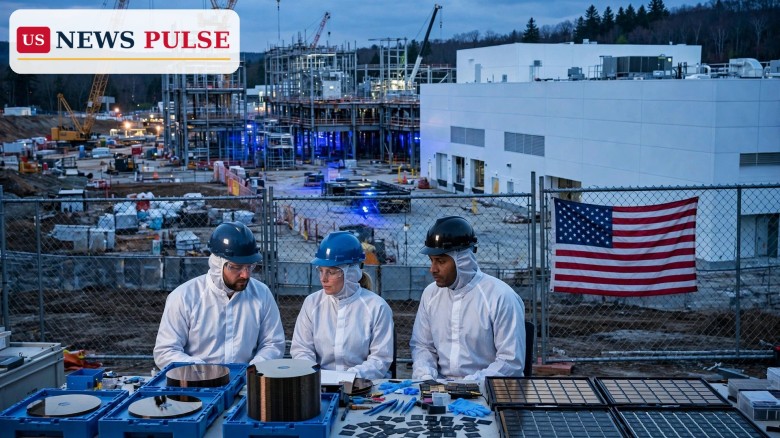
SK Hynix's planned $45 billion chip investment in New York is facing a delay, Reuters reported on Wednesday, November 4, 2026, because United States officials have held back export licences for chipmaking equipment needed at the company's plant in Dalian, China. The SK Hynix New York chip plant plan, to be built by its United States-based Solidigm unit, is the latest clash between Washington's technology controls on China and its drive to bring semiconductor manufacturing back to American soil. SK Hynix says higher production in China would help fund its American expansion, but the Commerce Department has so far refused to clear the equipment Dalian needs to grow.
Key Points
- SK Hynix faces a delay to a proposed $45 billion NAND investment in New York, Reuters reported on Wednesday, November 4, 2026.
- United States officials have held back export permits for chipmaking equipment needed at SK Hynix's Dalian plant in China.
- Solidigm, SK Hynix's United States-based unit, reportedly plans two NAND chip plants in Marcy, New York, with total investment possibly reaching around $100 billion over time.
- Solidigm executives have met Commerce Department officials nearly 10 times since late August, but the licences remain undecided.
- SK Hynix said on October 23 that it had stopped reviewing a possible United States stock-market listing for Solidigm, citing market conditions and share-price trends.
What Happened
Reuters reported on Wednesday that SK Hynix's proposed $45 billion NAND investment in New York faces a delay because American officials have held back export permits for chipmaking equipment needed at its Dalian plant in China. NAND memory is the storage chip used in smartphones, laptops, data centres and artificial intelligence hardware.
According to the report, Solidigm, the United States-based SK Hynix unit that makes NAND memory and solid-state drives, plans to invest about $45 billion to build two NAND chip plants in Marcy, New York. Total investment could rise to around $100 billion over time. The company, however, has not made any specific investment decisions yet.
Solidigm executives have reportedly met Commerce Department officials nearly 10 times since late August. At a meeting last week, Commerce Under Secretary Jeffrey Kessler maintained that Washington would not allow SK Hynix to bring in more American equipment to expand or upgrade Dalian. The department has not approved the licences, but it has not rejected them either, and the two sides are also discussing a separate 2027 licence for maintenance equipment.
Background: Why Dalian Matters to a New York Factory
Follow the money. SK Hynix is one of the world's largest memory chipmakers, alongside Samsung. Its Dalian plant produces memory chips for global customers, and the company says higher production there would help fund its expansion in the United States.
That argument runs into American export controls. Washington has spent years restricting sales of advanced chipmaking equipment to China, arguing that cutting-edge semiconductors can strengthen a rival's military and artificial intelligence capabilities. The controls require licences for sensitive equipment, which officials can slow, condition or block case by case.
SK Hynix New York Chip Plant: Why the Licences Matter
The licences are the mechanism Washington uses to control how fast, and how far, chip production in China can advance. Equipment for making NAND memory includes highly specialised machines for etching, layering and testing silicon wafers. Without permission to import that equipment, a plant can keep operating but cannot easily add capacity or move to more advanced production.
That is why Kessler's reported position matters. By maintaining that Washington would not allow SK Hynix to bring in more American equipment to expand or upgrade Dalian, the Commerce Department draws a line between maintaining existing output and growing it. SK Hynix, in turn, argues that higher production in China would help fund its United States expansion, linking the New York plants to the treatment of its Chinese factory.
Reactions and Positions
SK Hynix has not announced a final decision on the New York investment, and it has stressed that it has not made any specific investment decisions yet. That caution matters: the $45 billion figure, and the possible $100 billion total over time, are reported plans rather than confirmed commitments.
The company's reported position is that higher production in China would help fund its United States expansion. The Commerce Department's reported position is firmer, with Under Secretary Kessler said to have maintained that Washington would not allow SK Hynix to bring in more American equipment to expand or upgrade Dalian, while the department has neither approved nor rejected the requests.
Separately, SK Hynix said on October 23 that it had stopped reviewing a possible United States stock-market listing for Solidigm, as early as 2027, due to market conditions and share-price trends.
Why It Matters
The case tests whether the United States can simultaneously restrict chip technology in China and attract massive chip investment at home, when the same companies operate in both countries. It also matters for the memory chip market: NAND prices and supply affect phones, laptops and the data centres powering artificial intelligence.
What Happens Next
The immediate question is what happens to the licence requests. The Commerce Department could approve them, reject them, or leave them undecided while talks continue. The separate 2027 maintenance licence will be an early signal: approval would suggest Washington will keep Dalian running at its current scale, while a refusal would point to a harder line.
Watch, too, for any formal announcement from SK Hynix about Marcy. Until the company confirms specific investment decisions, the $45 billion plan remains a reported proposal rather than a committed build. Investors will also watch for any revival of the Solidigm listing review, paused on October 23.
Frequently Asked Questions
What is SK Hynix planning in New York?
Its Solidigm unit reportedly plans about $45 billion for two NAND chip plants in Marcy, New York, possibly rising to around $100 billion over time, though no specific investment decisions have been made yet.
Why is the project delayed?
Reuters reported that United States officials have held back export permits for chipmaking equipment needed at SK Hynix's Dalian plant in China, while SK Hynix says higher production in China would help fund its United States expansion.
Has the Commerce Department rejected the licences?
No. It has neither approved nor rejected the requests, and the two sides are also discussing a separate 2027 licence for maintenance equipment.
What is Solidigm?
Solidigm is SK Hynix's United States-based unit, which makes NAND memory and solid-state drives, and it is the vehicle for the reported New York investment.
What happened to Solidigm's planned listing?
SK Hynix said on October 23 that it had stopped reviewing a possible United States stock-market listing for Solidigm, as early as 2027, due to market conditions and share-price trends.
Related: South Korea exports surge 93.7% on the AI chip boom; Data-centre opponents gain from the Democrats' midterm sweep.
© 2026 US News Pulse. All rights reserved.
 Print
 Save