
Marco Rubio Denies Exit Plans and Vows to Serve Trump's Full Second Term
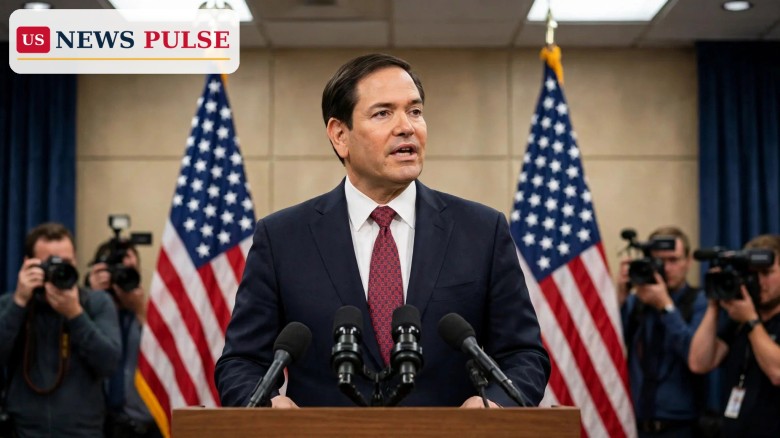
US Secretary of State Marco Rubio has firmly denied reports that he is considering leaving the Trump administration, saying that serving President Donald Trump for the duration of his second term "has always been my plan." The denial came in an interview with The New York Times on Thursday, November 5, 2026, hours after Bloomberg News reported that Rubio had discussed a possible exit with White House officials as he weighed a future presidential run. Rubio, who also serves as national security adviser, dismissed the report outright and refused to discuss 2028.
Key Points
- Marco Rubio told The New York Times that working for President Trump for the duration of his second term "has always been my plan."
- Bloomberg News reported on Thursday, November 5, 2026 that Rubio had discussed a possible exit with White House officials, who asked him to stay, as he weighed a possible 2028 presidential bid.
- Rubio said he did not know where the reports came from and refused to discuss 2028, saying: "I literally will not talk about 2028 anymore. I just won't do it."
- The White House and the State Department rejected the Bloomberg report, with a White House spokesperson calling it a fabricated hoax pushed by anonymous sources.
What Happened
The story broke on Thursday, November 5, 2026, when Bloomberg News reported that Rubio had discussed a possible departure from the administration with White House officials. According to the report, officials had asked him to stay as he weighed a possible run for president in 2028, although no decision had been made and no timeline had been set. Within hours, Rubio himself pushed back in public. Speaking to The New York Times, he said: "Working for President Trump for the duration of his second term has always been my plan."
The denial was swift and unequivocal, and it was echoed across the administration. The White House and the State Department both rejected the Bloomberg report in strong terms. White House spokesperson Beni Rae Harmony called the reports a fabricated hoax pushed by anonymous sources, while Dylan Johnson, the assistant secretary of state for global public affairs, called the Bloomberg report "totally made up."
Background: Rubio's Rise to Two Top Jobs
Rubio's position in the Trump administration is unusually powerful. He is not only the secretary of state, the country's chief diplomat, but also the national security adviser, a dual role that gives him an unrivalled say over American foreign policy. His departure would create two vacancies at the heart of the administration's foreign policy operation.
Rubio's path to the cabinet was itself a striking turn. A former senator from Florida and a onetime rival of Trump in the 2016 Republican primaries, he became one of the president's most trusted lieutenants in the second term. Rubio has also previously said he would support Vice President JD Vance if Vance ran for president in 2028.
Marco Rubio's Denial and the 2028 Question
The Bloomberg report landed at a sensitive moment. The Republicans lost control of both the House and the Senate in the midterm elections on Tuesday, November 3, 2026, and the days since have been filled with speculation about reshuffles, resignations and the future of the administration. On Thursday, Harmeet Dhillon resigned as the head of the Justice Department's Civil Rights Division, the first senior Trump administration official to leave since the midterm defeat, which only intensified the focus on who might be next. Read more: Harmeet Dhillon resigns as Justice Department civil rights chief after midterms.
Against that backdrop, a report that the secretary of state was weighing an exit carried obvious weight. It suggested not just a personnel change but a possible fracture at the top of the administration. Rubio's response was designed to remove any doubt. By going on the record with the Times and by having the White House and the State Department denounce the report in such blunt language, he and the administration closed ranks in public.
Reactions and Quotes
Rubio's own words were the centrepiece of the denial. "Working for President Trump for the duration of his second term has always been my plan," he told The New York Times. And on 2028, he was categorical: "I literally will not talk about 2028 anymore. I just won't do it."
The administration's spokespeople matched his tone. White House spokesperson Beni Rae Harmony called the reports a fabricated hoax pushed by anonymous sources. At the State Department, Dylan Johnson, the assistant secretary for global public affairs, was equally direct, calling the Bloomberg report "totally made up." A similar denial came earlier in the week from Sergio Gor. Read more: Sergio Gor denies report tipping him for a top Trump promotion after the midterms.
Why It Matters
Rubio's denial matters because his role is central to the administration's most difficult challenges. As secretary of state and national security adviser, he is at the centre of the effort to negotiate an end to the war with Iran, a conflict now in its ninth month, and of the administration's dealings with allies and rivals around the world. Vice President JD Vance said on Monday that the United States had made progress in talks with Iran and that no deadline had been set for a deal, and Rubio's steady presence at the top of the diplomatic operation is part of that effort. Read more: Vance says US-Iran talks are making progress with no deadline for a deal.
What Happens Next
Rubio is expected to remain in both of his roles, and the administration will hope the episode fades quickly. The immediate test will be whether further reports emerge; if they do, the administration will face the same question again, and repeated denials can themselves become a story. For now, though, the secretary of state has said plainly that he intends to serve the full second term, and the White House has backed him. For the moment, the man who runs American diplomacy is staying exactly where he is.
Frequently Asked Questions
Is Marco Rubio leaving the Trump administration?
No. Rubio told The New York Times on November 5, 2026 that serving President Trump for the duration of his second term "has always been my plan."
What did Bloomberg report about Rubio?
Bloomberg News reported on November 5, 2026 that Rubio had discussed a possible exit with White House officials, who asked him to stay, as he weighed a possible 2028 presidential bid.
What jobs does Marco Rubio hold?
Rubio is the US secretary of state and also serves as national security adviser, holding two of the most powerful foreign-policy jobs in the administration at the same time.
Will Marco Rubio run for president in 2028?
Rubio has refused to discuss 2028, saying "I literally will not talk about 2028 anymore." He has previously said he would support Vice President JD Vance if Vance ran for president in 2028.
Why did the report appear now?
The report came two days after the Democrats swept both chambers of Congress in the November 3, 2026 midterm elections..
© 2026 US News Pulse. All rights reserved.
 Print
 Save