
Penn State Tuition Lawsuit: DOJ Sues Over In-State Rates for Undocumented Students
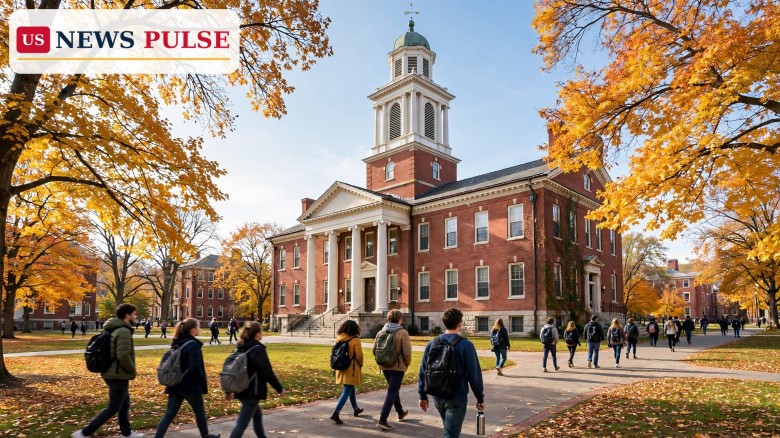
The Penn State tuition lawsuit landed on Thursday, November 5, 2026, when the U.S. Justice Department sued Pennsylvania State University in federal court, asking a judge to declare the university's in-state tuition policy for undocumented students unconstitutional and to bar the school from applying it. The 14-page complaint, filed in the U.S. District Court for the Middle District of Pennsylvania, names the university and its Board of Trustees as defendants.
It is the Justice Department's 27th lawsuit challenging in-state tuition for undocumented students — and only the second aimed at a single institution, after the University of Delaware on October 1, 2026. The filing shifts a campaign that has so far targeted state laws onto individual universities' policies.
Key Points
- The Justice Department sued Penn State on November 5, 2026, seeking a court order that its in-state tuition policy for undocumented students is unconstitutional.
- The case is the department's 27th lawsuit over in-state tuition for undocumented students, and only the second aimed at a single university.
- Penn State lets undocumented students, with or without DACA status, qualify for in-state tuition if they meet the university's residency requirements.
- At University Park, tuition and fees for 2026–27 are $21,198 for first- and second-year Pennsylvania residents, against $44,894 for nonresidents — a gap of $23,696 a year.
- The case rests on 8 U.S.C. 1623, which bars residence-based tuition benefits for people not lawfully present unless the same benefit is open to U.S. citizens regardless of where they live.
What Happened
The complaint asks the court for two things: a declaration that Penn State's policy violates federal law and the U.S. Constitution, and an injunction stopping the university from granting in-state rates to students who are not lawfully present in the United States. The department argues the policy gives undocumented students a benefit out-of-state American citizens cannot get, even if they have lived in Pennsylvania for years.
Pennsylvania has no state law on in-state tuition for undocumented students, so the lawsuit targets the university's own policy directly rather than a statute passed in Harrisburg. Penn State said on Thursday that it was aware of the complaint and is reviewing it. The university has not yet filed a response, and no hearing date has been set. The case will be heard in the Middle District of Pennsylvania, the federal court covering the university's home region, including its University Park campus in State College.
Background and Context
Penn State's policy allows undocumented students — including those with Deferred Action for Childhood Arrivals (DACA) protection and those without it — to pay the in-state rate if they satisfy the university's residency requirements. For many families, that is the difference between an affordable degree and one that is out of reach.
Federal law has restricted such benefits since 1996, when Congress passed 8 U.S.C. 1623 as part of a wider immigration law. It says a person who is not lawfully present cannot receive a postsecondary education benefit based on residence in a state unless a U.S. citizen can get the same benefit regardless of where the citizen lives. The University of Delaware became the first single institution sued, on October 1, 2026, and similar cases have already ended in-state tuition breaks for undocumented students in Texas, Florida, Illinois, Kentucky, Nebraska, Oklahoma and Kansas.
The Penn State Tuition Lawsuit and the $23,696 Tuition Gap
The numbers explain why the case matters so much to students and their families. At University Park, Penn State's flagship campus, tuition and fees for first- and second-year students in 2026–27 are $21,198 for Pennsylvania residents and $44,894 for nonresidents. The difference is $23,696 every year — nearly $95,000 over a four-year degree. For a student without lawful status, the in-state rate can be the difference between enrolling and staying home.
Penn State is one of the largest universities in the country, and University Park alone draws students from every state. If the Justice Department wins, the ruling could become a template for challenges to tuition policies at other public universities that adopted similar rules without a state law behind them.
Reactions and Quotes
Associate Attorney General Stanley Woodward said the department is ensuring that no state law or university policy gives preferential treatment to undocumented students over American citizens. Assistant Attorney General Brett Shumate said Congress made a deliberate choice in the 1996 law, and the department intends to enforce it.
Penn State said it was aware of the complaint and is reviewing it. The university did not say whether it will defend the policy in court or change it, and no timetable for its response has been announced.
Why It Matters
The case is the clearest sign yet that the administration's tuition campaign is widening from state capitols to campus administrations. Until now, universities that set their own tuition rules without a state law behind them have been outside the fight. Penn State changes that.
For undocumented students, the stakes are immediate: losing the in-state rate would more than double the cost of a Penn State degree. For universities, a ruling against Penn State would put every similar policy under legal threat. For the courts, it tests how far a 1996 federal statute reaches into decisions universities have treated as their own.
What Happens Next
Penn State must now decide whether to fight the case or settle it. Its response will be filed in the Middle District of Pennsylvania, and the Justice Department may ask the court for a preliminary order blocking the policy while the case is heard. A final ruling could take months.
Two cases are worth watching: the University of Delaware suit, the first of its kind, and the state-level cases that have already ended tuition breaks in seven states. Together, they will show whether the courts accept the department's reading of the 1996 law — and how many more universities could be next.
Frequently Asked Questions
Why did the Justice Department sue Penn State?
It says the university's in-state tuition policy for undocumented students violates 8 U.S.C. 1623, which bars residence-based tuition benefits for people not lawfully present unless U.S. citizens can get the same benefit regardless of where they live.
How big is the tuition gap at Penn State?
At University Park, tuition and fees for 2026–27 are $21,198 for first- and second-year Pennsylvania residents and $44,894 for nonresidents — a difference of $23,696 a year, or nearly $95,000 over four years.
What is 8 U.S.C. 1623?
It is a federal law passed in 1996 that says a person who is not lawfully present in the United States cannot receive a postsecondary education benefit based on living in a state, unless a U.S. citizen is eligible for the same benefit no matter where the citizen lives.
Is Penn State the first university to be sued?
No. It is the second single institution sued, after the University of Delaware on October 1, 2026. It is the Justice Department's 27th lawsuit in the wider campaign against in-state tuition for undocumented students.
Related coverage: Judge blocks DOJ from tying police grants to immigration enforcement; Mullin says U.S. deportations will continue despite Democrats’ midterm sweep; Trump administration held secret Iran deportation talks during war, court files show.
© 2026 US News Pulse. All rights reserved.
 Print
 Save