
Tesla to End Cybertruck Production by Mid-2027 as Cybercab Robotaxis Take Over
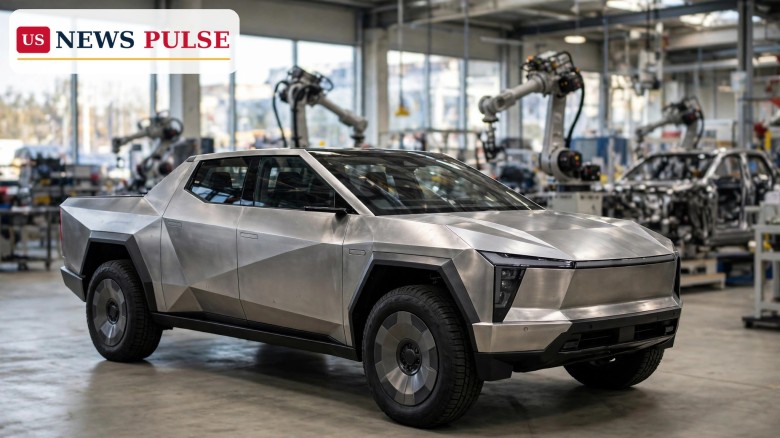
Austin, Texas — Tesla will wind down production of the Cybertruck around the middle of 2027, chief executive Elon Musk said on Friday, November 6, 2026, ending the run of Tesla’s most recognisable vehicle after less than four years. The angular stainless-steel pickup will give way at Gigafactory Texas to the Cybercab, Tesla’s two-seat robotaxi.
Musk announced the move in a post on X, calling it the “end of an era” and saying the Cybertruck line in Austin would be wound down “to make room for increased Cybercab production.” He did not say whether production would move to another plant.
Key Points
- Elon Musk said on Friday that Tesla will wind down Cybertruck production at Gigafactory Texas around mid-2027, to make room for Cybercab production.
- Unveiled as a concept in late 2019 and in production since late 2023, the Cybertruck is built only at the Austin plant.
- Cybertruck sales have fallen sharply: Cox Automotive data shows sales down 28% so far in 2026, with 11,586 sold in Q1 against 16,097 a year earlier.
- Tesla delivered 8,295 “Other Models” vehicles, including the Cybertruck, in Q3 2026, down 48% year over year.
- The Cybercab is a two-seat, fully autonomous vehicle with no steering wheel or pedals, and Musk has said Tesla will soon build more Cybercabs than all its other vehicles combined.
What Happened
Musk’s announcement came in a short post on X on Friday. “Tesla will wind down Cybertruck production around the middle of 2027 to make room for increased Cybercab production,” he wrote, adding: “End of an era.” Sales show a vehicle losing momentum: about 20,000 Cybertrucks were sold in 2025, and roughly 70,000 since the truck first reached customers, against a line built for 250,000 a year.
The timing points to a deliberate handover rather than a sudden stop. Winding production down around mid-2027 gives Tesla more than half a year to run down Cybertruck orders while it ramps up the Cybercab, the driverless two-seater at the centre of its next chapter. Musk has said Tesla will soon make more Cybercabs than all its other vehicles combined — an ambition that needs factory floor space, and the Cybertruck line is where that space will come from.
Background: The Cybertruck’s Short, Loud Life
Few modern vehicles have attracted as much attention as the Cybertruck. Musk unveiled it as a concept in late 2019 at an event in Los Angeles, where a steel ball famously cracked its supposedly shatterproof window on stage. The truck’s wedge-shaped, stainless-steel body looked like nothing else on the road, and Tesla collected more than a million reservations.
Production began in late 2023, and the first trucks reached customers that November. The production version cost more than Musk had quoted at launch, and early owners reported quality problems, including panel gaps and drive-system faults. Tesla issued a series of recalls, the largest covering nearly all Cybertrucks built to that point over an accelerator-pedal fault. For a time the Cybertruck was the best-selling electric pickup in the United States, helped by a market with almost no direct rivals. But its appeal proved narrow: its polarising shape, size and price limited it to a niche of buyers, while traditional pickup owners stayed loyal to petrol and diesel trucks.
Tesla Cybertruck Production Ends as Robotaxis Take Priority
The decision to end Cybertruck production is best read as a statement about where Tesla believes its future lies. The Model 3 and Model Y remain Tesla’s commercial backbone, but Musk has spent two years arguing Tesla’s real value lies in autonomy: in robotaxis that earn money around the clock, and in the software and AI that drive them. The Cybercab is the purest expression of that bet: a vehicle designed from the start to have no driver.
The Cybertruck, by contrast, was always a difficult vehicle to build at scale. Its stainless-steel exoskeleton resists stamping and bending and requires specialised tooling. Its flat panels demand tight tolerances, and its line was built for 250,000 trucks a year that demand never reached. Roughly 70,000 Cybertrucks have been sold since launch, less than a third of a single year’s planned capacity.
Reactions and Quotes
Musk’s own words were brief and final. “End of an era,” he wrote on X, alongside the announcement that Cybertruck production would wind down “to make room for increased Cybercab production.” The post drew a flood of responses from Cybertruck owners, many asking whether existing trucks would keep receiving software updates and parts support. Tesla has not yet answered that question publicly.
Cybertruck lead engineer Wes Morrill struck a more reflective note on X, writing: “Cybertruck was an incredible technology development platform and lives on through Cybercab.” His comment points to the truck’s engineering legacy: its 48-volt architecture, steer-by-wire system and stainless-steel techniques are expected to feed into the Cybercab and future Tesla vehicles.
Why It Matters
The end of the Cybertruck matters because the truck was never just a vehicle. It was the boldest design statement any major carmaker had made in decades, a bet that buyers wanted something radically different from the pickups that dominate American roads. Its failure to reach mass-market volumes is a reminder that novelty alone does not sell trucks: buyers in America’s most conservative car segment wanted capability, price and familiarity, and the Cybertruck offered novelty first. It also marks a clear turn in Tesla’s identity, from a company defined by the cars it sold to drivers to one defined by cars that drive themselves. For owners, questions remain over parts, service and resale values.
What Happens Next
Cybertruck production will continue until around the middle of 2027, giving buyers several more months to order one of the last trucks. Tesla has not said whether it will offer a final edition or special pricing to clear inventory, and it has not confirmed a firm end date, only the mid-2027 window Musk gave on Friday. Attention now turns to the Cybercab ramp: when production begins at Gigafactory Texas and how many the plant can build in its first year.
Frequently Asked Questions
When will Tesla stop making the Cybertruck?
Musk said Tesla will wind down Cybertruck production around mid-2027, to make room for Cybercab production at Gigafactory Texas in Austin.
Why is Tesla ending Cybertruck production?
Musk said the line is needed for the Cybercab robotaxi. Sales have also fallen sharply, down 28% so far in 2026, with about 20,000 sold in 2025 against a line built for 250,000 a year.
What is the Cybercab?
The Cybercab is Tesla’s two-seat, fully autonomous vehicle with no steering wheel or pedals. Musk has said Tesla will soon build more Cybercabs than all its other vehicles combined.
Will Tesla still support existing Cybertrucks?
Tesla has not yet said how long parts, service and updates will continue for the roughly 70,000 Cybertrucks sold since launch.
Related coverage: White House tech panel postponed as Nvidia, Meta CEOs were set to attend · Zipline raises $1.5 billion at $21.5 billion valuation to build US drone delivery network · Trump backs Nvidia CEO Jensen Huang amid reported China spy plot inquiry
© 2026 US News Pulse. All rights reserved.
 Print
 Save