
Trump Confirms 'Minor' US Strikes on Iran Air Defence as State Dept Warns Americans
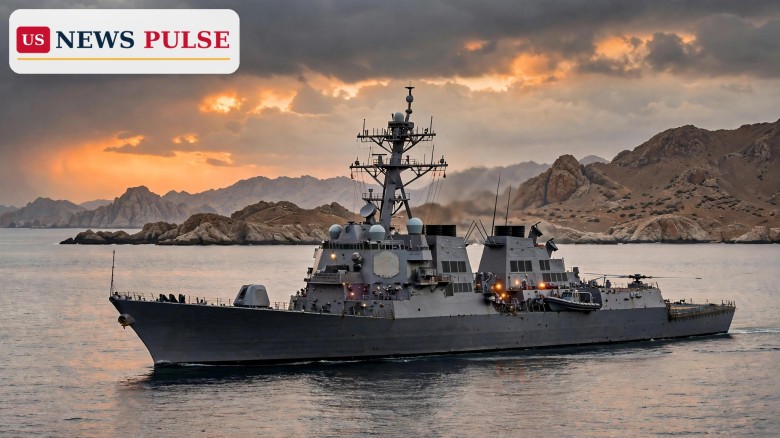
President Donald Trump confirmed on Friday that the United States carried out new limited strikes on Iran, targeting an Iranian air defence system, and described the action as "minor", as the State Department warned Americans across the Middle East of attacks by the Iranian-supported Houthis. Trump spoke in West Palm Beach on Friday evening. Iranian state media reported two explosions in the Suza area of Qeshm Island, in the Strait of Hormuz.
Key Points
- Trump's confirmation: the US carried out new limited strikes on an Iranian air defence system, which Trump called "minor" and said was knocked out in "about 15 minutes, maybe five".
- Where it happened: Iranian state media reported two explosions in the Suza area of Qeshm Island, in the Strait of Hormuz.
- State Department warning: Americans across the Middle East were told to stay vigilant amid a higher threat of Houthi attacks and Iranian efforts to target US officials.
- Fresh Houthi attacks: the warning followed new Houthi attacks on Saudi Arabia on Friday, with Saudi defences intercepting two ballistic missiles near Najran and a drone near Mecca.
- The wider picture: the war is in its ninth month since February 28, 2026, and Qatar's mediation continues.
What Happened in the New US Strikes on Iran
The clearest account came from Trump himself. Speaking to reporters after landing in Florida on Friday evening, he said the US had hit an Iranian anti-aircraft system that Tehran had recently built. "They knocked out — they built a little bit of an anti-aircraft device and we knocked it out in about 15 minutes, maybe five," he said. He did not say where the system stood or who carried out the strike.
Tehran offered little more. State media reported two explosions in the Suza area of Qeshm Island but gave no official account of damage or casualties. US officials have said most of Iran's air defences were destroyed or severely degraded in Israel's bombardment in June 2025 and early in the current war, so a newly built system would have been a notable target. The strikes followed Monday's US defensive strikes on Qeshm, Hengam and Bandar Abbas, and US Central Command called the situation "relatively calm" while promising an announcement on Iran at 8:30 a.m. ET on Saturday.
Background and Context
The US-Iran war began on February 28, 2026, and is now in its ninth month. It has been fought in waves: American and Israeli strikes on Iranian military and nuclear-linked targets, Iranian missile and drone attacks on Israel and Gulf states, and repeated disruption to shipping through the Strait of Hormuz.
Trump has confirmed limited strikes before. On Tuesday, November 3, speaking by phone to Fox & Friends, he confirmed US forces had hit an anti-aircraft facility on Qeshm Island, calling it "just a minor attack" and saying "it wasn't war". Friday's confirmation used almost the same language, but for a new target built after that strike. The diplomacy has never fully stopped: Qatar's mediation continues, and Trump said on Friday the United States is "doing very well" with Iran and is talking to Tehran's representatives. Vice President JD Vance said on Monday Washington had made "progress" in the talks and set no deadline for a deal.
Trump's "Minor" Strikes on Iran's Air Defence
The word Trump chose, "minor", matters. It is the same word he used for the November 3 strike, and it signals how the White House wants this operation understood: not an escalation, but a small, contained action against a single military target. The fifteen-minute figure — "maybe five" — reinforced that framing.
There is a strategic logic to it as well. If Iran is rebuilding air defences faster than expected, Washington has an interest in knocking new systems out before they become operational, while keeping the door open to the talks Trump says are going well. Satellite imagery published on Friday showed Iran rebuilding missile bases, and a rebuilt air defence system on Qeshm would be part of the same effort to restore capabilities lost earlier in the war.
Reactions and Quotes
Trump's own words were the main public statement on the strikes. "They knocked out — they built a little bit of an anti-aircraft device and we knocked it out in about 15 minutes, maybe five," he told reporters in Florida on Friday evening. He added that the United States is "doing very well" with Iran and is talking to Tehran's representatives.
The State Department's warning, issued on Friday through its TravelGov account on X, was broader. It told Americans across the Middle East to stay vigilant amid a higher threat of attacks by Iranian-supported Houthis and Iranian efforts to target US officials, and cautioned about possible flight cancellations, airspace closures and travel disruptions. It covered Israel, Saudi Arabia, Iran, Iraq, Qatar, Oman, Jordan, Bahrain, Kuwait and Lebanon. No Iranian official statement on the strikes was reported.
Why It Matters
For Americans in the Middle East, the State Department warning matters most. A region-wide alert covering ten countries, warning of flight cancellations and airspace closures, is a serious signal, and it came on the same day as fresh Houthi attacks on Saudi Arabia. The interception of two ballistic missiles near Najran and a drone near Mecca shows the threat is current, not theoretical.
For the war itself, Friday's strikes matter because they show Iran is rebuilding — and the United States is watching. Neither side has stopped preparing for a longer conflict, even while negotiators talk, and the strikes test whether limited military action helps or hurts the talks Trump says are going well.
What Happens Next
The immediate focus is the announcement US Central Command has promised for 8:30 a.m. ET on Saturday, which may clarify what was hit on Qeshm and what Washington intends next. Any Iranian official response will be closely watched, as will any further Houthi action after the Najran and Mecca interceptions. Beyond that, US-mediated trilateral talks are due in Abu Dhabi on November 10-11, with the Iran file running in parallel through Qatari mediation. Whether Friday's strikes become a pattern or a one-off will depend on what Iran does next.
Related coverage: Two missiles strike Iran's Qeshm Island in new Saturday attack, Iran says, Iran rebuilding missile bases as satellite images show underground work and Trump confirms US strike on Iran's Qeshm Island, calling it a 'minor attack'.
Frequently Asked Questions
What did Trump confirm on Friday?
He confirmed new limited US strikes on an Iranian air defence system, called the action "minor", and said it was knocked out in "about 15 minutes, maybe five".
Where did the strikes happen?
Iranian state media reported two explosions in the Suza area of Qeshm Island, in the Strait of Hormuz.
What did the State Department warn Americans about?
It warned Americans across the Middle East to stay vigilant amid a higher threat of Houthi attacks and Iranian efforts to target US officials, and cautioned about possible flight cancellations, airspace closures and travel disruptions.
Which countries did the warning cover?
Israel, Saudi Arabia, Iran, Iraq, Qatar, Oman, Jordan, Bahrain, Kuwait and Lebanon.
What Houthi attacks happened on Friday?
Saudi air defences intercepted two ballistic missiles near Najran and a drone near Mecca.
© 2026 US News Pulse. All rights reserved.
 Print
 Save