


 | Today's Date:





Iran Rebuilding Missile Bases as Satellite Images Show Underground Work
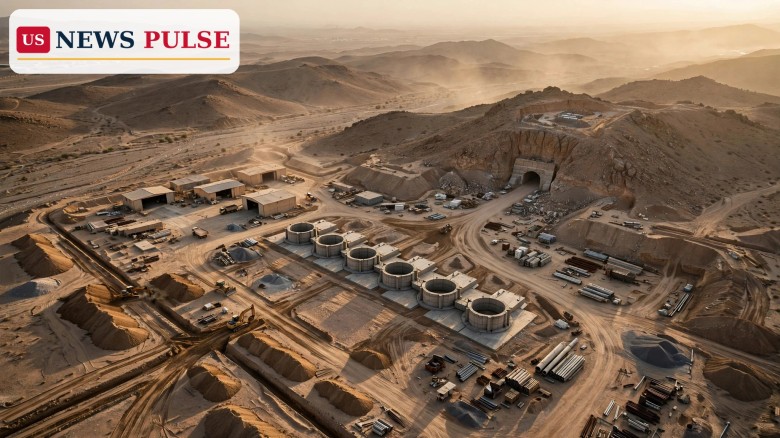
Satellite images show Iran rebuilding missile bases damaged in months of American and Israeli strikes, with major construction and underground work now visible at key military sites, according to a BBC Verify analysis published on Friday. The images, taken in November, show building work under way at two of Iran's biggest missile bases — Garmdareh, near Tehran, and Shahroud in the north — alongside repairs at at least a dozen other military sites. Analysts say Tehran is moving more of its missile infrastructure underground, where it is harder to hit.
Key Points
- A BBC Verify analysis of satellite imagery from November found major construction at Iran's Garmdareh and Shahroud missile bases.
- At least 12 other military sites show signs of repairs and reconstruction after months of strikes.
- At Karaj, analysts identified significant excavation and a possible new portal for an underground facility.
- At Kermanshah, new roofs cover destroyed buildings; at Parchin, a bunker has been reinforced with concrete.
- The rebuilding comes as the US-Iran war enters its ninth month.
What Happened
The BBC Verify analysis, published on Friday, November 6, compared satellite images taken in November with earlier imagery. Analysts at MAIAR, a British intelligence company, reviewed the images and identified the construction work. The findings point to a systematic rebuilding effort across Iran's missile infrastructure, rather than isolated repairs at a single base.
At Garmdareh in Karaj, near Tehran, the images show significant excavation. Sam Lair, a research analyst at the Foreign Policy Research Institute, told the BBC the site shows a possible “new portal for an underground facility”. Janes Defence Intelligence also identified tunnel entrances suggesting an expansion of damaged missile bases. At Shahroud in northern Iran, the images show digging and new buildings; former CIA analyst Jim Lamson told the BBC the excavation could be linked to missile production.
At the Kermanshah missile base in western Iran, new roofs have been built on buildings destroyed in strikes. At Parchin east of Tehran, damaged buildings and debris have been cleared, and an underground bunker at the Taleghan 2 facility has been reinforced with concrete. MAIAR also noted work at tunnel entrances near the Fordow underground uranium enrichment complex.
Background: Nine Months of War
The US-Iran war began on February 28, 2026, and is now in its ninth month. American and Israeli forces have carried out repeated strikes on Iranian military and nuclear targets, including missile bases, air defence systems and enrichment facilities. US officials say most of Iran's air defences were destroyed or severely degraded in Israel's June 2025 bombardment and the early war.
Despite the bombing, Iran has kept launching missiles and drones while mediation continued. Qatar is mediating, and Iran has been reviewing proposals. Vice President JD Vance said this week that Washington has made progress in talks with Iran and set no deadline for a deal. Days before the satellite findings were published, President Trump confirmed fresh limited strikes on Iranian air defences and said a decision on wider military action would come soon.
Iran Rebuilding Missile Bases Underground
The most striking feature of the new imagery is how much of the work is going underground. Tunnel entrances, excavation and new portals appear at several sites, pointing to a deliberate shift: putting missile production, storage and launch infrastructure below ground, where bombs and missiles struggle to reach it.
Iran has long used underground facilities for its missile and nuclear programmes. Fordow, the enrichment complex built into a mountain south of Tehran, has survived repeated attacks precisely because it is buried deep underground. The work at Garmdareh, Shahroud and Parchin suggests Tehran is applying the same logic more widely.
That shift changes the arithmetic of the air campaign: strikes that destroyed surface buildings did not necessarily destroy what was stored beneath them. It also signals intent. Rebuilding missile bases and digging new underground facilities takes time, money and organisation, and it is not the work of a government preparing to abandon its missile programme.
Reactions and Analysis
The analysts who reviewed the imagery were careful about what the pictures can and cannot prove. Satellite images can show excavation, new buildings and cleared debris, but they cannot confirm what is happening inside a tunnel or under a new roof. On scale and direction they agreed: the rebuilding is extensive, under way at many sites at once, and largely underground.
Lair's identification of a possible new portal at Karaj was one of the clearest findings, reinforced by Janes' tunnel entrances at multiple sites. Lamson linked the Shahroud excavation to missile production. The findings fit the war's pattern: Iran has repeatedly repaired damaged sites after strikes.
Why It Matters
Iran's missile force is central to the war. It is the weapon Tehran has used most, and the capability the United States has worked hardest to destroy. If Iran is rebuilding its missile bases underground, the air campaign's gains may prove less lasting than they appeared.
The findings also complicate diplomacy. The top American demand in the talks has been a firm, verifiable commitment that Iran will not rebuild its nuclear programme, which the United States says it destroyed. The images show Iran rebuilding its missile infrastructure in plain view, raising the question of what else it may be rebuilding out of sight. For the region, the rebuilding signals a country preparing for a long war, not one seeking a quick exit.
What Happens Next
President Trump has said a decision on wider military action against Iran will come soon, and the satellite findings are likely to feature in that decision. If the administration concludes Iran is using diplomacy as cover to rebuild, pressure for larger strikes could grow; if not, the imagery may strengthen the case for a deal covering missiles as well as nuclear facilities.
Analysts will keep watching the sites. New satellite images in the coming weeks should show whether the construction accelerates, whether more tunnel entrances appear and whether the work spreads to other bases. Each new image will show how much of the missile force has been restored. The talks continue in parallel, with Qatar mediating and Vice President Vance saying the United States feels good about the prospects of a negotiated settlement.
Frequently Asked Questions
What did the satellite images show?
Construction at the Garmdareh and Shahroud missile bases, plus repairs at 12 other military sites.
Why is the underground work significant?
Underground facilities are harder to monitor and destroy, so moving missiles below ground makes future strikes less effective.
Which sites were named in the analysis?
Garmdareh near Tehran, Shahroud in the north, Kermanshah near Iraq, Parchin east of Tehran and tunnel entrances near Fordow.
How long has the US-Iran war been going on?
The war began on February 28, 2026, and is now in its ninth month.
What has President Trump said about further action?
He confirmed fresh limited US strikes on Iranian air defences and said a decision on wider military action would come soon.
Related coverage: Two Missiles Strike Iran's Qeshm Island in New Saturday Attack, Iran Says; US Offers $20 Million Reward for Information on Iran's Nuclear Programme; Iran Hands Out Iodine Tablets Near Nuclear Sites as US Strike Fears Grow.
Leave a Comment