
Laith Nakli Deportation Fight: Actor Faces Removal as His Biggest Film Opens
Laith Nakli is living the biggest moment of his acting career — and fighting to stay. The 56-year-old New York actor, born in Britain to Syrian parents, plays crime boss Mike Mahmoudi opposite Oscar winner Mahershala Ali in Your Mother Your Mother Your Mother. But when the film rolled out its Hollywood red carpet, Nakli stayed away, fearing immigration officers could detain him at an airport. The Trump administration has reopened a deportation case the government closed in 2013 — and his next hearing is only weeks away.
Key Points
- Nakli, 56, skipped his film's Hollywood premiere, fearing detention by immigration officers at an airport.
- His case was closed in 2013 but reopened this year — one of nearly 150,000 sent back to court since January 2025.
- The case stems from a 2000 guilty plea to four counts of conspiracy over illegal steroids.
- Judge Frederic Block recently denied a petition to vacate the conviction; a motion to reconsider has been filed.
- He appeared at an immigration court hearing at 26 Federal Plaza, New York, on October 30 — his first since 2013; his next hearing is about a month away.
What Happened
Nakli's new film puts him on screen beside one of Hollywood's most decorated actors, in the largest role of a career built over three decades in the US. The release should have been a celebration. Instead, he skipped the Hollywood premiere, worried that travelling through an airport could put him in detention while his case is active.
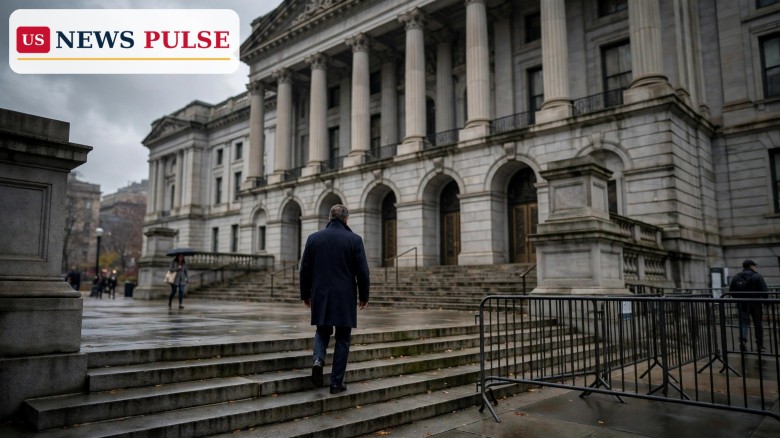
On October 30, 2026, Nakli entered an immigration courtroom at 26 Federal Plaza in lower Manhattan — his first appearance since the case closed thirteen years ago. The hearing was procedural, but its meaning was plain: a case he believed was behind him is live again, and a judge will decide whether he can stay in the United States. His next hearing is about a month away.
A Homeland Security spokesperson gave no specific reason for reopening the case, saying only: "All his claims will be heard by an immigration judge." The department has not said what changed to justify reviving a case it set aside in 2013.
Background: A Case Closed in 2013, Reopened in 2026
Born in Britain to Syrian parents, Nakli is a citizen of both countries. He came to the US from Damascus in 1990 and won the "Mr. Syria" bodybuilding title in 1996. In 2000, he pleaded guilty to four counts of conspiracy to possess and distribute illegal steroids. Judge Frederic Block sentenced him to three years' probation, community service and a $3,000 fine, instead of up to 20 years in prison.
In 2011, Homeland Security accused Nakli of fraud over immigration paperwork and cited the drug charges as "crimes of moral turpitude", which can make a non-citizen deportable. The government pursued removal, then stopped. In 2013, his case was administratively closed — shelved, not decided — and stayed that way for thirteen years.
What changed was policy, not Nakli. In April 2025, a Justice Department memo called administrative closure a "de facto amnesty program", and the administration began sending dormant cases back to court. Nakli's is one of nearly 150,000 returned since January 2025.
Laith Nakli Deportation Case: What the Court Records Show
Nakli's lawyers have attacked the case at its foundation. Earlier this year, his attorney petitioned to vacate the 2000 conviction, arguing Nakli's lawyer then never warned him the plea carried mandatory deportation. Judge Block, who sentenced Nakli in 2000, recently denied the petition. His lawyers have asked the judge to reconsider.
A second avenue has also closed, for now. In July, the administration rejected Nakli's clemency application with some 6,000 other pardon requests. A pardon would have erased the conviction at the heart of the case; without it, the 2000 plea remains the central fact a judge must weigh. He has not been accused of any crime since, and nothing in the public record suggests the case was reopened over anything he did recently.
Reactions and Quotes
Homeland Security has said little about Nakli. Its spokesperson declined to explain why his case was chosen, offering only that "All his claims will be heard by an immigration judge." Why now, after thirteen quiet years, remains unanswered.
Nakli's legal team frames the case as a warning about the plea: his attorney argued Nakli was never told the guilty plea would mean mandatory deportation — a failure that, if accepted, could undo the conviction the removal case rests on. Judge Block's denial was a setback, but the motion to reconsider keeps the argument alive.
Why It Matters
Nakli's case matters because it is not unique. Nearly 150,000 closed cases have returned to immigration court since January 2025, each one a person living and working in the United States believing their case was over. The administration says closure was never final, only a pause. Critics say reopening decades-old cases punishes people who served their sentences and rebuilt their lives.
The case also tests how far one guilty plea should reach. Nakli served probation, paid his fine and did community service more than two decades ago. The question is whether that 2000 plea — entered, his lawyers say, without a deportation warning — should still cost him his home in America. His story puts a human face on a policy usually expressed in statistics.
What Happens Next
Nakli's next hearing is about a month away. The motion asking Judge Block to reconsider his denial of the petition to vacate the 2000 conviction is pending in federal court; if it succeeds, the foundation of the deportation case crumbles. If it fails, the judge will decide whether the decades-old conviction requires his removal. The film will continue its run with its star unable to promote it in person.
Frequently Asked Questions
Who is Laith Nakli?
Laith Nakli, 56, is a New York actor born in Britain to Syrian parents. He came to the US from Damascus in 1990, won the "Mr. Syria" bodybuilding title in 1996, and stars as crime boss Mike Mahmoudi beside Mahershala Ali in his new film.
Why is Laith Nakli facing deportation?
His case stems from a 2000 guilty plea to four counts of conspiracy over illegal steroids, cited in 2011 as "crimes of moral turpitude". His lawyers argue he was never warned the plea carried mandatory deportation.
Wasn't his deportation case closed years ago?
Yes — the government closed it in 2013. The Trump administration reopened it this year, one of nearly 150,000 dormant cases returned to court after a memo called closure a "de facto amnesty program".
Why did he skip his film's Hollywood premiere?
He feared immigration officers could detain him at an airport while his case is active. He attended an immigration court hearing in New York on October 30, 2026, instead.
What happens next in the case?
His next hearing is about a month away. His lawyers have asked Judge Frederic Block to reconsider his denial of a petition to vacate the conviction, and his July clemency application was rejected with about 6,000 others.
Related coverage: 66 lawmakers urge Trump to cancel Afghan deportation flights, Judge blocks Afghan deportation flight and Mullin says deportations will continue.
© 2026 US News Pulse. All rights reserved.
 Print
 Save