
Data Centre Power Costs Could Leave Americans 'On the Hook', TVA Warns
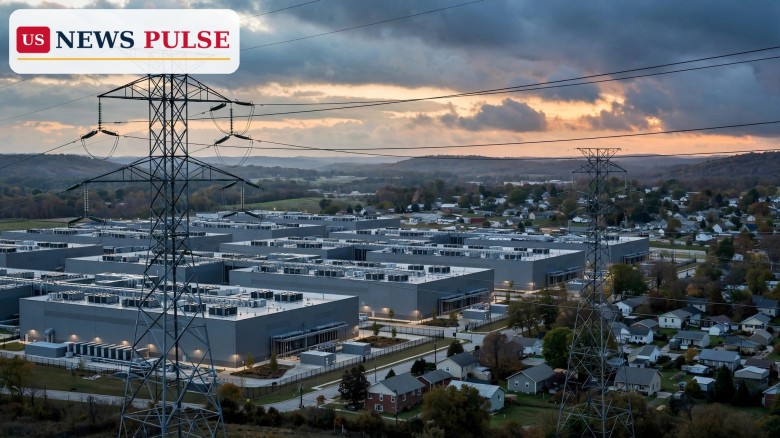
A USA Today investigation published on Sunday warns that the data centre boom sweeping Tennessee and the United States could leave ordinary Americans paying for the huge power costs of the artificial intelligence era. The Tennessee Valley Authority, the federal utility supplying electricity to 10 million people in seven states, is planning more than $13 billion in power investments through 2029.
Data centres already account for 18% of TVA's industrial demand, expected to double by 2030. Nationally, the US has more than 4,000 data centres, which consumed over 4% of the nation's electricity in 2024, with demand projected to more than double by 2030, according to the International Energy Agency.
Key Points
- TVA plans more than $13 billion in power investments through 2029 and forecasts needing 11,000 to 32,000 megawatts of additional generating capacity by 2040.
- Data centres are already 18% of TVA's industrial electricity demand, expected to double by 2030; TVA received roughly 11,000 megawatts of electricity requests from data centres and tech companies last year.
- TVA's board unanimously approved a new rate in August charging data centres about 10% more than the manufacturing rate, in effect since October 1, with a nonrefundable fee of about $1.5 million per megawatt.
- In Memphis, Elon Musk's xAI built Colossus 2 next to homes in a residential neighbourhood, with a $659 million expansion under way; an $11.3 billion, 850-acre development, Project River, is planned near Chattanooga.
- The US already has more than 4,000 data centres using over 4% of national electricity in 2024, with demand projected to more than double by 2030, the IEA says.
What Happened
The investigation, published Sunday, November 8, 2026, opens a three-part USA Today series on how the boom is reshaping Tennessee. TVA's forecasts project 11,000 to 32,000 megawatts of additional capacity by 2040. That would expand its system by a third, or nearly double it.
Last year TVA reported roughly 11,000 megawatts of electricity requests from data centres and technology companies alone, nearly a third of its existing capacity, enough power for about 6.4 million homes. But how much of the projected growth is tied to data centres is not public. TVA now calls that figure outdated and has declined to give an updated estimate. Spokesman Scott Brooks called it a “moment in time” that was “likely outdated as soon as it was shared.”
Background: How the Boom Reached Tennessee
Tennessee has about 65 data centres, including xAI in Memphis, Meta in Gallatin and Google in Clarksville. For Loretta Young Thornton, 66, the boom arrived across the railroad tracks from her Memphis home, a 1920s house on two acres she named Serenity. Then the trees came down and Colossus 2 rose in their place. The drone of machinery, like a jet engine, runs day and night. “I just say that's my noisy neighbor, Elon Musk,” she said.
Communities are fighting back: hundreds protested near the Nashville Zoo, Lawrenceburg residents packed a planning meeting, and a Memphis moratorium debate shut down a city council meeting.
Data Centre Power Costs: Who Pays if the Boom Goes Bust?
Power plants and transmission lines can operate for decades, outlasting the data centres they serve, and their costs are recovered through rates over decades. If data centres close or use less power than expected, other customers could be left paying. Columbia economist Stijn Van Nieuwerburgh estimates the US could spend $10 trillion on data centres and related infrastructure by 2032. He found 509 gigawatts of proposed capacity, nearly 10 times what operates today, but a realistic total of about 180 gigawatts. “At which point are we beginning to overbuild it?” he asked.
A 2025 report for the Southern Environmental Law Center warned forecasts may be inflated, with planned US data centres alone needing 90% of the world's projected increase in AI chip production through 2030. TVA's own history warns: in the 1970s it planned 17 nuclear reactors; by 1984 it had cancelled eight, abandoning billions.
Reactions and Quotes
TVA says new charges protect customers. In August its board unanimously approved, without discussion, a rate charging data centres about 10% more than the manufacturing rate, in effect since October 1, with a nonrefundable fee of about $1.5 million per megawatt. “TVA is not focused on building to meet data center growth,” spokesman Scott Brooks told The Tennessean. “We are focused on building new generation to support growth in business and industry and to preserve delivery of reliable, affordable electricity to 10 million people we serve.”
Advocates are unconvinced. “If they are not getting revenues to cover these costs from the data centers, they will get them from the rest of us,” said Maggie Shober of the Southern Alliance for Clean Energy. She said TVA has not shown the protections would cover long-term investments if centres close early or use less power than expected.
“If the data center demand doesn't materialize because there's a bubble, then ratepayers are going to be on the hook for paying all those costs over the longer term,” said Amanda Garcia of the Southern Environmental Law Center. Industry disagrees: “It's not the dot com boom, because this is steel in the ground,” said Christy Tarallo of the Data Center Coalition.
Why It Matters
For TVA's 10 million customers, the stakes are in monthly bills: if data centre demand falls short, the cost of plants built to serve it must still be paid, most likely by households and small businesses. Vanderbilt researcher Asad Ramzanali warned the risks could spread further, as tech firms are investing hundreds of billions in AI without yet earning enough to justify it, increasingly with borrowed money.
Related coverage: OpenAI's pledge to pay the full power costs of its data centres; voters rejecting data centres in nearly every local ballot measure; and Texas pausing new data centre approvals.
What Happens Next
TVA's rate is in effect, but the utility has not released the calculations behind the 10% rise or the $1.5 million fee. The $659 million Colossus 2 expansion and the $11.3 billion Project River will test Tennessee's grid, and USA Today's series has two more parts to come.
Frequently Asked Questions
What is the Tennessee Valley Authority?
TVA is a federal utility supplying electricity to about 10 million people in seven states, including most of Tennessee.
How much power do TVA data centres use?
Data centres are already 18% of TVA's industrial demand, expected to double by 2030; TVA received about 11,000 megawatts of electricity requests from data centres and tech companies last year.
What is TVA's new data centre rate?
Approved in August and in effect since October 1, it charges data centres about 10% more than the manufacturing rate, plus a nonrefundable fee of about $1.5 million per megawatt.
Could household electricity bills rise because of data centres?
Advocates warn they could: if data centres close early or use less power than expected, the cost of plants built for them would still be recovered through other customers' rates.
What is Project River?
An $11.3 billion, 850-acre development near Chattanooga proposing up to 1,500 megawatts of its own generation.
© 2026 US News Pulse. All rights reserved.
 Print
 Save