


 | Today's Date:




Voters Reject Data Centres in Nearly Every Local Ballot Measure in 10 States
Voters across the United States have delivered a sweeping rebuke to the artificial intelligence building boom, rejecting data centres in nearly every local ballot measure put to them on Tuesday, November 3, 2026. Opponents won all but one of the 38 measures called by the following morning, out of 41 data centres ballot measures held across 10 states, in the biggest local backlash yet against the industry’s rapid expansion.
Key Points
- Voters rejected data centres in 37 of the 38 local ballot measures called by Wednesday morning, out of 41 held across 10 states.
- Ohio held 21 of the measures — more than half the national total — and opponents won in every jurisdiction with reported results.
- Seven municipalities passed permanent bans and ten more voted to limit facilities by size or electrical footprint.
- The only place data centres prevailed was Harwood, North Dakota, where 75% of 430 voters rejected a charter amendment requiring extra scrutiny of large industrial projects.
- NBC exit polling found 56% of voters called AI and data centres a crucial or major factor in their vote for Congress; 64% of them backed Democrats.
What Happened
On Election Day, voters in 10 states decided 41 local measures on data centres, according to preliminary results compiled by datacentersontheballot.com and reported by Route Fifty. By the following morning, 38 had been called, and opponents had won 37 of them. Some votes were advisory rather than binding, so local officials are not legally forced to follow them — but the scale of the rejection was unmistakable,
In Ohio, which held 21 of the 41 measures, opponents won in every jurisdiction with reported results. In Defiance, voters banned data centres over 25 megawatts by 63% to 37%. In Wilmington, four rezoning proposals tied to data-centre projects were rejected by roughly 80% to 20%. In Hubbard, more than three-quarters approved a ban. Elsewhere the margins were just as wide: in Edgewater, Florida, 77% approved a ban; in Alhambra, California, about 82% backed one in early results; in El Dorado, Kansas, a 10-year ban passed 71% to 29%. In Emporia, Kansas, a ban on “high impact” facilities passed with just over 60%. Moratoriums were approved in Bloomington, Illinois, and in Peru and Wiscasset, Maine. The lone exception was Harwood, North Dakota, where the amendment would have applied to future projects, not the controversial Applied Digital campus already approved there.
Background: How Data Centres Became a Ballot Issue
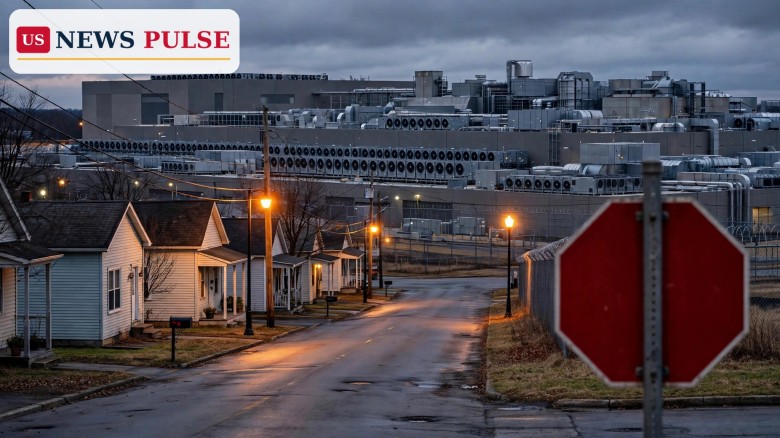
The votes did not come out of nowhere. For two years, the race to build the computing power behind artificial intelligence has turned quiet towns into battlegrounds over land, water and electricity. Developers promised jobs and tax revenue; residents worried about soaring utility bills, drained aquifers, noise, and deals signed behind closed doors.
Local resistance had already scored wins before Election Day. In April, voters in Port Washington, Wisconsin, backed an initiative requiring voter approval for large tax-increment financing districts used for data centres. Residents of Monterey Park, California, voted overwhelmingly to permanently ban the facilities inside city limits, in what appeared to be the first vote of its kind in the United States. US News Pulse reported before the election that at least 41 measures in 38 local jurisdictions would put the AI boom to the vote on November 3.
Data Centres Ballot Measures: The Results State by State
Ohio was the centre of the action, with 21 measures in more than a dozen jurisdictions. Voters in at least 14 Ohio municipalities passed bans or other restrictions, including outright construction bans in Hubbard, Sunbury, Pataskala, Urbana, Defiance, Upper Sandusky, Piqua, Granville, Conneaut and Trenton.
In Florida, Edgewater’s 77% vote for a ban was one of the night’s widest margins. In California, Alhambra backed a ban by about 82% in early results. In Kansas, El Dorado’s 10-year ban passed 71% to 29%, while Emporia’s ban on “high impact” facilities passed with just over 60%. More votes are expected in December in Arkansas and North Dakota. Seven municipalities passed permanent bans, and ten more voted to limit facilities by size or power use: a near-total sweep.
Reactions
Campaigners against the data-centre buildout celebrated the results as a turning point. “Voters across the country have emphatically rejected the push for AI data centers. In state after state and race after race, Big Tech has failed to deliver — and everyday Americans have won,” said Mitch Jones, deputy director of Food & Water Action, a nonprofit that campaigns for clean water and food.
Analysts cautioned that the backlash reflects how the boom has been handled as much as the technology itself. “I think it is fair to say Americans have been feeling frustrated this summer and fall at the peremptory way the new technology has been imposed without guardrails,” Mark Muro, a senior fellow at the Brookings Institution, said at an event on data centres and the midterms last month.
Why It Matters
The results strike at the heart of the AI economy. Data centres are the physical backbone of artificial intelligence: every chatbot answer, image and video generated by AI runs through them. A wave of local bans and limits could slow that construction, raise its cost, and force developers to negotiate harder with the communities that host them. The political signal is just as important: NBC exit polling found that 56% of voters called AI and data centres a crucial or major factor in their vote for Congress, and 76% said they opposed a new data-centre facility in their own community. That makes data centres one of the rare issues that cut across party lines — and one that candidates in both parties will now have to answer for.
What Happens Next
The fight is far from over. More data-centre votes are expected in December in Arkansas and North Dakota, and a state-level campaign in Ohio is working to put a constitutional amendment banning new data-centre construction on the ballot next year. Developers are likely to challenge some results in court or seek permits in friendlier jurisdictions. State lawmakers are also watching: several legislatures are expected to debate new rules on siting, water use and electricity costs in 2026. For now, the message from Election Day is plain: in town after town, voters were asked whether they wanted a data centre as a neighbour — and nearly everywhere, they said no.
Frequently Asked Questions
How many data-centre ballot measures were there?
Voters decided 41 local measures across 10 states on November 3, 2026. By the following morning, 38 had been called and opponents had won 37 of them.
Which states voted on data centres?
Ohio held the most, with 21, followed by California, Florida, Illinois, Kansas, Maine, New Jersey, North Dakota and other states. More votes are expected in December in Arkansas and North Dakota.
What is a data centre?
A data centre is a large facility housing computer servers that store, process and distribute data. They power cloud computing, streaming and AI systems, and use large amounts of electricity and water for cooling.
Why are voters opposed to data centres?
Residents cite rising power and water bills, strain on local grids and water supplies, noise, and a lack of transparency in deals between local governments and developers.
Leave a Comment