
Senate Votes 73-25 to Advance Energy Permitting Bill in First Post-Midterm Move
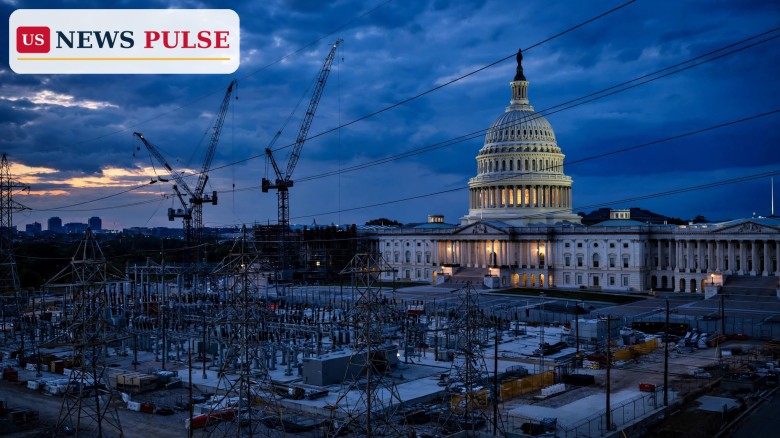
The United States Senate voted 73-25 on Monday evening to advance a sweeping energy permitting bill, Congress's first major action since Democrats swept the midterm elections. The Senate energy permitting bill, the Bipartisan American Affordability and Jobs Act, cleared cloture on the motion to proceed at 5:30 p.m. ET with nearly every Republican and 22 Democrats behind it, easily passing the 60-vote bar. The vote opens debate on the most ambitious rewrite of federal environmental review law in decades.
Key Points
- The Senate voted 73-25 on Monday, November 9, 2026, to advance the Bipartisan American Affordability and Jobs Act (BAAJA, S. 5653), clearing cloture on the motion to proceed.
- Nearly every Republican joined 22 Democrats to pass the 60-vote threshold, in Congress's first major action since the Democratic midterm sweep.
- The bill sets firm deadlines for environmental reviews and limits court challenges, rewriting parts of four major environmental laws.
- It fast-tracks permits for AI data centres and the power plants and transmission lines serving them, while requiring data-centre developers to pay the full cost of grid upgrades.
- Senator Sheldon Whitehouse said the bill could save consumers about $60 to $80 a month; investment firm TD Cowen put its chances of becoming law at 25 percent.
What Happened
The vote was procedural but decisive. By 73 to 25, senators invoked cloture on the motion to proceed to the bill, introduced on September 30 by Senators Shelley Moore Capito, Sheldon Whitehouse, Mike Lee and Martin Heinrich. It was the first significant floor action of the lame-duck session, six days after voters handed Democrats control of both chambers in the November 3 midterms. A second cloture vote, floor debate and a final Senate vote are expected in the coming days or weeks, and the bill must still pass the House before the current Congress ends in January.
President Donald Trump has endorsed the bill, giving it a powerful backer in the White House, though he added a pointed caveat around the time of the vote. "No, I will not approve wind turbines," Trump said, drawing a line around one form of energy even as he backed the broader push to speed up permits. The remark showed the balancing act at the heart of the package.
Background and Context
The permitting bill has been years in the making. For more than a decade, lawmakers in both parties have complained that federal environmental reviews take too long, with major projects routinely spending years stuck in permitting limbo. Supporters say the delays have become a bottleneck for the economy, holding up transmission lines and power plants just as electricity demand surges for the first time in a generation, driven largely by the data centres powering artificial intelligence. The politics shifted on November 3, when Democrats won both chambers. The bill's Democratic authors said last week they would not wait for the new Congress. TD Cowen cut the bill's chances from about 40 percent before the election to 25 percent afterwards, though Monday's 73-25 vote showed the bill still commands a broad bipartisan coalition in the Senate.
Senate Energy Permitting Bill: What's Inside
At its core, the act rewrites the rules governing how long federal agencies can take to review energy projects and how easily those decisions can be challenged in court. It sets firm deadlines for reviews under the National Environmental Policy Act, the 1970 law requiring agencies to assess the environmental impact of major projects, and amends the Clean Water Act, the Endangered Species Act and the National Historic Preservation Act. Supporters say the changes would give developers the certainty to invest billions in new infrastructure. Critics say they would weaken protections that have safeguarded water, wildlife and historic sites for half a century.
The bill also fast-tracks permits for data centres and for the power plants and transmission lines serving them, while requiring data-centre developers to pay the full cost of grid upgrades, rather than passing it to households through higher electricity bills. Senator Whitehouse has argued the package could save consumers about $60 to $80 a month
Reactions and Quotes
Supporters framed Monday's vote as a rare moment of bipartisan agreement in a divided capital. The bill's authors have argued for months that permitting reform is one of the few areas where the two parties still share common ground, and the 73-25 margin appeared to prove the point. Opposition came swiftly from environmental and tribal groups. The National Congress of American Indians urged senators to vote no on November 8, warning the bill would weaken consultation requirements and fast-track projects across tribal lands. Senator Jeff Merkley noted the bill never had a public hearing in either chamber, arguing legislation of this scale deserved open scrutiny.
Why It Matters
The stakes go beyond the Senate floor. America's electricity grid is under strain as data centres, electric vehicles and new factories all demand more power, and the country is struggling to build transmission lines fast enough to carry it. Projects that take years to permit are projects that may never get built, and supporters say the current system is effectively a brake on economic growth. With Democrats set to take control in January, Republicans have only weeks left to move their priorities, and the permitting bill is one of the few major items with genuine bipartisan support.
What Happens Next
The Senate will now move to a second 60-vote cloture vote, followed by floor debate and a final vote, all expected in the coming days or weeks. Senators can offer amendments, and the fight over wind energy, tribal consultation and judicial review is likely to intensify. If the bill clears the Senate it goes to the House, where it must pass before the current Congress ends in January 2027. The clock is the bill's biggest enemy: the lame-duck session runs only about six weeks, with a Thanksgiving break, and Congress must also deal with government funding, which runs out on December 11.
Frequently Asked Questions
What is the Bipartisan American Affordability and Jobs Act? It is a Senate energy permitting bill, numbered S. 5653, that sets deadlines for environmental reviews, limits court challenges and fast-tracks permits for energy projects and AI data centres.
What did the Senate vote on Monday? Senators voted 73-25 to invoke cloture on the motion to proceed, the procedural step that opens formal debate. Sixty votes were needed.
How would the bill affect consumers? Senator Whitehouse has said it could save consumers about $60 to $80 a month, in part because data-centre developers would pay the full cost of grid upgrades.
Who opposes the bill? Environmental groups and tribal organisations, including the National Congress of American Indians. Critics say it weakens environmental protections and never received a public hearing.
What happens next? A second cloture vote, floor debate and a final Senate vote are expected in the coming days or weeks, and the bill must then pass the House before January 2027.
For more on the bill's origins, read our earlier report on the lame-duck push for the permitting bill, and our coverage of Congress's return for the lame-duck session.
© 2026 US News Pulse. All rights reserved.
 Print
 Save