
China's Trade Surplus Tops $1 Trillion in 10 Months as AI Boom Fuels Record Exports
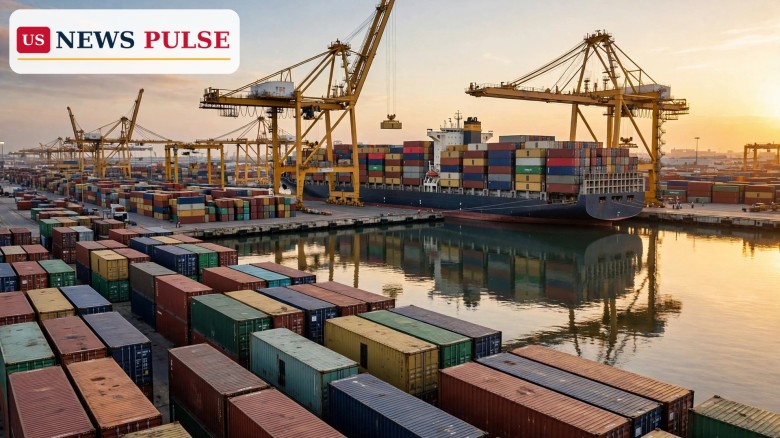
China's trade surplus passed $1 trillion in just 10 months of 2026, reaching $1.04 trillion between January and October, as a global race to build artificial intelligence infrastructure powered an export boom. The milestone, in customs data released on Tuesday, November 10, came a month earlier than in 2025, when China first topped $1 trillion, and puts the country on course to beat last year's record surplus of $1.2 trillion. Exports rose 35.2% in October to $412.3 billion, ahead of economists' 33.5% forecast, while imports grew 41.6% to $307.1 billion.
Key Points
- China's trade surplus hit $1.04 trillion in January-October 2026, topping $1 trillion for a second straight year, a month earlier than in 2025.
- Exports rose 35.2% in October to $412.3 billion, beating the 33.5% forecast, while imports grew 41.6% to $307.1 billion.
- The monthly surplus narrowed to $105.3 billion in October from $133.53 billion in September, as import growth outpaced exports.
- High-tech products — semiconductors, electronics and electric vehicles — are driving the boom as the global AI build-out lifts demand.
- China extended its trade truce with Washington by two months on Monday, ahead of the expected Xi-Trump meeting at the APEC summit in Shenzhen.
What Happened
China's customs authority released the October trade figures on Tuesday, November 10, 2026, and they showed an export machine running at full speed. Exports of $412.3 billion followed September's 36.3% surge, and imports climbed 41.6% to $307.1 billion as factories bought in raw materials, components and energy to feed the export lines.
The monthly surplus narrowed to $105.3 billion in October from $133.53 billion in September, because imports grew faster than exports. But the cumulative figure is what made the headlines: $1.04 trillion in 10 months, with two months of the year still to go. The figures landed a day before the US-China trade truce was due to expire, and days before the APEC summit in Shenzhen on November 18-19, where Xi and Trump are expected to meet for the third time in 2026. China announced on Monday that it is extending the truce by two months, keeping tariffs on hold.
Background and Context
China's trade surplus has grown into one of the largest in modern economic history, and the 2026 figures show how the engine behind it has changed. A decade ago, the surplus was built on cheap manufactured goods — clothing, toys and household items. Today it is built on high technology: semiconductors, electronics and electric vehicles lead the export list, and the global race to build AI data centres has driven demand for the chips, servers and components that Chinese factories supply.
That shift has helped China keep exporting even as its domestic economy struggles, with weak demand at home and a long property slump weighing on household spending. Export growth has become the counterweight, keeping factories busy while the domestic market recovers slowly. The surplus is also broad: with the European Union it reached $310.7 billion in the first 10 months, while with the United States it dipped to $32.71 billion in October from $34.01 billion in September.
China Trade Surplus: How the AI Boom Powered the Record
The driving force behind the 2026 surplus is the worldwide build-out of artificial intelligence. Companies and governments are spending heavily on data centres, and that spending flows straight into orders for semiconductors, servers, networking equipment and the electronics around them. China, the world's largest manufacturer of electronics, sits at the centre of that supply chain.
Electric vehicles are the other pillar. Chinese carmakers have expanded rapidly overseas, selling affordable electric cars in Europe, Southeast Asia, Latin America and the Middle East, helped by cheap batteries and aggressive pricing. October exports beat the 33.5% growth economists forecast, despite US tariffs and European duties on Chinese electric vehicles. Imports tell the other half of the story: the 41.6% jump suggests factories are stocking up on the inputs they need to keep the export lines running.
Reactions
Economists had expected a strong October, but the 35.2% export gain still beat the 33.5% consensus forecast, extending a run of upside surprises. Markets read the figures as evidence that the export engine remains the strongest part of China's economy, even as domestic demand stays soft.
The truce extension was the other immediate reaction. Extending the pause by two months removes a deadline and keeps the door open for the Xi-Trump meeting at APEC to produce progress. For China's trading partners, the surplus is a reminder of the imbalance at the heart of the global economy: a surplus on course to beat $1.2 trillion means China sells far more to the world than it buys, a gap criticised in Washington and Brussels alike.
Why It Matters
A trade surplus of more than $1 trillion matters because it is reshaping the global economy in real time. It shows China's manufacturing base, far from being weakened by tariffs, has adapted and found new markets and new products. It matters for the United States, where the surplus sits at the centre of trade negotiations with Beijing, and for Europe, where a $310.7 billion surplus in 10 months feeds debates about tariffs and dependence on Chinese supply chains. And it matters for China itself: the export boom is masking a still-weak domestic economy. If export growth ever falters, that cushion disappears.
What Happens Next
The next milestone comes at the APEC summit in Shenzhen on November 18-19, where Xi and Trump are expected to meet for the third time this year. With the trade truce extended by two months, the meeting has a window to produce something more durable — or to expose how far apart the two sides still are on tariffs, technology and market access. November's trade figures, due in early December, will show whether the October pace can hold: if exports keep growing at more than 30% a year, China will comfortably beat its 2025 record of $1.2 trillion. Watch also for the policy response in Washington and Brussels.
Frequently Asked Questions
How big is China's trade surplus in 2026?
It reached $1.04 trillion in the first 10 months of 2026, topping $1 trillion for a second straight year, a month earlier than in 2025.
How much did China's exports grow in October?
Exports rose 35.2% year on year to $412.3 billion, ahead of the 33.5% forecast. Imports grew 41.6% to $307.1 billion.
What is driving China's export boom?
High-tech products — semiconductors, electronics and electric vehicles — led by global demand for AI infrastructure, offsetting weak domestic demand and a property slump.
What is China's trade surplus with the US and the EU?
With the US it dipped to $32.71 billion in October; with the EU it reached $310.7 billion in January-October.
When will Xi Jinping and Donald Trump meet next?
At the APEC summit in Shenzhen on November 18-19, their third meeting of 2026.
Related: the export boom comes as US-China trade talks continue — our report on the US-China trade deal framework agreed ahead of the Trump-Xi meeting — and the AI demand behind it is lifting exporters across Asia — our story on South Korea's exports surging 93.7% as the AI chip boom delivered a record October.
© 2026 US News Pulse. All rights reserved.
 Print
 Save