
CMS Awards $10 Billion in Rural Health Funds to All 50 States as Medicaid Cuts Loom
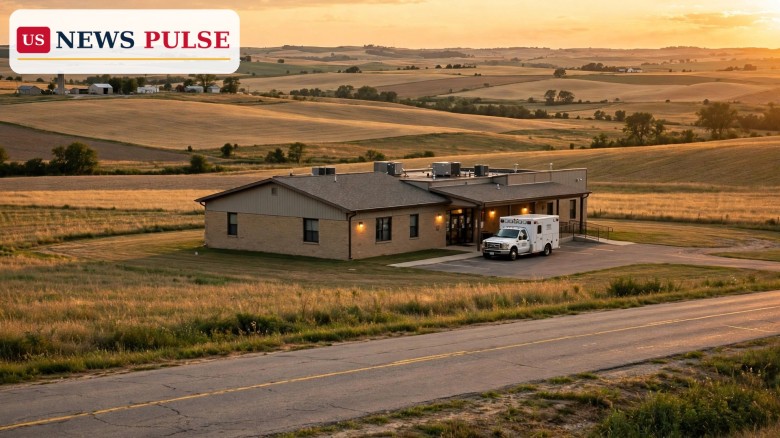
The Centers for Medicare & Medicaid Services has awarded another $10 billion in Rural Health Transformation Program funding to all 50 states, the agency announced on Monday, November 9, 2026 — even as the same law that created the programme is set to strip an estimated $137 billion from rural Medicaid care.
The second-year awards bring the total distributed so far under the five-year, $50 billion Rural Health Transformation Program to $20 billion. The programme, created by the Working Families Tax Cuts Act — also known as the One Big Beautiful Bill Act — runs through fiscal year 2030 and aims to rebuild health care in small towns and farming communities where hospitals have been closing and doctors are scarce. Every state receives a $100 million annual base payment, while the remaining $5 billion is divided by rural population and facilities, state policy actions, and progress on projects approved in year one.
Key Points
- CMS awarded $10 billion in fiscal 2027 Rural Health Transformation Program funding to all 50 states on November 9, 2026, bringing the programme total so far to $20 billion.
- Every state gets a $100 million base payment; the other $5 billion is shared out by rural population, facilities, policy actions and project progress.
- Texas received the most, nearly $282 million, and New Jersey the least, about $142.3 million; North Dakota gained the most, up $7.4 million to $206.4 million, and Florida fell the most, down $6.1 million to $203.8 million.
- KFF estimates the same law's Medicaid cuts will cost rural areas $137 billion, and experts warn the new money cannot fully offset those losses.
What Happened
The Centers for Medicare & Medicaid Services announced the second round of awards on Monday, November 9, 2026, confirming that all 50 states will share $10 billion in fiscal 2027 funding — the second instalment of a five-year, $50 billion commitment Congress built into the Working Families Tax Cuts Act.
The programme targets the parts of America where health care is hardest to reach: small towns and farming counties where the nearest hospital can be an hour's drive away and clinics struggle to recruit doctors.
CMS Administrator Dr Mehmet Oz said states have already put the first year's money to work. "States have already put these resources to work bringing better care closer to home for their rural communities," Oz said. Health and Human Services Secretary Robert F. Kennedy Jr. described the funding as giving states flexibility to design their own solutions. CMS also said states will begin more detailed quarterly reporting this month, and capped payments for otherwise unreimbursed care at 15 percent of a state's award per budget period.
Background and Context
The Rural Health Transformation Program was created as part of the same law that delivered the largest Medicaid cuts in the programme's history. Supporters present the $50 billion as a dedicated rescue fund for rural health care, while critics say it is dwarfed by the damage the same law does to the system it is supposed to save.
Rural America relies on Medicaid far more than cities do, and KFF estimates rural areas will lose about $137 billion from the law's Medicaid cuts, against a $50 billion fund over five years — barely more than a third of the cuts.
Rural Health Transformation Program: How the $10 Billion Is Divided
Half of this year's $10 billion is distributed as a flat $100 million base payment to each of the 50 states. The other half is shared out by rural population, rural facilities, state policy actions and progress on projects approved in the first round. Texas received the most, nearly $282 million, while New Jersey received the least, about $142.3 million. North Dakota posted the largest dollar increase, up $7.4 million to $206.4 million, while Florida recorded the largest decline, down $6.1 million to $203.8 million. Pennsylvania fell $2.6 million to $190.7 million. In total, 25 states gained funding and 25 received less.
About half of the $10 billion was allocated partly on scores for whether states enacted policies favoured by the Make America Healthy Again movement, according to Politico and KFF. The MAHA agenda, championed by Secretary Kennedy, emphasises nutrition and chronic disease prevention. Tying health money to those policies has drawn praise from supporters and criticism from those who say funding for struggling rural hospitals should not depend on a state's stance on unrelated questions.
Reactions and Quotes
Dr Oz struck an upbeat note, saying states "have already put these resources to work bringing better care closer to home for their rural communities." Secretary Kennedy described the funding as giving states flexibility to spend on the problems their own rural communities face. Health policy experts have been more cautious: a $50 billion fund spread over five years cannot replace $137 billion in Medicaid cuts, and rural hospital associations have warned the cuts will force more closures.
Why It Matters
For the roughly 46 million Americans who live in rural areas, this is not an abstract budget debate. It is the difference between a hospital that stays open and one that closes, between an ambulance ride of twenty minutes and one of an hour. The $10 billion will fund real projects — new clinics, recruited doctors and expanded telehealth — but it arrives in the same law that is cutting far more from the system rural health care depends on. More on the wider Medicaid story: our report on a Nebraska cancer patient who lost coverage under new Medicaid work rules and the WHO's call for governments to regulate ultra-processed foods.
What Happens Next
States will begin the more detailed quarterly reporting this month, and CMS will use those reports — along with progress on approved projects — to shape the third year of awards. States that deliver results are likely to gain; those that stall could lose funding again. The bigger question is what happens as the Medicaid cuts take hold: the $137 billion in rural losses estimated by KFF will phase in over the coming years, while the transformation fund runs through fiscal 2030 and then ends.
Frequently Asked Questions
How much rural health funding has CMS awarded so far?
CMS has now awarded $20 billion — $10 billion in year one and $10 billion in fiscal 2027 funding announced on November 9, 2026. The programme totals $50 billion over five years, through fiscal 2030.
How much does each state receive?
Every state receives a $100 million annual base payment. The other $5 billion is shared out by rural population, facilities, policy actions and project progress. Texas received the most this year at nearly $282 million, and New Jersey the least at about $142.3 million.
Does the $50 billion cover the Medicaid cuts?
No, according to KFF. The same law's Medicaid cuts are estimated to cost rural areas $137 billion — far more than the $50 billion fund — and experts warn the rural health money cannot fully offset those losses.
What is the new reporting requirement?
States will begin more detailed quarterly reporting this month, and payments for otherwise unreimbursed care are capped at 15 percent of a state's award per budget period.
© 2026 US News Pulse. All rights reserved.
 Print
 Save