
US Sends No Official Delegation to COP31 as Nearly 200 Nations Meet in Antalya
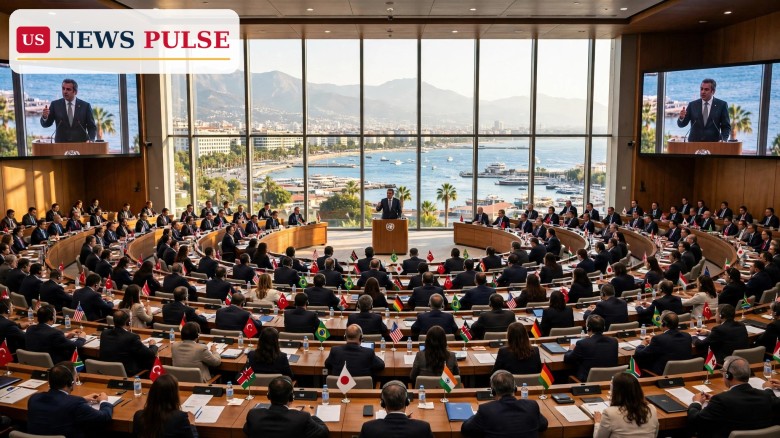
The COP31 climate summit opened in Antalya, Turkey, on Monday without the United States at the table. Nearly 200 countries sent delegations to the two-week talks, but Washington — the world’s second-largest greenhouse-gas emitter and its biggest historical polluter — sent no official federal delegation, the second year in a row American officials have stayed away from the UN’s annual climate negotiations.
Key Points
- COP31 opened on Monday, November 9, 2026, in Antalya, Turkey, and runs through Friday, November 20, with delegations from nearly 200 countries.
- The United States sent no official federal government delegation, the second successive year without American officials at the talks, after President Donald Trump withdrew the US from the Paris Agreement for a second time and from the UN Framework Convention on Climate Change.
- A White House official defended the position on Monday, criticising international climate policies as economically damaging.
- A congressional delegation is expected to attend, and more than 100 American state and local leaders, plus business and community representatives, are taking part independently through groups such as America Is All In and Climate Mayors.
- The summit marks 10 years since the Paris Agreement entered into force; the UN warns temperatures are on course to exceed 1.5C above pre-industrial levels.
What Happened
COP31 opened on Monday at the ANFAS Antalya Expo Center on Turkey’s Mediterranean coast, with negotiations running for two weeks and a World Leaders’ Summit on November 11–12. Delegations from nearly 200 countries are negotiating the next steps in the global effort to slow climate change, a decade after the Paris Agreement entered into force.
The absence was confirmed as the talks began: no federal officials were listed on the US delegation, and no senior administration figure was scheduled to speak. A White House official defended the decision on Monday, arguing international climate policies damage the economy.
The United States is not entirely unrepresented. A congressional delegation is expected, and more than 100 American state and local leaders, plus business and community representatives, are taking part independently through networks such as America Is All In and Climate Mayors — a split that has defined American climate diplomacy in recent years: while the federal government stays away, governors, mayors and companies still show up.
Background: America’s Second Exit From the Climate Table
The empty American chair at COP31 is the result of a deliberate policy choice, not an oversight. President Trump withdrew the United States from the Paris Agreement during his first term, the country rejoined under President Joe Biden, and Mr Trump withdrew it again after returning to office. It then went further, withdrawing from the UN Framework Convention on Climate Change itself — the 1992 treaty that created the annual COP meetings.
That makes the United States the only major economy formally outside the framework governing the talks. Washington has no seat in the negotiating rooms where the rules for climate finance, emissions reporting and adaptation support are written, even though the US remains the world’s second-largest emitter of greenhouse gases today and the largest cumulative emitter in history.
COP30 in Brazil last year was the first summit without American officials; COP31 is the second in a row. The absence is felt most sharply in finance talks, where developing countries are pressing wealthy nations for far more adaptation support — and the world’s largest economy is not at the table to answer.
COP31 Climate Summit: From Pledges to Implementation
COP31 president Murat Kurum, Turkey’s environment minister, has framed the summit’s goal as moving from pledges to implementation. The formal agenda is paired with an Action Agenda covering methane cuts, adaptation and climate-resilient cities, while negotiators work toward agreement on a plan to increase electricity’s share of global energy use and revive stalled efforts to move away from fossil fuels.
Australia’s Chris Bowen is presiding over the talks, which mark 10 years since the Paris Agreement entered into force. The UN has warned the world is on course to exceed 1.5C above pre-industrial levels, a threshold scientists say would bring far more dangerous heatwaves, floods and crop failures.
The backdrop is grim. A UN report released as COP31 opened found 2026 is on track to be one of the four hottest years on record, and a separate scientific assessment projected fossil-fuel emissions would fall only slightly this year, leaving the remaining carbon budget for 1.5C at less than four years at current rates.
Reactions
The White House position drew a familiar divide. Administration officials argue international climate agreements impose costs on American workers and industry without binding other large emitters tightly enough, and that the US can cut emissions through domestic energy policy.
Climate advocates and many of the American state and local leaders in Antalya take the opposite view. They argue the absence hands influence to rivals — above all China, which sent a senior delegation led by Vice-President Han Zheng — and leaves American businesses without a voice in rules that will shape clean-energy markets for decades.
UN Secretary-General António Guterres, who called the talks a “moment of truth” before they opened, has warned every country must do more, and do it now.
Why It Matters
The United States is not just another delegation. It is the world’s second-largest emitter, its largest historical polluter, and traditionally the largest contributor to climate finance for developing nations. When Washington stays home, the finance talks lose their biggest potential payer.
The absence also matters for the politics of the summit. Climate negotiations run on consensus, and the countries that show up write the rules. With the US outside the room, China, the European Union and host country Turkey carry more weight in shaping the outcome.
What Happens Next
The World Leaders’ Summit on November 11–12 will set the political tone before negotiators settle into detailed bargaining until November 20. The key tests are whether countries can agree on a plan to expand clean electricity and on new finance commitments for developing nations.
The congressional delegation’s arrival will be watched as the only formal American political presence at the summit. But the larger question is whether the US absence becomes permanent. If the administration’s position holds, COP32 will open next year with the same empty chair.
Frequently Asked Questions
Why is the US not at COP31?
President Donald Trump withdrew the United States from the Paris Agreement for a second time and from the UN Framework Convention on Climate Change, so no official federal delegation was sent.
When and where is COP31?
COP31 opened on Monday, November 9, 2026, in Antalya, Turkey, and runs through Friday, November 20, with a World Leaders’ Summit on November 11–12.
Are any Americans attending COP31?
Yes — a congressional delegation is expected, and more than 100 state and local leaders, plus business representatives, are attending independently.
What is COP31 trying to achieve?
They seek to expand clean electricity, move away from fossil fuels, and strengthen climate finance and adaptation support for developing countries.
What is the 1.5C warning about?
The UN warns global temperatures are on course to exceed 1.5C above pre-industrial levels, a threshold scientists say would bring far more dangerous heatwaves, floods, droughts and crop failures.
© 2026 US News Pulse. All rights reserved.
 Print
 Save