


 | Today's Date:




Hottest Year on Record: 2026 Among the Four Warmest Ever, UN Report Says
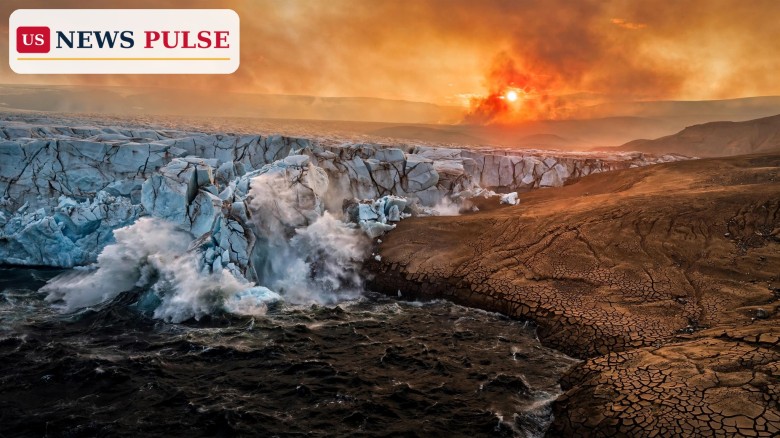
The world is on course for one of the four hottest years since modern records began, the United Nations said on Monday, 9 November 2026, as climate talks opened in Turkey. The World Meteorological Organization's annual State of the Global Climate report found that the global average temperature between January and September was 1.47 degrees Celsius above the pre-industrial average, and warned that the final figure could climb higher as a major El Niño develops.
Every one of the past 12 years, including 2026, now ranks among the 12 warmest ever recorded since measurements began around 1850, while ocean temperatures kept rising from their 2025 record highs and sea levels hit a new record as glaciers and ice sheets melt.
Key Points
- The WMO's State of the Global Climate report, released on 9 November 2026 as the COP31 climate talks opened in Antalya, Turkey, says 2026 is on track to be one of the four hottest years on record.
- From January to September 2026, the global average temperature was 1.47C above the pre-industrial average, and a major El Niño could push the full-year figure higher.
- Each of the past 12 years ranks among the 12 warmest ever recorded since records began around 1850.
- Ocean temperatures kept rising from their 2025 all-time highs, and global mean sea levels reached a record this year as glaciers and ice sheets melt.
- The EU's Copernicus service had already said 2026 was all but certain to become the second calendar year after 2024 to pass the 1.5C Paris Agreement threshold.
What Happened
The report landed on the opening day of COP31, the UN climate conference running from 9 to 20 November in Antalya, Turkey. It sets the scientific baseline for two weeks of talks on emissions cuts, climate finance and help for countries already coping with rising seas and extreme heat.
The WMO drew on data from national weather services, satellite records and ocean monitoring networks. Its January-to-September average of 1.47C above the 1850-1900 baseline leaves 2026 among the four warmest years on record, and the final ranking could still move as a major El Niño builds in the Pacific. The report also confirmed that global mean sea levels reached a record this year, driven by expanding warm water and glacier meltwater.
Background/Context
The 1.5C figure is the line the world agreed not to cross. Under the 2015 Paris Agreement, countries pledged to hold warming well below 2C above pre-industrial levels and to pursue efforts to limit it to 1.5C. In 2024 the planet passed 1.5C for a full calendar year for the first time, and the EU's Copernicus Climate Change Service says 2026 is now all but certain to become the second year to do so. Scientists stress one year above 1.5C does not breach the long-term goal, measured over decades, but each year above the line makes it harder to hold.
The warming has been relentless rather than sudden. Twelve consecutive years now sit inside the twelve warmest on record, a streak unbroken since 2015. Behind it sit slower, heavier changes: oceans absorbing most of the extra heat trapped by greenhouse gases, sea levels rising year after year, and glaciers retreating on every continent.
Hottest Year on Record: What 1.47 Degrees Means
The 1.47C figure measures the world against the climate of 1850 to 1900, the period scientists use as a stand-in for the time before large-scale fossil-fuel burning. It averages thousands of readings from land stations, ships, buoys and satellites. That the nine-month average sits just 0.03C below 1.5C shows how close the planet runs to a limit meant to be a distant guardrail.
The heat does not stay in the air. The oceans have absorbed most of the extra energy trapped by greenhouse gases, and warm water takes up more space, lifting sea levels even before a single glacier melts. Add meltwater from shrinking glaciers and ice sheets, and the result is this year's record sea level. Higher seas mean higher storm surges, saltier farmland and more frequent coastal flooding.
Reactions/Quotes
John Kennedy, the WMO's head of climate information, said the evidence was unambiguous. "Every indicator here is telling the same story. We're seeing the heat trapped by greenhouse gasses is showing up in the ocean, in the atmosphere, in the melting of ice and the rising of sea levels," he said. The message, he suggested, is not in any single record but in all of them agreeing at once.
The timing was deliberate. By publishing on COP31's first day, the WMO handed negotiators a fresh, authoritative picture of the climate they are trying to protect. The Antalya talks will test whether governments can turn that picture into faster emissions cuts and more adaptation money for the countries hit hardest.
Why It Matters
For the United States, the numbers already have concrete shapes. Warmer oceans fuel stronger hurricanes and heavier rain, and higher seas push king tides further onto streets in Florida and California. Heat is now among the deadliest weather hazards in the country, and the toll climbs yearly.
Every fraction of a degree counts. The difference between 1.47C and 1.5C is small on a thermometer, but it is the difference between heatwaves that strain power grids and ones that break them, between floods that recede and floods that stay. The WMO's report is a reminder that the climate is not waiting for the negotiations to finish.
What Happens Next
COP31 continues in Antalya until 20 November, with new pledges on emissions and finance due. The WMO will confirm the final 2026 ranking early in 2027, and scientists will watch the Pacific: a stronger El Niño could see 2027 challenge the records of 2024 and 2026. For now, the verdict stands: the planet has just lived through one of its hottest years, and the heat is not letting up.
Frequently Asked Questions
How hot was 2026 so far? From January to September, the global average temperature was 1.47C above the pre-industrial average, putting 2026 on track to be one of the four hottest years on record.
Is 2026 the hottest year ever? No. It ranks among the four warmest years on record, but 2024 remains the warmest year ever recorded and the first calendar year to pass 1.5C above pre-industrial levels.
What is the 1.5C Paris threshold? Under the 2015 Paris Agreement, countries aim to keep warming well below 2C and limit it to 1.5C. One year above 1.5C does not breach the long-term goal, which is measured over decades.
What is El Niño, and why does it matter here? El Niño is a periodic warming of Pacific Ocean waters that can add heat to global temperatures. The WMO says a major El Niño could push 2026's final average higher still.
When will the final 2026 ranking be known? The WMO will confirm it early in 2027, once complete data from the final months have been collected and checked.
Read more on US News Pulse: Climate Health Emergency: Lancet Warns Heat Deaths Hit Record 710,000 in 2023 and Record King Tides Flood California and Florida Coasts in Historic Week and Four Corners Flood Risk: Moderate Risk Warning for November 1 Heavy Rain.
Leave a Comment