
USS George H.W. Bush Deployment Extended to 12 Months as Iran War Drags On
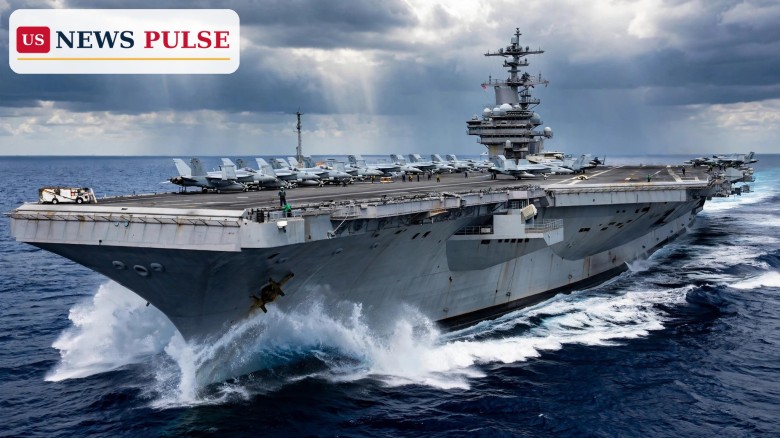
The United States Navy has warned the families of sailors aboard the aircraft carrier USS George H.W. Bush to prepare for a deployment that could stretch to a full year, telling about 500 relatives at Naval Station Norfolk that the ship will not be coming home for the holidays. The warning, given at a town hall on November 9, is the second extension since the strike group left Virginia on March 31 for a routine six- to seven-month deployment.
For the roughly 7,000 service members in the strike group, the news confirmed what many had suspected. The ship reached the Middle East in April to relieve the USS Gerald R. Ford and enforce the American naval blockade of Iran, and it has flown more than 8,000 sorties from the North Arabian Sea. Its commanding officer, Captain Justin Issler, told sailors to plan for a worst-case scenario of 12 months at sea.
Key Points
- The Navy told about 500 family members at a November 9 town hall in Norfolk to prepare for a possible 12-month deployment of the USS George H.W. Bush strike group.
- The carrier will not return for the holidays; it is the second extension since the group left Norfolk on March 31, 2026.
- Captain Justin Issler told sailors to plan for a worst-case 12 months at sea; the final decision rests with Defence Secretary Pete Hegseth.
- The strike group of about 7,000 has flown more than 8,000 sorties enforcing the US naval blockade of Iran.
- Families voiced anger over harsh conditions aboard: food shortages, broken equipment and mental health struggles.
What Happened
Acting Secretary of the Navy Hung Cao acknowledged the strain on families, especially children waiting for parents to return. Admiral Karl Thomas, commander of US Fleet Forces Command, said the decision was so recent it had not yet entered the orders book. Admiral James Kilby, the vice chief of naval operations, said the final decision on deployment timelines rests with Defence Secretary Pete Hegseth.
Rear Admiral Todd Cimicata, commander of the strike group, was candid about the uncertainty. "We don't know because the world gets a vote for when we're going to come back," he said. The group was scheduled for a standard six- to seven-month tour.
Background: A Deployment That Was Supposed to End in the Autumn
When the George H.W. Bush left Norfolk in late March, the war with Iran was barely a month old. The conflict began on February 28, 2026, and the carrier was rushed to the region to anchor the American naval blockade of Iran. Its air wing has flown combat missions around the clock ever since.
No replacement is ready to take its place, and the administration has been building up American naval power in the region rather than drawing it down. In late October, President Donald Trump ordered a third carrier strike group, led by the USS Theodore Roosevelt, toward the Middle East, the largest American naval surge since the 2003 invasion of Iraq. Vice President JD Vance said earlier in November that Washington has made progress in talks with Iran and set no strict deadline for a deal.
USS George H.W. Bush Deployment Strains Sailors and Families
The human cost of the extension has been the sharpest part of the story. Families at the town hall voiced anger about conditions aboard the ship, including food shortages, broken equipment and mental health struggles among the crew. The complaints point to a deeper problem: a warship built for a six-month cruise is being asked to sustain combat operations for twice as long.
Long deployments are among the hardest strains in military life. Children grow up while a parent is away, and an open-ended tour makes planning impossible. The Navy's refusal to give a firm return date was itself an admission that it cannot yet say when the ship will come home.
Reactions and Quotes
The most striking words at the town hall came from Rear Admiral Todd Cimicata, who told families plainly that the return date is out of the Navy's hands. "We don't know because the world gets a vote for when we're going to come back," he said. It set the tone for the meeting: no promises, no firm date, only preparation for the worst case.
Captain Justin Issler gave sailors the same guidance. Acting Secretary Hung Cao acknowledged the burden on children waiting for parents to return. Admiral Karl Thomas said the decision was so recent it had not yet entered the orders book, and Admiral James Kilby said the final call belongs to Defence Secretary Pete Hegseth.
Why It Matters
The possible 12-month deployment is a measure of how far the war with Iran has moved beyond the quick campaign many expected when it began in February. A carrier that was supposed to be home by the autumn is now being prepared for a full year at sea, while the Navy sends a third carrier to the region. That is the shape of a long war, not a short one.
The strain is cumulative: every month the Bush stays at sea wears on the ship, its aircraft and its crew. The town hall was a warning to the country as well: the war is not ending soon, and its costs are still rising.
What Happens Next
The final decision on how long the George H.W. Bush stays at sea rests with Defence Secretary Pete Hegseth, and the Navy says the decision is still moving through the official orders process. Until then, families have been told to plan for the worst case: a 12-month deployment keeping the strike group in the region into the spring of 2027.
Two things will shape that decision: the war and the negotiations with Iran, where officials have reported progress but no deal; and the condition of the ship and its crew.
Frequently Asked Questions
How long has the USS George H.W. Bush been deployed?
The strike group left Norfolk on March 31, 2026, for a standard six- to seven-month deployment. It has been extended twice, and families have been told to prepare for a possible 12 months at sea.
Why is the deployment being extended?
The carrier is enforcing the US naval blockade of Iran and flying combat sorties in the war that began on February 28, 2026. With the war in its ninth month, the Navy has kept the ship in the region.
How many service members are in the strike group?
About 7,000 service members, including roughly 4,500 sailors aboard the carrier. The ship has flown more than 8,000 sorties since arriving in the North Arabian Sea.
When will the ship return to Norfolk?
There is no firm return date. Families have been told to plan for a worst-case scenario of 12 months at sea, and the final decision rests with Defence Secretary Pete Hegseth.
What conditions have families complained about?
Families have voiced anger over harsh conditions aboard, including food shortages, broken equipment and mental health struggles.
Read more: Trump sends third aircraft carrier strike group toward the Middle East and Oil prices rise after reported US strike on Iran's Qeshm Island.
© 2026 US News Pulse. All rights reserved.
 Print
 Save