


 | Today's Date:




Oil Prices Rise After Reported US Strike on Iran's Qeshm Island
Oil prices rose in early Asian trading on Tuesday after a reported United States strike on Iran's Qeshm Island put a fresh risk premium back into world crude markets. Brent crude futures climbed 48 cents, or 0.5%, to $105.25 a barrel by 0104 GMT, while United States West Texas Intermediate crude gained 47 cents, or 0.5%, to $96.93 a barrel, according to Reuters. The move came hours after the Wall Street Journal reported, citing US officials, that the United States had struck Qeshm Island, and it partly reversed a steep fall on Monday, when Brent settled $8.66, or 7.63%, lower at $104.77 a barrel.
Key Points
- Brent crude rose 48 cents to $105.25 a barrel and WTI rose 47 cents to $96.93 in early Asian trade on Tuesday, November 3, 2026.
- The rebound followed a Wall Street Journal report that the United States struck Iran's Qeshm Island, near the Strait of Hormuz.
- Brent had settled $8.66, or 7.63%, lower on Monday at $104.77, after markets leaned toward a diplomatic path with Tehran.
- US officials described the reported strikes as defensive, aimed at preventing Iran from attacking commercial shipping in the Strait of Hormuz.
- Tehran said on Monday that contacts with Washington to end their war were continuing, after Qatari-mediated talks ended without a breakthrough.
What Happened
Reuters reported the early Tuesday price moves after the Journal's account of the Qeshm strike circulated in Asian markets. Traders who had spent Monday pricing in a greater chance of diplomacy suddenly had to price in the opposite risk: that military action around the Strait of Hormuz could continue, or widen, even as negotiators keep talking. The result was a modest rise, not a surge, which itself tells a story. Markets were unsettled, but they were not yet signalling a prolonged supply shock.
The numbers matter because of where they started. Brent ended October at its highest level in six months, Reuters noted, on concern that the Middle East conflict could escalate again after Tuesday's US midterm elections. Monday's sharp fall then took Brent back to $104.77. Tuesday's early gain to $105.25 restored only a small part of that drop. In other words, the market on Tuesday morning was still well below its late-October highs, but it had stopped falling and turned, at least for the first hours of Asian trading.
Background: Qeshm, Hormuz and an Eight-Month War
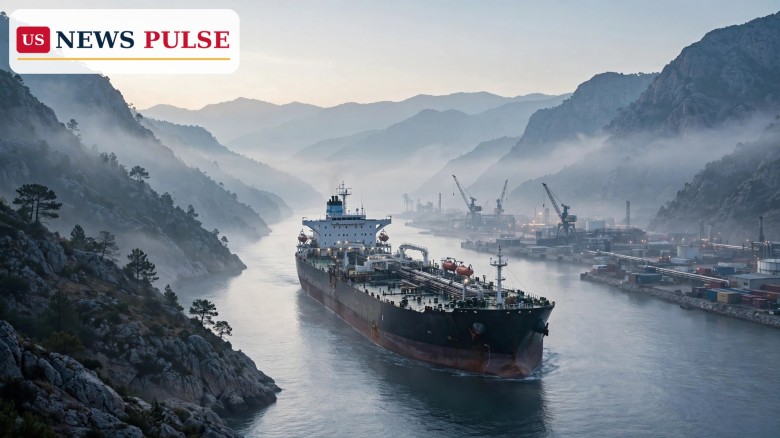
Qeshm Island sits at the mouth of the Strait of Hormuz, the narrow passage between Iran and Oman that carries tankers from Gulf producers to the rest of the world. Reuters noted that the strait previously carried about a fifth of global crude oil and natural gas supplies. That share is why a single island, and a handful of explosions reported there, can move prices on the other side of the world before most Americans have woken up.
The US-Iran conflict began in late February 2026 and has sharply reduced traffic through the strait, according to Reuters. US News Pulse reported on Monday that the Journal, citing US officials, described the Qeshm action as part of a series of limited strikes in recent weeks, aimed at securing the strait. Iranian state media reported five explosions on Qeshm and blasts in the nearby port city of Bandar Lengeh, while US Central Command did not immediately comment and Iranian authorities had not confirmed a strike or an attacker.
Oil Prices Rise After Qeshm Strike Report
The clearest market explanation on Tuesday came from Tim Waterer, chief market analyst at KCM Trade, quoted by Reuters. "The report added a degree of risk premium back into the oil price. Just when markets were starting to price in a more diplomatic path, this reminder of ongoing military activity has flipped the tone," Waterer said. A risk premium, in plain terms, is the extra amount buyers are willing to pay for oil today because tomorrow's supply looks less certain.
The timing adds to the sensitivity. Brent ended October at a six-month high precisely because traders worried the conflict could escalate again after Tuesday's midterm elections. Energy costs are also politically charged in the United States. Reuters noted that the Iran war is a leading cause of high gasoline prices weighing on voters, and that Trump is under pressure to end the conflict. A sustained rise in crude would make that political problem harder; a fall would ease it. Tuesday's modest rise, on its own, does neither decisively.
Reactions and Quotes
Beyond Waterer's market comment, the official reactions so far have been measured, and in some cases absent. US Central Command did not immediately comment on the reported Qeshm strike. Iranian authorities had not confirmed the cause of the explosions reported on the island. That silence leaves the central facts of the strike itself — what was hit, and with what effect — still unconfirmed in public, even as markets react to the report.
On diplomacy, the signals were more open. Trump said on Monday that a deal with Tehran "could happen", while also raising doubts about resuming strikes. Tehran, for its part, said contacts to end the war were continuing. The two messages are not contradictory: negotiators can keep talking while military planners keep acting, and markets must weigh both at once. That dual track is exactly what Tuesday's trading reflected — a small premium for danger, layered over a larger hope for a settlement.
Why It Matters
For most readers, the importance of Tuesday's oil move is not the 48 cents itself. It is what the move reveals about fragility. A war that has already cut traffic through Hormuz, a strait that once carried a fifth of the world's crude and gas, can still push prices with a single unconfirmed report. Households do not buy Brent crude, but they buy petrol, heating oil, flights and food transported by fuel, so a prolonged rise would eventually reach family budgets.
For voters, the link is direct and immediate. The midterm elections fall on Tuesday, November 3, and Reuters explicitly tied high gasoline prices to voter sentiment and to pressure on Trump to end the Iran conflict. Energy prices rarely decide an election alone, but when they are high, they colour how voters judge the economy as a whole. A market that keeps swinging on Hormuz headlines is therefore a political story as much as a business one.
What Happens Next
The next test will come when European and then American trading opens, and traders in London and New York weigh the same report that moved Asian markets. If the early gains hold or grow, it will suggest the risk premium is sticking. If they fade, it will suggest Asian traders overreacted to a report that neither Washington nor Tehran has fully confirmed. Either way, the direction will be set less by Tuesday's opening prices than by what officials say next.
Diplomatically, the questions are whether the Qatari-mediated contacts produce a concrete proposal, whether Tehran's altered proposals narrow the gap with Washington, and whether either side clarifies what happened on Qeshm. A confirmed strike, a denial, or a detailed damage assessment would each move the market differently. So would any sign that shipping through Hormuz is being disrupted, or, conversely, that it is returning toward normal.
Frequently Asked Questions
Why did oil prices rise on Tuesday? Reuters reported that Brent and WTI rose in early Asian trade after the Wall Street Journal reported a US strike on Iran's Qeshm Island, adding a risk premium back into prices after Monday's fall.
How much did oil rise? Brent rose 48 cents, or 0.5%, to $105.25 a barrel by 0104 GMT, and WTI rose 47 cents, or 0.5%, to $96.93 a barrel.
Why did oil fall so sharply on Monday? Brent settled $8.66, or 7.63%, lower at $104.77 on Monday, as markets leaned toward a diplomatic path with Tehran before the Qeshm report emerged.
What is the Strait of Hormuz and why does it matter? It is the narrow waterway between Iran and Oman through which tankers carry Gulf oil to the world; Reuters noted it previously carried about a fifth of global crude oil and natural gas supplies.
Has the Qeshm strike been officially confirmed? Not in the sources read for this article: US Central Command did not immediately comment, and Iranian authorities had not confirmed a strike or an attacker.
Related coverage on US News Pulse: US strikes Iran's Qeshm Island in secret raids near Hormuz, WSJ reports; Wall Street closes mixed Monday as Dow rises on tech sell-off; Ukraine-Russia peace talks set for Abu Dhabi on Nov 10-11 as US mediates.
Leave a Comment