
Ten Killed in Guinea Gold Mining Clashes After Artisanal Ban Sparks Violence
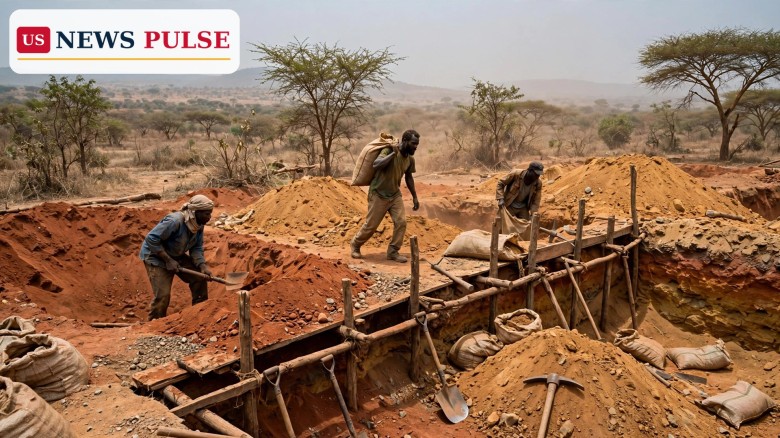
Ten people were killed and 13 injured in violent clashes in Guinea’s gold-producing Siguiri region after security forces moved to enforce the country’s ban on artisanal gold mining, the Ministry of Territorial Administration said late on Thursday, November 13, 2026. Five of the dead were foreign nationals, according to the ministry’s provisional figures, which did not name their nationalities. The ban, imposed on November 2, has already forced tens of thousands of miners into Mali and Burkina Faso.
Key Points
- Ten people were killed and 13 injured in clashes in Guinea’s Siguiri region on Wednesday, November 12, 2026.
- Five of the dead were foreign nationals, but the ministry did not name their nationalities.
- The violence broke out as security forces enforced Guinea’s ban on artisanal gold mining, imposed on November 2, 2026.
- Authorities say miners’ failure to follow regulations polluted farmland, rivers and vegetation.
- Around 100,000 people have arrived in Mali’s capital Bamako and nearly 60,000 more in Kouremale after being forced to leave Guinea, while Burkina Faso says it has repatriated 45,406 citizens.
What Happened
Siguiri, in northeastern Guinea, is one of the country’s main gold-producing areas, and artisanal mining has long been a lifeline for local families and for migrant workers from across West Africa. On Wednesday, security forces were in the region to check that the mining ban, announced on November 2, was being carried out. The ministry said protesters erected barricades on public roads, the confrontation escalated, and shots were exchanged.
By the time the ministry issued its statement late on Thursday, ten people had been confirmed dead and 13 injured. The figures are provisional. It did not say whether any security forces were among the casualties or whether arrests had been made. The government has not said who fired first, and no independent account of the confrontation has yet been published.
Background: Gold, Livelihoods and a Ban
Guinea is rich in gold, bauxite and iron ore, and mining is central to its economy. Alongside large industrial mines, artisanal and small-scale gold mining supports hundreds of thousands of people, many of them working informally with hand tools, mercury and shallow pits. In Siguiri, whole communities depend on the trade, from the diggers themselves to the traders, transporters and shopkeepers who serve the mining camps.
The government imposed the ban on artisanal gold mining in Siguiri on November 2, 2026, saying miners had failed to comply with regulations and had caused environmental damage, including the pollution of agricultural land, rivers and vegetation. But enforcement is a blunt tool where few alternative livelihoods exist, and the ban has displaced large numbers of people in days.
The Guinea Gold Mining Ban and Its Fallout
The human cost of the ban is already visible across Guinea’s borders. Mali said last week that around 100,000 people had arrived in the capital, Bamako, and nearly 60,000 more in the border town of Kouremale after being forced to leave Guinea when the ban was announced.
Burkina Faso said on Friday, November 13, that it had repatriated 45,406 of its citizens forced to leave Guinea because of the ban. The displacement also carries a political charge: governments in Bamako and Ouagadougou are now dealing with the consequences of a decision taken in Conakry, and the deaths in Siguiri add a new grievance to an already tense situation.
Reactions and Statements
The Ministry of Territorial Administration’s statement is so far the main official account of the violence. It said the clashes occurred as security forces were verifying implementation of the ban, and that the situation escalated after protesters erected barricades on public roads. The ministry gave the provisional toll of ten dead and 13 injured, including five foreign nationals, but offered no further detail on the circumstances of the shooting or on any inquiry into the deaths.
Neighbouring governments have so far responded to the displacement rather than to the killings. Mali’s figures on arrivals in Bamako and Kouremale and Burkina Faso’s repatriation count were released before the Siguiri deaths were confirmed, and neither government had publicly commented on the clashes when the ministry’s statement was published. Reuters, which first reported the ministry’s statement, noted that the figures could not be independently verified.
Why It Matters
The Siguiri deaths matter first because ten people were killed in a dispute over how a mining ban is enforced, and five of them were foreign nationals whose families may still not know what happened. The violence shows the risks of enforcing a sweeping ban where mining is the main source of income and the people most affected have few other options.
It matters, too, because of the scale of the displacement. Around 160,000 people arriving in Mali and more than 45,000 repatriated to Burkina Faso in less than two weeks is a humanitarian challenge in its own right, and it could strain relations between Guinea and its neighbours if the returns are handled badly.
What Happens Next
The immediate question is whether the death toll will rise. The ministry described its figures as provisional, and more information is expected as officials reach the affected mining sites and hospitals report on the injured. The identities and nationalities of the five foreign nationals are also likely to emerge in the coming days, and their governments may then respond directly.
Enforcement of the ban is expected to continue, and the key question is whether the government will pair it with support for displaced miners or with dialogue with mining communities. Without either, further confrontations are possible, particularly in Siguiri and other gold-producing areas.
Frequently Asked Questions
What happened in Siguiri, Guinea?
Ten people were killed and 13 injured in clashes on Wednesday, November 12, 2026, when security forces enforcing Guinea’s ban on artisanal gold mining confronted protesters who had erected barricades on public roads. The toll is provisional, according to the Ministry of Territorial Administration.
Why did Guinea ban artisanal gold mining?
The government imposed the ban in Siguiri on November 2, 2026, saying miners had failed to comply with regulations and had caused environmental degradation, including pollution of agricultural land, rivers and vegetation.
Who were the people killed?
Ten people died, including five foreign nationals. The ministry did not specify the foreigners’ nationalities, and no names have been released. Thirteen people were injured.
How many people have been displaced by the ban?
Mali said around 100,000 people had arrived in Bamako and nearly 60,000 more in Kouremale after being forced to leave Guinea. Burkina Faso said it had repatriated 45,406 of its citizens.
What happens next?
Officials are expected to confirm the final casualty figures and the identities of the dead, while enforcement of the ban continues. Neighbouring countries are managing the return of tens of thousands of displaced miners, and the risk of further clashes remains if no support or dialogue follows.
Related coverage: UN Begins Liquidating Western Sahara Mission After 35 Years as Guterres Warns of Escalation; Europe Wins a Seat at Ukraine Peace Talks as EU Agrees E5 Team for Negotiations; Guinea-Bissau Vaccine Trial Cancelled After ‘Unethical’ Outcry Over Newborn Study.
© 2026 US News Pulse. All rights reserved.
 Print
 Save