
More Than 2,500 Flights Canceled Saturday as Airlines Dig Out From Ground Stop
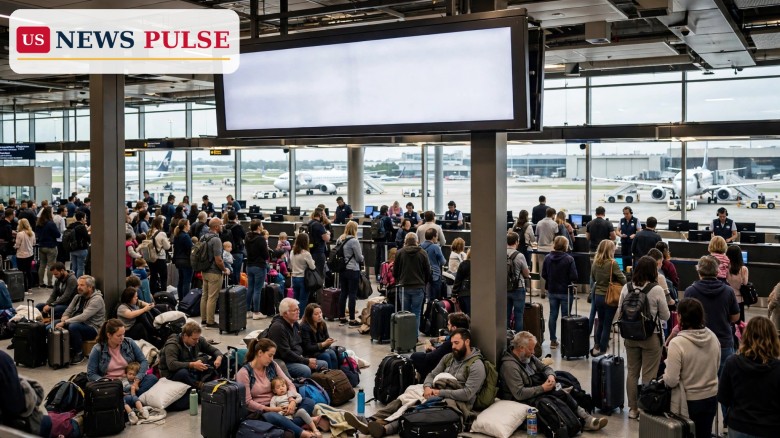
More than 2,500 flights were canceled across the United States on Saturday, November 14, 2026, as airlines struggled to recover from the Federal Aviation Administration's nationwide ground stop the night before. Hundreds more were delayed as carriers worked to reposition aircraft and crews left in the wrong cities. The disruption capped a chaotic 24 hours for American air travel: Friday's stoppage lasted more than four hours — the longest nationwide ground stop in 25 years — and stranded over a million passengers.
The ground stop was lifted at about 8:15 p.m. ET Friday, but the damage was already done. Planes sat on the ground, crews had run out of legal flying hours, and Friday night's passengers were still waiting for a seat on Saturday morning. Airlines warned the knock-on effects would take days to clear.
Key Points
- More than 2,500 flights were canceled on Saturday, with hundreds more delayed, as airlines recovered from Friday's ground stop.
- Flightradar24 counted more than 4,700 cancellations and 10,000 delays on Friday, with at least 827 flights diverted.
- The FAA lifted its nationwide ground stop at about 8:15 p.m. ET Friday after more than four hours — the longest in 25 years and the first since January 2023.
- Officials said new technology added to the air traffic control system overloaded antiquated equipment, causing communications and radar gaps at all 22 control centers.
- Homeland Security Secretary Markwayne Mullin said there was "no evidence of a cyberattack," and Transportation Secretary Sean Duffy said recovery would take days but should be complete before the Thanksgiving rush.
What Happened
The trouble began on Friday afternoon, when the FAA ordered a nationwide ground stop that brought departures to a standstill. About 11,000 flights carrying more than 1.5 million passengers had been scheduled to depart after 4 p.m. ET, and many never left the gate. At least 827 flights were diverted mid-journey, landing far from their destinations and leaving passengers to find another way home.
By Saturday morning the problem had changed shape. The skies were open, but the system was out of place: aircraft sat in the wrong cities and crews delayed on Friday had timed out under federal rest rules. Airlines canceled more than 2,500 Saturday flights as they rebuilt their schedules, and hundreds more departed hours late. At airports across the country, travelers spent the night on terminal floors or queued for hours at rebooking desks, while sports teams scrambled for alternate transport to weekend games.
Background and Context
A nationwide ground stop is one of the rarest measures in US aviation. The last one came in January 2023, when a computer failure knocked out the system that sends safety alerts to pilots. Friday's stoppage was different: it was not a single system that failed, but a breakdown in the communications and radar links controllers rely on to keep aircraft separated.
Trump administration officials said the trigger was new technology being added to the air traffic control system. The new equipment overloaded the antiquated hardware it was meant to replace, producing intermittent communications and radar gaps at all 22 of the FAA's Air Route Traffic Control Centers. When controllers could no longer be sure they could see and talk to every aircraft, the only safe option was to stop departures.
Flight Cancellations Saturday: The Scale of the Disruption
Saturday's tally of more than 2,500 canceled flights made it one of the worst days for US air travel this year, even though the ground stop had ended the night before. Hundreds of additional flights were delayed, many by hours, and thousands of rebooked passengers found themselves bumped again as airlines juggled aircraft and crew assignments.
Recovery is slow because the system has no slack. An aircraft that missed its Friday evening flight cannot simply pick up its Saturday schedule; it must be flown to wherever its next departure begins. Crews face the same problem, and federal rules limit how long they can work before resting. Each canceled flight creates two or three more problems, which is why airlines warned normal operations would take days to restore. With the Thanksgiving travel rush less than two weeks away, the timing could hardly have been worse for travelers.
Reactions and Quotes
Transportation Secretary Sean Duffy blamed old hardware and overloaded routers, and said the FAA's new artificial intelligence system did not cause it. He warned recovery would take days, but said operations should be back to normal in time for the Thanksgiving rush — a promise that will now be tested.
Homeland Security Secretary Markwayne Mullin moved quickly to rule out foul play, saying there was "no evidence of a cyberattack" and no link to the Microsoft outage that hit the same week. He also pointed to what did go right: more than 3,000 flights landed safely during the disruption, he said, even as departures were halted nationwide. That leaves open how a modernization effort meant to make the system safer managed to bring it down.
Why It Matters
This was not a storm or a computer glitch that can be shrugged off. A nationwide ground stop is the aviation equivalent of pulling the emergency brake on the entire country, and it happened because the system that keeps planes apart could not be trusted to work. The fact that it lasted more than four hours — the longest in a quarter of a century — shows how fragile the infrastructure underneath American air travel has become, just as tens of millions of Americans prepare to fly for Thanksgiving. If the recovery slips, the busiest travel week of the year could begin with the system already under strain.
What Happens Next
Airlines will spend the next several days working through the backlog, repositioning aircraft and crews and rebooking stranded passengers. The FAA faces questions about the technology rollout officials say triggered the failure, and about whether the new equipment should have been connected to the live system at all. Travelers with flights booked in the next week should check their status and allow extra time at the airport. For the full story of Friday's stoppage, read our report on the FAA nationwide ground stop that halted all US flights for four hours, and for the government's response, see our coverage of Trump declaring the air traffic control crisis a national emergency and seeking $50 billion.
Frequently Asked Questions
How many flights were canceled on Saturday? More than 2,500 flights were canceled across the United States on Saturday, November 14, 2026, with hundreds more delayed.
Why were the flights canceled? Airlines were recovering from Friday evening's FAA ground stop, which left aircraft and crews out of position.
How long did the ground stop last? The stop lasted more than four hours and was lifted at about 8:15 p.m. ET on Friday, making it the longest nationwide ground stop in 25 years.
What caused the ground stop? Officials said new technology added to the air traffic control system overloaded antiquated equipment, causing communications and radar gaps at all 22 control centers.
Was it a cyberattack? No. Homeland Security Secretary Markwayne Mullin said there was no evidence of a cyberattack and no link to the Microsoft outage.
© 2026 US News Pulse. All rights reserved.
 Print
 Save