


 | Today's Date:





Trump Declares Air Traffic Control Crisis a National Emergency, Seeks $50 Billion
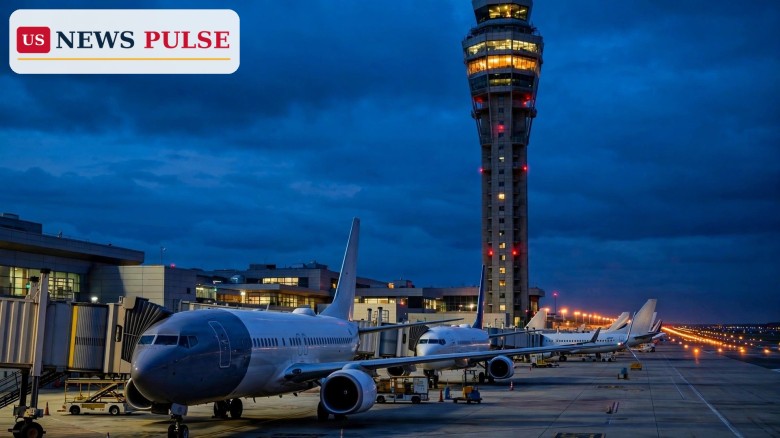
President Donald Trump has declared the failures of America's air traffic control system a "national emergency", hours after a nationwide ground stop paralysed US aviation Friday, as Transportation Secretary Sean Duffy raised the administration's upgrade demand to $50 billion.
The declaration was announced by Homeland Security Secretary Markwayne Mullin, who said there was "no evidence" of a cyberattack behind the outage. Duffy called on Congress to approve emergency funding for a system he described as "incredibly old" — then went further than the president's own request. "The president's asked for $30 billion. I want $50 billion," he said.
Key Points
- President Trump declared the air traffic control failures a "national emergency" on Friday night, November 13, 2026, hours after the nationwide ground stop was lifted.
- Transportation Secretary Sean Duffy raised the funding ask to $50 billion, $20 billion above the president's $30 billion request, and urged Congress to approve emergency funding.
- Earlier on Friday, Duffy and White House budget chief Russell Vought had asked Congress for $30.1 billion before year-end, on top of $12.5 billion approved in 2025.
- Homeland Security Secretary Markwayne Mullin said there was "no evidence" of a cyberattack behind the outage.
- The ground stop ran from 3:54 p.m. to about 8:15 p.m. ET on Friday, cancelling more than 1,000 flights and delaying nearly 10,000 — the third nationwide ground stop since September 11, 2001.
What Happened
The crisis began on Friday afternoon, when the Federal Aviation Administration spotted instability in radar and communications at air traffic control centres at 3:36 p.m. ET. Within 20 minutes, the agency ordered a nationwide ground stop at 3:54 p.m. for safety reasons. Flights already in the air could continue, but departures across the country were halted.
The stop lasted roughly four hours and 20 minutes before being lifted at about 8:15 p.m. ET. By then, more than 1,000 flights had been cancelled and nearly 10,000 delayed, according to Reuters. It was only the third nationwide ground stop in US history, after September 11, 2001 and the January 11, 2023 NOTAM failure.
Background and Context
The emergency declaration did not come out of nowhere. Earlier on Friday, before the ground stop, Duffy and Vought had sent Congress a letter urging approval of $30.1 billion before the end of the year to modernise airports and air traffic control: $10 billion for control towers, $10 billion for telecoms and technology, and $10 billion for airport improvements, on top of $12.5 billion approved in 2025.
The White House had already asked Congress for $30.1 billion for aviation reform on Friday, and the administration had pressed lawmakers to act before Democrats take control of Congress in January. Major airlines, including the major carriers, had backed the request. The January 2025 midair collision at Reagan National Airport, which killed 67 people, had already put the system under scrutiny.
Air Traffic Control National Emergency: What the Declaration Means
A national emergency declaration is a political signal as much as a legal one. It puts the full weight of the presidency behind Duffy's funding demand and frames the system as a crisis requiring immediate congressional action. Congress is in its final weeks before the new Democratic majorities take their seats in January, and the administration is asking lawmakers to approve tens of billions of dollars on an accelerated timetable. By declaring an emergency, Trump is pressing Congress to treat the funding as urgent — and making it harder for lawmakers to defer the decision to the next Congress.
Duffy's $50 billion figure signals the administration now believes $30.1 billion is not enough.
Reactions and Quotes
Duffy was blunt about the state of the system. He blamed outdated legacy equipment, saying the air traffic control network relies on an analog system overloaded with data, a failure no patch can fix for long. His message to Congress was direct: approve the money now, before the system fails again.
"The president's asked for $30 billion. I want $50 billion," Duffy said at the White House briefing, raising the administration's own request by $20 billion on live television. The remark put Duffy ahead of the president's figure — an unusual public step. Mullin, for his part, sought to calm the most serious fears about the outage. There was "no evidence" of a cyberattack, he said, a point the administration repeated as it worked to reassure travellers and airlines that the failure was a matter of ageing infrastructure, not hostile action.
Why It Matters
The declaration matters because of what comes next on the calendar. Thanksgiving falls on Thursday, November 26, one of the busiest travel periods of the year in the United States, and it is now less than two weeks away. Millions will fly home for the holiday, and Friday's failure showed the system can stop working with almost no warning.
The funding fight will now play out in the open. The administration wants $30.1 billion — or $50 billion, if Duffy gets his way — approved before the end of the year, in a Congress that is about to change hands. The emergency declaration is Trump's attempt to lock in the money before Democrats take control in January.
What Happens Next
The question now is whether Congress acts before the end of the year. Duffy and Vought's letter asked for approval of the $30.1 billion package before year-end, and Duffy has now raised the figure to $50 billion. Lawmakers must decide whether to take up the request in the remaining weeks of the session, and whether to meet the higher number.
Travellers should expect disruption to linger into the weekend. If the administration gets its way, the declaration will be remembered as the moment Washington finally decided to pay for a new air traffic control system. If Congress balks, Friday's four-hour shutdown may be remembered as a warning that went unheeded.
Frequently Asked Questions
What did President Trump declare a national emergency? President Trump declared the failures of America's air traffic control system a "national emergency" on Friday night, November 13, 2026, hours after a nationwide ground stop paralysed US aviation.
How much money is the administration asking for? Transportation Secretary Sean Duffy raised the ask to $50 billion, $20 billion above the president's $30 billion request. Earlier on Friday, Duffy and budget chief Russell Vought had asked Congress for $30.1 billion before year-end, on top of $12.5 billion approved in 2025.
Was the outage caused by a cyberattack? No evidence of a cyberattack has been found, according to Homeland Security Secretary Markwayne Mullin. Duffy blamed outdated legacy equipment, saying the system is "incredibly old" and overloaded with data.
How long did the ground stop last and how many flights were affected? The ground stop ran from 3:54 p.m. to about 8:15 p.m. ET on Friday, November 13, 2026 — roughly four hours and 20 minutes. More than 1,000 flights were cancelled and nearly 10,000 delayed. It was only the third nationwide ground stop since September 11, 2001.
Why is the timing so urgent? Thanksgiving falls on Thursday, November 26, one of the busiest US travel periods of the year, and the administration wants the funding approved before the end of the year, before Democrats take control of Congress in January.
Leave a Comment