
US Intelligence: Iran Still Has Up to 2,500 Missiles Despite Trump Claims
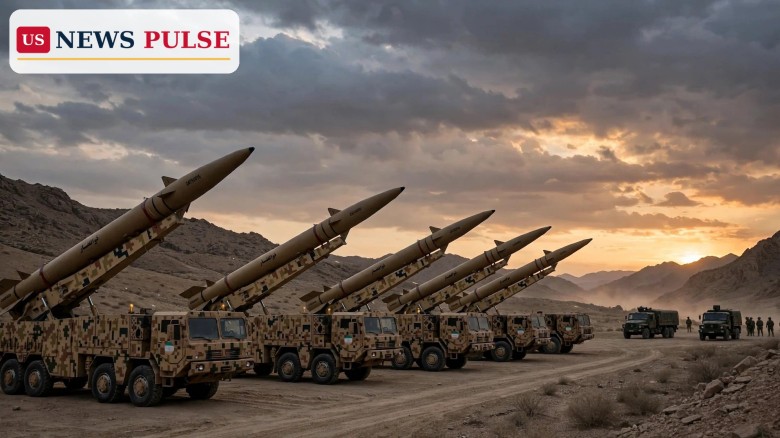
United States intelligence now estimates that Iran still holds between 1,500 and 2,500 missiles, according to a new assessment reported by The Wall Street Journal on Sunday, November 15, 2026, a finding that directly undercuts repeated claims by President Donald Trump and his administration that Iran's military had been decimated. The assessment leaves Tehran with significant capacity to strike American and allied targets if all-out war resumes, and it has already shaped internal debate in Washington over whether to resume strikes alongside Israel.
Officials cautioned that the estimate carries low confidence: it is hard to track how many missiles are ready to launch.
Key Points
- US intelligence estimates Iran still has between 1,500 and 2,500 missiles, The Wall Street Journal reported on Sunday, November 15, 2026.
- The assessment is low confidence: US officials cannot reliably track how many missiles are launch-ready and how many are in storage.
- US and Israeli strikes damaged Iran's missile-production facilities, but Tehran has kept rebuilding from stockpiled components, at a slower pace than before the war.
- Israeli military officials separately estimate Iran has more than 1,500 ballistic missiles, matching the low end of the US range.
- The finding cuts against Trump administration claims that Iran's military was decimated.
What Happened
The Wall Street Journal reported the assessment on Sunday, citing US officials familiar with the intelligence. The estimate covers Iran's total missile holdings after more than eight months of war that began on February 28, 2026.
The strikes by the United States and Israel damaged Iran's ability to build new missiles, the officials said, but they did not destroy the arsenal itself. Tehran has kept assembling missiles from components it had already stockpiled, at a slower pace than before the war, and it also retains large numbers of drones and short-range missiles.
The assessment has landed in the middle of an active debate inside the administration over whether to resume strikes alongside Israel, even as Trump has told advisers he may hold off if there are no new provocations from Tehran or the Houthis.
Background and Context
The war between the United States, Israel and Iran is now in its ninth month. It began with American and Israeli strikes on February 28, 2026. A ceasefire agreed in April did not hold, and a memorandum of understanding signed in June did not stop the fighting. Vice President JD Vance has said the top US priority is a firm, verifiable commitment that Iran will not rebuild its nuclear programme.
Diplomacy has swung sharply in the past two weeks. On November 2, Vance said Washington had made "progress" in talks with Iran and had set "no strict deadline" for a deal. Days later, Trump wrote that the United States does not need a deal with Iran and pulled Vance from the Iran file.
The fighting has also spread across the Gulf. Three oil tankers were hit by mines and caught fire in the Strait of Hormuz on Saturday, November 14, and Iran's Revolutionary Guards claimed on Sunday that six drones struck a US radar base in Bahrain. The Gulf Cooperation Council's secretary-general told the UN Security Council on Friday that Iran has fired more than 7,000 missiles and drones at Gulf states since February 28.
Iran's Missile Arsenal: What 1,500 to 2,500 Missiles Really Means
The headline range matters because it measures what Iran can still do, not just what it has lost. Even the low end, 1,500 missiles, would mean Tehran has replenished more than half of its estimated prewar stockpile, according to Simone Ledeen, a former Pentagon official in Trump's first term. She noted that Iran had fully rebuilt its arsenal between the 12-day war in June 2025 and the start of the current conflict in February 2026.
The uncertainty cuts both ways. A low-confidence estimate means the real number could be lower, but it could also be higher, and US officials cannot say how many missiles are ready to fire. Israeli military officials have reached a similar conclusion, estimating more than 1,500 ballistic missiles.
Reactions and Quotes
Ledeen's reading of the numbers was blunt: even at the lowest figure, Iran's recovery has been substantial, and the idea that the arsenal is gone does not match the intelligence. Her point carries weight: she served in the first Trump administration.
Trump's own position has shifted in recent days. He has reportedly told senior advisers he may hold off attacking Iran if there are no new provocations from Tehran or the Houthis, a signal that the White House is weighing restraint. That caution sits alongside pressure from Israel: Mossad Director Roman Gofman was in Washington on Friday, November 13, for talks with US officials, as Prime Minister Benjamin Netanyahu presses Trump to resume military action.
The administration has not publicly disputed the assessment. Its public line has been that Iran's military was decimated, and the new figures make that claim harder to sustain without qualification.
Why It Matters
The size of Iran's remaining arsenal changes the arithmetic of any decision to resume strikes. A country with up to 2,500 missiles can still threaten US bases, Gulf cities and shipping lanes, and the past week has shown that threat is not theoretical: sirens have sounded in Bahrain and tankers have burned in the Strait of Hormuz. Related coverage: Trump may hold off Iran attacks if Tehran and the Houthis stay quiet.
It also matters for the diplomatic track. If Iran's arsenal is largely intact, Tehran negotiates from a stronger position than the "decimated" framing suggests, and Washington's leverage looks different. Related coverage: Iran fired 7,000 missiles and drones at Gulf states, the GCC chief told the UN.
What Happens Next
The immediate question is whether Trump holds to the restraint he has signalled. If Tehran and the Houthis avoid new provocations, the pause may hold. If they do not, the intelligence assessment will be part of the case for resuming strikes alongside Israel. Also read: Mossad chief Gofman met CIA Director Ratcliffe in Washington on Iran.
The longer question is whether the rebuilding can be stopped. Production is slower than before the war, but it has not stopped, and every month of rebuilding adds to the stockpile.
Frequently Asked Questions
How many missiles does Iran still have, according to US intelligence?
Between 1,500 and 2,500 missiles, according to a US intelligence assessment reported by The Wall Street Journal on Sunday, November 15, 2026.
Why is the estimate described as low confidence?
US officials said it is hard to track how many missiles are ready to launch and how many are held in storage.
Did US and Israeli strikes destroy Iran's missile programme?
No. The strikes damaged Iran's missile-production facilities, but Tehran has kept rebuilding from stockpiled components.
What do Israeli officials estimate?
Israeli military officials similarly estimate Iran has more than 1,500 ballistic missiles, matching the low end of the US range.
Will the US resume strikes on Iran?
That is under debate inside the administration. Trump has reportedly told advisers he may hold off attacking if there are no new provocations from Tehran or the Houthis.
© 2026 US News Pulse. All rights reserved.
 Print
 Save