


 | Today's Date:



Iran Fired 7,000 Missiles and Drones at Gulf States, GCC Chief Tells UN
Iran has fired more than 7,000 missiles and drones at Gulf states since February 28, 2026, the head of the Gulf Cooperation Council told the UN Security Council on Friday, November 13, 2026. GCC Secretary-General Jasem Mohammed Albudaiwi said the strikes hit airports, ports, oil and gas plants, power stations, desalination plants and homes across all six Gulf monarchies.
Key Points
- GCC chief Jasem Mohammed Albudaiwi told the UN Security Council on Friday, November 13, 2026, that Iran has fired more than 7,000 missiles and drones at GCC states since February 28, 2026.
- An Asharq Al-Awsat tally put the total at 7,028 attacks, about 1,716 missiles and 5,311 drones, with the UAE absorbing 2,846, Saudi Arabia 1,234 and Kuwait 1,194.
- The strikes hit airports, ports, oil and gas facilities, power stations, desalination plants and homes in all six GCC states, killing and injuring people.
- About 1,600 vessels have been disrupted in the Strait of Hormuz and more than 23,000 seafarers stranded, choking fertilizer supplies and raising famine risks.
- Albudaiwi called for an immediate end to the attacks, enforcement of the arms embargo, and full compensation from Iran for the victims.
What Happened
The session was requested by Bahrain on Gulf tensions and maritime security, and convened by Latvia, which holds the council's rotating presidency this month. Albudaiwi spoke for all six GCC members: Saudi Arabia, the UAE, Qatar, Kuwait, Bahrain and Oman. "We are addressing your council today with a unified Gulf voice," he said, calling the attacks "a flagrant violation of the sovereignty and territorial integrity of GCC member states" and urging the council to act "to ensure their cessation (and) to prevent their recurrence."
The tally put the total at 7,028 attacks: about 1,716 missiles and 5,311 drones. The UAE has taken the heaviest share, 2,846 attacks, followed by Saudi Arabia with 1,234 and Kuwait with 1,194. Hours earlier, the US shot down two Iranian drones headed for Bahrain, as reported in our story on the Bahrain drone interception.
Background and Context
The US-Iran war began on February 28, 2026, and is now in its ninth month. Albudaiwi rejected Iran's justifications for striking countries he said "were not party to the war but instead exerted intensive diplomatic efforts to spare the region from escalation." The GCC holds Tehran "fully responsible," he said.
In March 2026 the council adopted Resolution 2817, condemning the Iranian attacks on GCC states and Jordan and demanding they stop. Albudaiwi said the council now had "the responsibility to follow up on its implementation." The Houthis, he said, have targeted the Two Holy Mosques area, pilgrims, airports and oil facilities, including an October strike on Riyadh airport that killed 14 people. Saudi defences have repeatedly intercepted missiles aimed at Riyadh and Mecca, as covered in our report on Saudi Arabia intercepting Houthi missiles aimed at Riyadh and Mecca.
Iran Fired More Than 7,000 Missiles and Drones at Gulf States
More than 7,000 missiles and drones in under nine months means roughly 26 attacks a day, aimed at the airports, ports, oil and gas plants, power stations, desalination plants and homes of the region.
The six states remain committed to their right to self-defense under Article 51 of the UN Charter, and he told the council: "The security of the GCC states is indivisible, and any attack against one member state is an attack against all." Bahrain's UN ambassador said about 1,600 vessels have been disrupted in the Strait of Hormuz, with more than 23,000 seafarers stranded. Albudaiwi rejected any attempt to close the strait or impose "unlawful restrictions or transit fees" on shipping, and cited the Law of the Sea guarantee that safe passage "shall not be impeded or suspended."
Reactions and Quotes
Albudaiwi's message was blunt: stop the attacks, hold the perpetrators to account, compensate the victims in full. "We affirm our full solidarity with the Kingdom of Saudi Arabia," he said. "We stand united alongside the Kingdom and support the measures it takes to safeguard its sovereignty." He welcomed a Security Council statement on October 15 affirming Saudi Arabia's right to self-defense, and a unanimous November 12 resolution condemning the Houthi escalation and embargo-breaching arms shipments.
He also condemned the Houthis' treatment of UN staff after years of abductions and disappearances. A UN member of staff recently died while detained by the militia, he noted, and others face trial on "fabricated charges carrying the death penalty." He urged the council to take "a firm position" on these "unprecedented crimes against UN personnel." On diplomacy, he said any deal with Tehran must address Gulf security, including Iran's nuclear program, its missiles and drones, and its support for proxies, and that better relations required Iran to reciprocate "through clear actions, including ending attacks and threats (and) ceasing support for armed militias."
Why It Matters
The briefing matters because it puts a number on a war mostly measured in individual incidents. More than 7,000 missiles and drones, 1,600 disrupted vessels and 23,000 stranded seafarers describe a campaign against the Gulf's economy and its people, not just its defences.
Albudaiwi warned the shipping disruption had gone beyond economics to encompass "a serious humanitarian dimension." He cited UN Secretary-General Antonio Guterres, who warned that "the developing and most vulnerable countries could be facing famine and acute food insecurity due to fertilizer shortages." "Disruption of navigation in a single corridor affects factories, businesses and consumers across continents," Albudaiwi said.
What Happens Next
Albudaiwi laid out four demands: an immediate and unconditional end to attacks by Iran, direct or through its proxies; an end to Houthi attacks and enforcement of the arms embargo; a return of shipping in the Strait of Hormuz to the conditions before February 28; and accountability, including compensation in full by Iran. Diplomacy continues in parallel, with Washington saying progress has been made in talks with Iran and no deadline set.
Frequently Asked Questions
How many missiles and drones has Iran fired at Gulf states?
More than 7,000 since February 28, 2026, according to GCC Secretary-General Jasem Mohammed Albudaiwi, who briefed the UN Security Council on November 13, 2026.
Which Gulf country has been hit hardest?
The United Arab Emirates has absorbed about 41 percent of the attacks, or 2,846, followed by Saudi Arabia with 1,234 and Kuwait with 1,194.
What did the UN Security Council already do about the attacks?
In March 2026 the council adopted Resolution 2817, condemning the Iranian attacks on GCC states and Jordan, demanding they stop, and denouncing Tehran's move to close the Strait of Hormuz.
How is the Strait of Hormuz disruption affecting the rest of the world?
About 1,600 vessels have been disrupted and more than 23,000 seafarers stranded. Fertilizer shipments are being choked, raising famine risks in developing countries, the GCC chief and Antonio Guterres warned.
What is the GCC asking the Security Council to do now?
An immediate end to attacks by Iran and its proxies, enforcement of the Houthi arms embargo, restored Hormuz shipping, and full compensation from Iran.
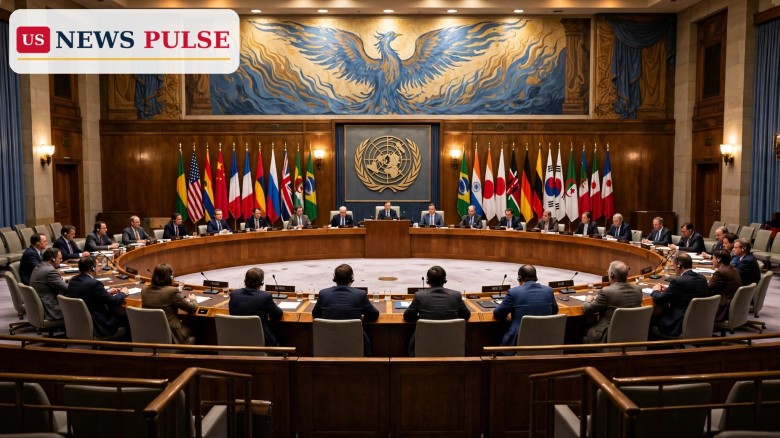
Image: Iran fired 7,000 missiles and drones at Gulf states: delegates sit at the curved table of the UN Security Council chamber in New York during a formal session.
Leave a Comment