
Kushner Pushes Direct Europe-Russia Talks as Five Nations Send Peace Envoys
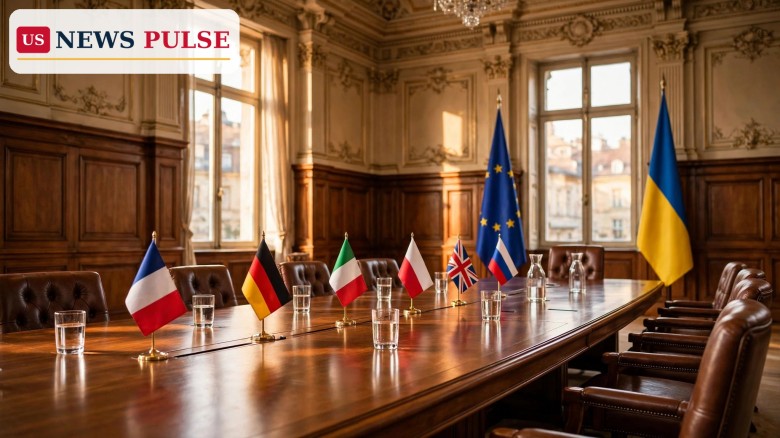
US envoy Jared Kushner said on Saturday that he is working to bring Europe and Russia into direct contact for the first time in the Ukraine peace process, putting European governments at the negotiating table with Moscow. The Kushner Europe-Russia talks push came as five European nations agreed to send representatives to future rounds. Kushner said both Kyiv and Moscow understand compromises will be necessary, and that he and fellow envoy Steve Witkoff are now working on the next steps after this week's Abu Dhabi round ended without a breakthrough but produced a prisoner exchange.
Key Points
- Jared Kushner said on Saturday, November 14, 2026, that he is working with Russia, Ukraine and Europe to advance the peace talks, including direct engagement between Europe and Moscow.
- France, Germany, Italy, Poland and the United Kingdom agreed on Friday to send representatives to future peace talks, and have signalled readiness to send troops as part of a "coalition of the willing" if a ceasefire is reached.
- The Kremlin has signalled openness to negotiations with Europe but criticised a lack of proposals from the bloc.
- French President Emmanuel Macron said Europe must "state clearly" what it wants for the post-war period, "including to the Russians", and that Ukraine belongs alongside NATO.
- The Abu Dhabi talks this week failed to reach a breakthrough but resulted in a prisoner exchange, and negotiators suggest another round of multilateral talks may follow.
What Happened
Kushner spoke to reporters on Saturday after this week's Abu Dhabi round, the first trilateral talks between the United States, Russia and Ukraine in nine months. He said Washington is working with all sides to take the negotiations to the next stage, and that a central part of that work is arranging direct engagement between Europe and Moscow. "Both sides" — Kyiv and Moscow — know that compromises will be necessary, he said.
Separately, European leaders agreed on Friday to send five representatives to future peace talks. France, Germany, Italy, Poland and the United Kingdom will each send an envoy. The same five countries have signalled readiness to send troops as part of a "coalition of the willing" to secure Ukraine in the event of a ceasefire.
Background: From Abu Dhabi to a Wider Table
The push for a wider table follows the Abu Dhabi round, where US, Russian and Ukrainian delegations met on November 10 and 11 in the first trilateral session since February. The talks narrowed gaps on some issues but failed to reach a breakthrough, ending instead with agreement on a large-scale prisoner exchange. Ukraine and Russia agreed the prisoner exchange in Abu Dhabi.
Europe's absence from the core talks has been a running tension. The continent's governments are Ukraine's largest collective backers after the United States, and any settlement would rely on European troops, money and guarantees. Yet the main negotiating channel has run through Washington. Earlier this month, Kushner met officials in Brussels on security guarantees, and the White House hosted Russian and Ukrainian representatives at a gathering convened by First Lady Melania Trump. Melania Trump brought Russian and Ukrainian representatives together at the White House on November 5.
Kushner Europe-Russia Talks: What Direct Engagement Would Mean
Direct engagement between Europe and Russia would be a first in the current peace process. Until now, the Europeans have dealt with Moscow mainly through sanctions and intermediaries, while the substantive negotiation has been an American affair. A direct channel would let European governments test Russian positions for themselves, present their own demands on security guarantees, and judge whether Moscow is serious about a settlement.
The Kremlin's response so far has been guarded. Moscow has signalled openness to negotiations with Europe but criticised a lack of proposals from the bloc — a complaint that is, in effect, an invitation for Europe to put terms on the table. Al Jazeera's Mike Hanna said Russia's acceptance of European participation "is something that could actually be important". For Ukraine, a European seat strengthens its hand on guarantees, since the countries that would enforce a ceasefire would negotiate its terms. Kushner has also said the US is working toward the largest prisoner exchange of the Ukraine war.
Reactions
Kushner framed the effort as a natural next step, saying he is working with Russia, Ukraine and Europe to advance the talks and that both sides understand compromises will be necessary.
Macron's Saturday post was the most detailed European response. By insisting that Europe must "state clearly" what it wants for the post-war period, "including to the Russians", he argued that Europe should arrive at the table with its own position. He also restated that Ukraine belongs alongside NATO, a position Moscow has long opposed. The Kremlin has not closed the door, leaving room for a meeting while putting the burden on the Europeans to define what they want.
Why It Matters
The shape of the negotiating table matters as much as what is said at it. A settlement imposed on Europe would be hard to enforce; a settlement Europe helps write is one its governments can defend at home, fund, and guarantee with troops. If the five-nation envoy group becomes permanent, it would give Europe a structural role it has lacked. The Abu Dhabi round showed the parties can still agree on humanitarian steps such as prisoner exchanges, but could not bridge the core gaps on territory and security — and adding Europe directly introduces new leverage and new possibilities.
What Happens Next
Negotiators suggest there might be another round of multilateral negotiations building on what they described as "substantial progress" in the recent talks, though no date has been announced. The five European envoys are expected to attend future rounds, and the question now is whether a direct Europe-Russia meeting can be arranged, and what proposals Europe brings to it.
Watch for three things: whether the Kremlin follows its signal of openness with a concrete step, such as agreeing a date; whether the five governments present a joint position on security guarantees, NATO, and the troop commitment; and whether the prisoner exchange agreed in Abu Dhabi is carried out.
Frequently Asked Questions
What did Jared Kushner announce on Saturday?
Kushner said he is working with Russia, Ukraine and Europe to advance the talks, including direct engagement between Europe and Moscow.
Which five European countries will send envoys?
France, Germany, Italy, Poland and the United Kingdom agreed on Friday to send representatives to future peace talks.
Has Russia agreed to talk directly with Europe?
The Kremlin has signalled openness to negotiations with Europe but criticised a lack of proposals from the bloc. No date or format for a direct meeting has been announced.
What happened at the Abu Dhabi talks?
The US, Russian and Ukrainian delegations met in Abu Dhabi on November 10 and 11, 2026. The talks failed to reach a breakthrough on ending the war but resulted in agreement on a large-scale prisoner exchange.
What did President Macron say?
Macron said Europe must "state clearly" what it wants for the post-war period, "including to the Russians", and that Ukraine has a key role alongside NATO.
© 2026 US News Pulse. All rights reserved.
 Print
 Save