


 | Today's Date:



Kushner Says US Working Toward Largest Prisoner Exchange of Ukraine War
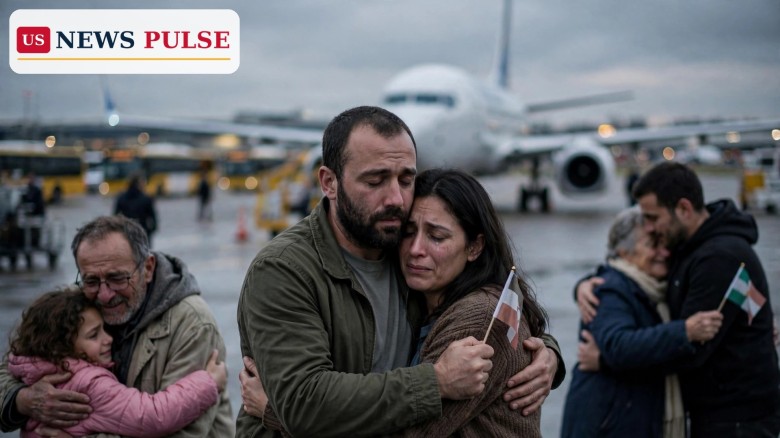
The United States is working toward the largest prisoner exchange of the Russia-Ukraine war, US envoy Jared Kushner said on Thursday, confirming also that European nations will join the next round of American-brokered peace talks. Writing on X after a week of shuttle diplomacy from Abu Dhabi to Moscow and Dublin, Kushner said the exchange could potentially reunite thousands of people with their families, the clearest sign yet that prisoners are now central to the peace effort.
Key Points
- Kushner said Washington is working toward "the largest prisoner exchange of the war", writing on X on Thursday, without details.
- Russia and Ukraine agreed to expand the next round of US-brokered peace talks to include European nations.
- The announcement followed Kushner and Steve Witkoff meeting Vladimir Putin in Moscow and Volodymyr Zelenskyy in Dublin, after the Abu Dhabi round, the first in nine months.
- Zelenskyy welcomed the European presence, hoping the agenda would include ceasefire efforts and defusing the conflict.
- Witkoff said Putin agreed to let Europeans join, but urged Washington to work with allies to understand if they wanted peace or war.
What Happened
Kushner announced it on X on Thursday, November 13, 2026, capping a frantic week of American diplomacy. It was his first public account since leaving the Gulf, and it carried two pieces of news: a bigger prisoner exchange than anything agreed so far, and a wider table for the next round.
The timing matters. It came two days after the Abu Dhabi round, the first direct Russia-Ukraine talks in nine months, ended without a ceasefire but with an agreement in principle on a large-scale prisoner exchange. Kushner gave no numbers, no timetable and no venue, and did not say whether the swap would cover military prisoners only or detained civilians too.
After Abu Dhabi, they met Putin at the Kremlin on November 12 for about two and a half hours, then flew to Dublin to brief Zelenskyy. Kushner said Washington was encouraged by progress but significant differences remained, particularly on territory.
Background and Context
The Abu Dhabi talks on November 10 and 11 brought Russian and Ukrainian delegations together for the first time in nine months, mediated by the United States. They ended without a ceasefire, but the agreement in principle on a large exchange gave Washington a foundation to build on. Our earlier report is here: Ukraine and Russia Agree Large-Scale Prisoner Exchange in Abu Dhabi Talks.
The Moscow leg followed immediately. Witkoff said after the Kremlin meeting that the trilateral process had restarted, with a new meeting already set. Kushner called the Moscow discussions "very fulsome and detailed". Our report is here: Ukraine Peace Talks Restart After Witkoff-Putin Moscow Meeting, Envoys Say. Prisoner swaps are one of the few areas where the two sides kept cooperating, and a swap on this scale would test lists, verification and logistics as never before.
Largest Prisoner Exchange: What Kushner Actually Said
Kushner's post was short, and its wording deserves close reading. He said Russia and Ukraine had agreed to expand the next round of talks to include European nations, and that Washington was working toward "the largest prisoner exchange of the war, potentially reuniting thousands of people with their families". The phrase "working toward" signals intent, not a done deal.
The European element is the other half of the announcement. Expanding the talks, Kushner said, would allow the parties to tackle "broader postwar European security arrangements alongside the territorial issues between Ukraine and Russia", not just where the lines on the map fall, but what security architecture follows a settlement. He added that a lasting end required credible security guarantees and "reciprocal" de-escalation commitments, suggesting Washington wants parallel, verifiable steps from both sides.
He gave no date, host city or figure for the exchange, and did not say whether the Europeans would join as full participants or observers. Read it as a direction of travel, not a finished agreement.
Reactions and Quotes
Zelenskyy welcomed the European presence in the next round, saying he hoped the agenda would include efforts towards ceasefires and defusing the conflict. His response was warm but focused on the fighting: for Kyiv the priority remains stopping the attacks, not only widening the guest list. He has long argued Europeans must be at the table, since any settlement shapes their security too.
Witkoff, speaking after the Moscow meeting, confirmed that Putin had agreed to let European representatives join the next round. "They're our partners, and it's important for them to be involved," he said. But he also relayed a harder message: Putin urged Washington to work with allies to understand whether they wanted peace or war. In Kyiv, a swap reuniting thousands would be the biggest morale event of the war.
Why It Matters
A prisoner exchange on this scale would matter for three reasons. First, it would be the largest humanitarian result of the war so far, returning thousands of captives to their families. Second, it would prove the Abu Dhabi channel can deliver concrete results, strengthening the case for keeping the talks going despite the territorial deadlock. Third, the European expansion would change the character of the process, turning a trilateral format into a multilateral one that addresses the security of the whole continent. For Washington, it also raises the stakes: having promised the largest exchange of the war, the envoys will now be judged on whether it happens.
What Happens Next
The immediate question is when and where the next round meets and who sits at the table. No date has been announced, and the envoys will need to settle the European participant list and the agenda before invitations go out. The exchange will need parallel technical work — lists of names, verification, medical checks and transport — all of which take time even when the politics are settled. Watch whether the exchange is announced alone or bundled with a ceasefire discussion.
Frequently Asked Questions
What did Jared Kushner announce about a prisoner exchange?
Kushner said on X on Thursday that the US is working toward "the largest prisoner exchange of the war, potentially reuniting thousands of people with their families", as Russia and Ukraine agreed to expand the next round to include European nations.
How many prisoners would be exchanged?
No number has been given — only that it could reunite thousands with their families. No exact figure or timetable has been announced.
Will European countries join the Ukraine peace talks?
Yes, according to Kushner and Witkoff. Putin agreed to let European representatives join the next round, though the exact list of countries and their role has not been published.
What was agreed at the Abu Dhabi talks?
The Abu Dhabi round on November 10 and 11, the first direct talks in nine months, ended without a ceasefire but with an agreement in principle on a large-scale prisoner exchange, the foundation for Kushner's larger swap.
What is the main obstacle to a peace deal?
Territory. Russia holds about a fifth of Ukraine, and Kyiv refuses to give up the rest of its eastern Donbas region, a gap Kushner said still showed significant differences.
Related reading: Zelenskyy Says Starshield Speed Cap Is Back, Slowing Ukraine Drone Defence.
Leave a Comment