
ULA Vulcan Rocket Anomaly Ends Amazon Leo Launch After Return to Flight
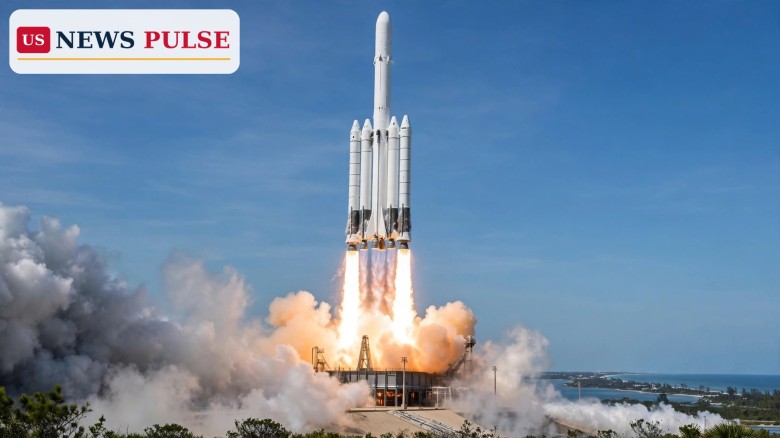
United Launch Alliance's Vulcan rocket roared off the pad at Cape Canaveral on Sunday after nine months on the ground, but the comeback ended in failure: a Vulcan rocket anomaly on the Centaur upper stage about 10 minutes in meant its 40 Amazon Leo satellites never reached orbit.
Key Points
- ULA's Vulcan lifted off at 12:41 p.m. ET on Sunday, November 15, 2026, from Cape Canaveral with 40 Amazon Leo satellites, the most on any Amazon mission.
- All six GEM-63XL boosters separated cleanly at T+1 minute 45 seconds, but a Centaur V anomaly about 10 minutes in kept the satellites from orbit.
- Vulcan's return after a nine-month grounding from a booster nozzle problem on USSF-87 in February 2026; the first of up to 38 Vulcan launches booked by Amazon.
- ULA said it did not meet its standard of mission success and will work with Amazon to find the cause and return to flight soon.
- Amazon's constellation stands at about 368 satellites and needs 578 for initial regional service, with a July 30, 2029 deadline.
What Happened
After Friday and Saturday scrubs, Sunday's first attempt at 12:11 p.m. ET held at T-20 seconds over a valve anomaly. ULA said the redline violation behind the hold was closed, and the countdown was retargeted to 12:40 p.m. ET, the end of the 29-minute window. Liftoff followed at 12:41 p.m. ET, with the 215-foot Vulcan VC6L — six boosters, two BE-4 engines and a Centaur V — climbing northeast on 3.9 million pounds of thrust.
The early flight looked clean: all six boosters separated at T+1 minute 45 seconds at 22 miles, with no sign of the nozzle problem. But about 10 minutes in, during the Centaur V's first burn, something failed. ULA confirmed at 1:36 p.m. ET that the rocket had suffered an anomaly and failed to deliver the satellites to orbit. The 40 satellites were never deployed: they had been due to separate in 21 events from about 1 hour 17 minutes after liftoff into a 450-kilometre parking orbit inclined 51.9 degrees. Also read: SpaceX Catches Ship 42 in First-Ever Tower Catch of an Orbital Starship Stage.
Background and Context
Trouble began on Vulcan's second flight in October 2024, when a nozzle "liberation" event struck one booster 37 seconds after liftoff; the rocket compensated and still reached orbit. Northrop Grumman test-fired a modified GEM-63XL successfully in Utah in February 2025. Then-ULA chief executive Tory Bruno blamed insulators bonded inside the shell that later became the nozzle.
USSF-106 in August 2025, using four boosters, was fully successful. But USSF-87 on February 12, 2026, also using four boosters, produced another nozzle observation 69 seconds after liftoff. Again the rocket compensated and reached orbit, but the U.S. Space Force suspended Vulcan launches. The inquiry found three credible causes, Northrop Grumman applied fixes, and the company test-fired an enhanced-nozzle GEM-63XL on April 15. That work brought Vulcan back to the pad nine months later, and on this flight the boosters appear to have worked; the failure came from the upper stage. Related coverage: Blue Origin Pushes New Glenn Return to Flight to January 2027 After Pad Blast.
The Vulcan Rocket Anomaly: What Went Wrong
The anomaly happened during the first burn of the Centaur V, the low-Earth-orbit-optimised upper stage on its first flight. ULA said it had no specific data yet, and the cause will only emerge from the investigation. The boosters, the part everyone was watching, did their job: NASASpaceFlight reported no apparent nozzle liberation issues.
The loss is measured in more than one rocket. The 40 satellites were the largest single batch Amazon has flown, and had they deployed, the constellation would have grown to 432 satellites. Amazon Leo, formerly Project Kuiper, is building a broadband mega-constellation of up to 3,236 satellites to compete with SpaceX's Starlink, with up to 38 Vulcan launches booked alongside flights on New Glenn and Ariane 64.
Reactions
ULA did not hide from the result: "Every flight generates data, and every flight teaches us something. Since the anomaly just occurred, we don't have any specific data yet to understand what occurred today." The statement went on: "ULA exists to provide assured access to space for our nation and for the customers who depend on us. That purpose is why we take on some of the hardest missions in spaceflight, and why we hold ourselves to the standard of mission success. Today, we did not meet that standard." ULA promised to work with its customer to find the cause and return to flight quickly.
NASA Administrator Jared Isaacman offered help within the hour: "Appreciate you quickly keeping the public and your partners informed. The team at @NASA is available to assist in all matters related to the investigation and remediation effort. Artemis, Moon Base, and the nation need ULA. We are in your corner and here to help." NASA and the Space Force were watching closely, with national security payloads and Boeing's Starliner planned for Vulcan.
Why It Matters
The failure matters first for Amazon's race against the clock. About 368 Amazon Leo satellites are in operational orbit, and the company needs 578 deployed to start initial regional service. A Federal Communications Commission extension on June 5 allows Amazon to complete its constellation by July 30, 2029; if it is not complete by then, the regulator could limit Amazon to the satellites already launched.
It matters for ULA too: Vulcan is its path to a higher flight rate and the national security missions it was built for, and this flight was meant to close the book on the nozzle saga. Instead, a new problem on a first-flight upper stage has opened a fresh investigation.
What Happens Next
An investigation is under way, and ULA says it will update when new information becomes available. The LV-02 mission was already being processed, but its launch date will now depend on what the inquiry finds and what fixes are needed. For Amazon, the question is how much of the schedule slips. For ULA, the next flight must close out two problems: the nozzle issue, likely behind it, and the Centaur anomaly, which is not.
Frequently Asked Questions
What happened to the ULA Vulcan launch on November 15, 2026?
Vulcan lifted off at 12:41 p.m. ET, but an anomaly during the Centaur V's first burn about 10 minutes in meant the 40 Amazon Leo satellites never reached orbit.
How many Amazon Leo satellites were lost?
Forty satellites were aboard LV-01, Amazon's largest batch; had they deployed, the constellation would have reached 432.
Why was Vulcan grounded before this flight?
Vulcan was grounded after USSF-87 on February 12, 2026, when a nozzle problem appeared 69 seconds after liftoff. The Space Force suspended launches while it was investigated and fixed.
Did the booster nozzle problem happen again?
No. The six boosters separated cleanly with no apparent nozzle issues; the anomaly was on the Centaur V upper stage, on its first flight in this configuration.
What happens to Amazon's constellation now?
Amazon has about 368 satellites in orbit and needs 578 for initial service. It must complete its constellation by July 30, 2029, and future Vulcan launches depend on ULA's investigation.
© 2026 US News Pulse. All rights reserved.
 Print
 Save