


 | Today's Date:





Blue Origin Pushes New Glenn Return to Flight to January 2027 After Pad Blast
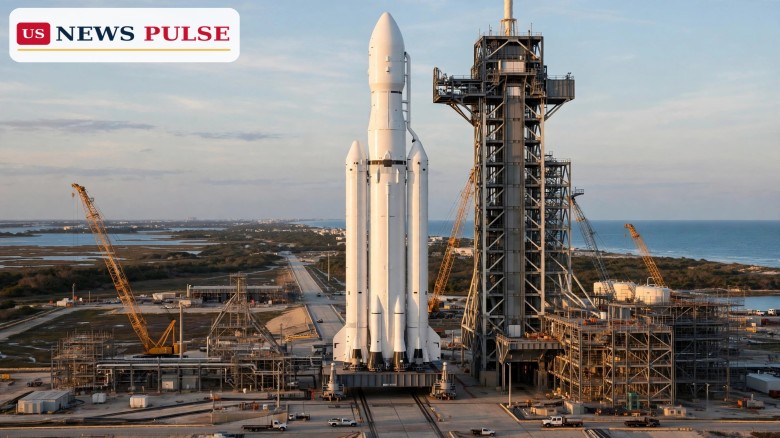
Blue Origin has pushed the return to flight of its New Glenn heavy-lift rocket to January 2027, missing its late-2026 target after a May explosion wrecked the company's only launchpad. The new date comes from a memo by CEO Dave Limp, first reported by the Financial Times on Thursday, November 5, 2026.
The 322-foot rocket has been grounded since exploding in May during a hot-fire test on Launch Complex 36 at Cape Canaveral, days before it was due to carry Amazon satellites into orbit. The blast badly damaged the pad, and summer weather slowed the rebuild.
Key Points
- Blue Origin has moved New Glenn's return to flight to January 2027, in a memo from CEO Dave Limp first reported by the Financial Times on November 5, 2026.
- The 322-foot rocket has been grounded since exploding in May 2026 during a hot-fire test on Launch Complex 36 at Cape Canaveral, its only launchpad.
- The blast badly damaged the pad and summer weather slowed the rebuild, though the Vehicle Access Tower has been repaired and restacked and the launch bridge restored.
- The January date is roughly 10 days beyond the previous target; founder Jeff Bezos said in October the rocket would likely fly around December 31.
- The delay overshadowed the unveiling of GS3, a new third stage, and Northstar, a booster engine with half the parts and 30 percent less mass than the BE-4.
What Happened
Limp told staff the company was updating its anticipated launch date as construction finishes and testing of new procedures begins. "We're proactively updating our anticipated launch date to January 2027," he wrote in the memo, seen by Reuters.
The slip is the latest setback for a rocket that has spent most of 2026 on the ground. New Glenn was due to fly in late May carrying Amazon satellites when it exploded during the static-fire test meant to prove it ready. The blast damaged the pad badly, and summer weather in Florida slowed the rebuild.
Blue Origin said the Vehicle Access Tower has been repaired and restacked and the launch bridge restored, leaving final construction and procedure testing before the rocket can return to the pad. No firm day in January has been announced.
Background: A Rocket Grounded by Its Own Test
New Glenn is Blue Origin's heavy-lift rocket, standing 322 feet tall, roughly the height of a 30-storey building. It is the centrepiece of the company's plans to compete for large commercial and government launches, and it is contracted to deploy satellites for Amazon's Leo broadband constellation, the rival to Starlink.
The May explosion was a heavy blow because Launch Complex 36 is Blue Origin's only launchpad. With no second site, the company could not move the programme elsewhere while the pad was repaired, so every week of rebuilding has been a week with no New Glenn flights.
The delay also matters beyond Blue Origin. NASA's Artemis III mission, targeted for summer 2027, relies on Blue Origin's Blue Moon lander to take astronauts to the lunar surface. That lander is separate, but the two programmes share engineering and testing inside the company. NASA's Artemis plans and the Blue Origin race to return astronauts to the Moon.
New Glenn Delay: What the January 2027 Date Means
The January date is a modest slip on paper, roughly 10 days past the target Blue Origin had been aiming for. Founder Jeff Bezos had told Fox News in October the rocket would likely fly around December 31. But the direction of travel matters: this is a programme that keeps arriving later than planned.
For Amazon, the delay means another month without New Glenn flights to deploy its Leo broadband satellites. The constellation needs regular launches, and every delay hands more time to SpaceX's Starlink, which is already flying at scale.
For Blue Origin, the delay is a test of credibility. The company spent years developing New Glenn, and a clean return in January would restore confidence; another slip would raise harder questions about the programme's pace.
Reactions and Quotes
Limp's memo was framed as a proactive update rather than a setback, a sign Blue Origin wants to manage expectations before the end of the year. "We're proactively updating our anticipated launch date to January 2027," he wrote, as construction finishes and new procedures are tested. The wording suggests the company believes the remaining work is understood and bounded.
The delay was reported alongside the unveiling of two new pieces of hardware: GS3, a new third stage for New Glenn, and Northstar, a booster engine with half the parts and 30 percent less mass than the BE-4. The announcements were meant to show the programme moving forward even as the launch date moved back.
Why It Matters
New Glenn matters because the heavy-lift market has little slack. SpaceX's Falcon Heavy and Starship dominate big-payload launches, and customers wanting an alternative have few places to go. Every month New Glenn stays grounded is a month that alternative does not exist.
It also matters for NASA's Moon plans. Artemis III is targeted for summer 2027, and Blue Origin's Blue Moon lander is central. The agency has already reshaped Artemis around what its providers can deliver, and delays at Blue Origin feed into that calculation. How SpaceX's shifting priorities are also putting NASA's Moon landing at risk.
Finally, the delay is a reminder of how unforgiving rocket development is. A single test failure in May cost Blue Origin the rest of the year, because the damage was to the one pad it had.
What Happens Next
Blue Origin will finish construction at Launch Complex 36 and test the new procedures put in place after the explosion. The rocket will then be rolled out for its own static-fire test, the same kind of test that destroyed its predecessor in May, before any launch date is set.
If that test goes well, January becomes a real launch window, with Amazon satellites the likely first payload. If it does not, the programme faces another delay and the pressure on Blue Origin will grow. The same week, the wider Space Coast is looking ahead to a new aerospace showcase at Kennedy Space Center. Trump unveils Capeweek, the world's biggest airshow, coming to Kennedy Space Center.
Frequently Asked Questions
When will New Glenn fly again?
Blue Origin now anticipates a return to flight in January 2027, in a memo from CEO Dave Limp first reported by the Financial Times on November 5, 2026.
Why has New Glenn been grounded?
The rocket exploded in May 2026 during a hot-fire test on Launch Complex 36 at Cape Canaveral, its only launchpad, days before a planned Amazon satellite flight.
How tall is New Glenn?
The rocket stands 322 feet tall, roughly the height of a 30-storey building.
What are GS3 and Northstar?
GS3 is a new third stage for New Glenn, and Northstar is a new booster engine with half the parts and 30 percent less mass than the BE-4. Both were unveiled as the delay was announced.
Does the delay affect NASA's Artemis III mission?
Artemis III, targeted for summer 2027, relies on Blue Origin's Blue Moon lander. The lander is separate, but delays at Blue Origin feed into NASA planning.
Leave a Comment