
Bessent Says Iran Economy Could Shrink 25% by March 2027 in Historic Collapse
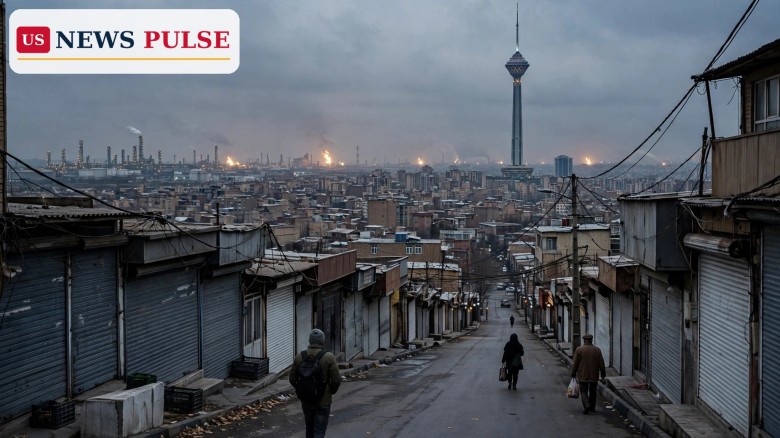
US Treasury Secretary Scott Bessent has warned that Iran's economy could shrink by a quarter within five months, calling the American pressure campaign against Tehran "the greatest economic isolation in the history of the world against a single country." In a Fox News interview on Sunday, November 15, 2026, Bessent predicted that the Iran economy could contract by 25 percent by March 2027 — a collapse he said would rival the fall of the Soviet Union in speed, and one the Trump administration hopes will force Tehran to accept a deal to end the nine-month war between the two countries.
Key Points
- Bessent said Iran's economy could contract 25% by March 2027.
- He compared it with the Soviet collapse: Russia shrank 22% over three years.
- Operation Economic Outcast, launched in August 2026, targets Iran's oil, banks and currency.
- Bessent said no oil has loaded recently at Kharg Island, Iran's main crude terminal.
- Task Force Iron Gate, launched November 7, aims to choke off weapons and illicit revenue.
What Happened
Bessent made the forecast in a Fox News interview on Sunday, November 15, reported on Monday, November 16. He said the United States had built the most sweeping economic isolation campaign ever aimed at a single country, and its effects were now accelerating inside Iran.
Operation Economic Outcast was launched in August 2026, targeting Iran's access to international finance, oil exports and foreign currency reserves. "During the collapse of the Soviet Union, the Russian economy contracted by 22% over three years. So, this is one of the fastest collapses in history," Bessent said.
Bessent pointed to the oil trade as the clearest evidence. He said there had been no recent oil loadings at Kharg Island, Iran's principal crude export terminal, and that domestic production was weakening. Oil is Tehran's largest source of hard currency, and a halt at Kharg would cut the money it uses to fund its government, military and allies.
Background and Context
The prediction comes in the ninth month of the US-Iran war, which began on February 28, 2026, when the United States and Israel launched strikes on Iran. Since then Washington has combined military action — a naval blockade and strikes such as the recent action on Qeshm Island — with an economic campaign to cut the money keeping Iran's government running.
Diplomacy has continued alongside the pressure. Vice President JD Vance said on November 2 that Washington had made "progress" in talks and set no deadline for a deal. President Donald Trump said an agreement was "coming together very nicely". The gap remains wide: Tehran wants sanctions eased, the blockade lifted and frozen assets released before reopening the Strait of Hormuz; Washington wants a verifiable pledge that Iran will not rebuild its nuclear programme.
Iran has lived under American sanctions since 1979. What is different now, the administration says, is scale: the campaign targets the shipping networks, banks and third countries moving Iran's oil and money, including recent sanctions on an Indian maritime network accused of giving Iran's shadow fleet false flags. Read more: US sanctions Indian maritime network over Iran shadow fleet false flags
Iran Economy Faces One of the Fastest Collapses in History
A 25% contraction in five months would be an extraordinary fall. Russia's economy shrank 22% over three years as the Soviet Union fell apart; Bessent predicts a larger fall in Iran in a fraction of the time.
The figures are US government estimates, and the underlying data has not been published. But the signs Bessent cited are concrete: no recent loadings at Kharg Island, weakening production, and a currency he estimated in October had passed three million rials to the dollar. For ordinary Iranians it would mean higher food and fuel prices, deeper shortages and more hardship.
The warning also matters for energy markets. Iran is a major oil producer, and the loss of its exports has already pushed prices higher during the war. If Kharg stays quiet, pressure on global supply is likely to continue. Read more: Iran claims six drones hit US radar base in Bahrain
Reactions and Quotes
"The greatest economic isolation in the history of the world against a single country," Bessent called the campaign, presenting it as a deliberate strategy to make defying Washington unbearable for Tehran.
He first made the 25% prediction to Iran International on October 26, when he estimated the rial had passed three million to the dollar and urged Iranians to stock up on fuel. Repeating it on Fox News, with new detail about Kharg Island, suggests the administration believes the pressure is working. The reports carried no immediate response from Tehran. Read more: Bessent gives Nvidia 10 days to explain whether AI chips reached China
Why It Matters
Bessent's forecast sets the terms of the endgame. If Iran's economy is collapsing at the pace he describes, Tehran faces a narrowing choice: accept a deal on Washington's terms, or watch its economy — and its ability to fund its military and allies — break apart.
It matters for tens of millions of ordinary Iranians, who would bear the brunt: food, fuel and medicine harder to obtain, hardship that could weaken the government or harden its resolve. And it matters for the region: a collapsing economy could push Tehran toward escalation as readily as toward a deal, while the administration needs results after the November 3 midterms.
What Happens Next
The marker is March 2027. The test will be visible in the oil trade: whether tankers return to Kharg Island, whether production stabilises or keeps falling, and whether the rial steadies or slides further.
Enforcement will tighten: Task Force Iron Gate, announced November 7, will disrupt weapons, sanctioned materials and illicit revenue through Iran's land borders and the Caspian Sea. Diplomacy continues — Vance says there is no strict deadline, Trump says a deal is "coming together very nicely" — but if March arrives without the predicted collapse, the strategy will face hard questions. If the collapse comes, Tehran's room to manoeuvre will be smaller than at any point in the war.
Frequently Asked Questions
What did Bessent predict?
Iran's economy could contract 25% by March 2027, one of the fastest collapses in history.
What is Operation Economic Outcast?
The US pressure campaign launched in August 2026, targeting Iran's finance, oil exports and foreign currency.
How does this compare with the Soviet collapse?
Russia's economy shrank 22% over three years; Bessent predicts 25% in Iran in about five months.
What is Kharg Island?
Iran's principal crude export terminal. Bessent said no oil has loaded there recently.
What is Task Force Iron Gate?
A US military effort announced November 7, 2026, to disrupt weapons and illicit revenue at Iran's borders and the Caspian Sea.
© 2026 US News Pulse. All rights reserved.
 Print
 Save