
Zelenskyy Urges US and Musk to Lift Starshield Curbs as Drones Lose Link at 161 km/h
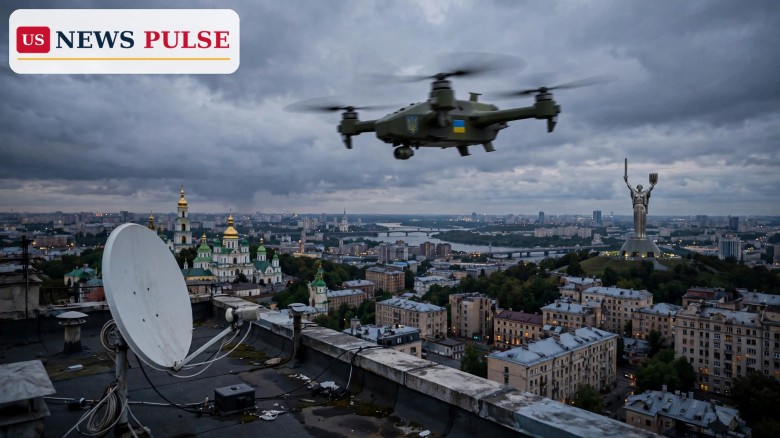
Ukrainian President Volodymyr Zelenskyy has urged the United States and Elon Musk to lift speed restrictions on the Starshield satellite service, warning the curbs cut off Ukraine's interceptors at 161 kilometres per hour as Russia steps up its drone campaign against the energy grid. In a post on X on Sunday, he said the limits remain in force along the front line and in Russian-occupied territory, and that his interceptors "simply cannot catch up with Russian jet-powered 'shaheds'". "We are counting on these restrictions being lifted," he wrote. "It is important to be on the right side of history."
Key Points
- Zelenskyy said on Sunday, 15 November 2026, that the Starshield speed cap is still in place along the front line and in Russian-occupied territory, and urged the US and Elon Musk to lift it.
- Ukraine's interceptor drones lose their operator link at 161 km/h (100 mph), so they cannot catch Russia's faster, jet-powered Shahed drones.
- He has told Ukraine's foreign and defence ministries, and his office, to work "as closely as possible" with the US administration and SpaceX.
- The Sunday post widens the picture from Friday, 13 November, when he said the roughly 100 mph cap applied only in Russian-occupied areas. He now says it covers the whole front line.
- The cap was first detected in October. Musk says the US government controls Starshield, Trump has denied responsibility, and SpaceX denied a cap exists on 13 November.
What Happened
Zelenskyy took to X on Sunday with a direct public appeal to Washington and to Musk. He said restrictions on Starshield, the military-grade version of Starlink, still limit how fast Ukrainian interceptors can fly while staying connected to their operators. Once a drone passes 161 km/h, the link drops — and with it, the ability to chase its target.
That matters because the targets have got faster. Russia's newer jet-powered Shahed drones fly at speeds Ukraine's interceptors can only match if they are allowed to fly flat out. Cut off at 100 mph, interceptors watch attack drones fly on towards power plants and substations. With winter approaching, those energy targets are what Moscow has been hitting, night after night, to leave Ukrainian cities cold and dark.
Background and Context
The row over Starshield speeds has run for more than a month, and Sunday's post is its latest turn. The cap was first detected in October, when Ukrainian operators found their aircraft losing their satellite link above 161 km/h. It was then lifted, with full speed returning on 24 October, until officials reported in mid-November that it was back.
On Friday, 13 November, Zelenskyy said the roughly 100 mph cap had returned in occupied areas. That same day, SpaceX denied that any cap was in place, even as Ukrainian officials insisted their drones were again losing connection at speed. Sunday's post suggests the disagreement is also about where it applies: Zelenskyy now says it covers the whole front line. Musk has said the US government controls the network, while Trump has denied responsibility. Senate Democrats have ordered Musk to preserve Starlink and Starshield records on Ukraine, and Senator Richard Blumenthal has opened a congressional inquiry.
Zelenskyy Starshield Restrictions: Interceptor Drones Cut Off at 161 km/h
The technical core of the dispute is simple. Ukraine's air defence against Russia's nightly drone waves depends increasingly on interceptor drones — small, fast, cheap aircraft sent up to hunt Shaheds before they reach their targets. To catch a jet-powered Shahed, an interceptor must fly faster than its prey and stay in contact with its operator while it does so.
Starshield provides that contact, carrying the control signal and the video feed the operator uses to steer the drone onto its target. If the link is capped at 161 km/h, the interceptor cannot fly faster without going blind: it either slows down and lets the Shahed escape, or speeds up and loses the connection that makes interception possible. The problem grows worse as winter closes in, with Russia targeting Ukraine's energy infrastructure.
Reactions and Quotes
Zelenskyy's own words carried the appeal. "We are counting on these restrictions being lifted," he wrote on X. "It is important to be on the right side of history." On the technical problem he was blunt: Ukraine's interceptors lose connection at 161 km/h and "simply cannot catch up with Russian jet-powered 'shaheds'".
Musk's position, stated earlier in the dispute, is that the US government controls Starshield, not SpaceX. Trump has denied responsibility for any restriction, and SpaceX denied on 13 November that a cap exists — at odds with Zelenskyy's account and the October episode, when the cap was detected, then lifted. Neither the White House nor Starlink had responded publicly to the Sunday post. The BBC said it had sought comment from both.
Why It Matters
The Starshield row matters first for Ukraine's air defence. Interceptor drones have become one of Kyiv's main tools against the Shahed waves, cheaper than firing a missile at every incoming drone and able to be launched in large numbers. If they are hobbled at 100 mph, a gap opens in that defence as Russia presses its winter energy campaign, and the cost is measured in damaged power plants and cold homes.
It matters, too, for the relationship between Kyiv, Washington and Musk. Starshield is a private company's network carrying a military service for an ally at war, and who sets its limits has become a diplomatic issue in its own right. Zelenskyy has now raised it publicly four times with Trump and once more on X.
What Happens Next
The next step is the one Zelenskyy ordered: Ukraine's foreign affairs and defence ministries, with his office, are to work "as closely as possible" with the US administration and SpaceX. No timetable has been given and no meeting announced. The test will be practical: whether Ukrainian operators find, in the coming days, that their drones can once again hold their link above 161 km/h.
The White House and Starlink have yet to respond, and their answers will shape what follows. If either confirms and lifts a cap, the dispute could end quickly; if both deny any restriction, Kyiv must press its case with evidence from its own operators, and the argument could drag into winter.
Frequently Asked Questions
What did Zelenskyy ask for on Sunday?
He urged the US and Elon Musk to lift Starshield speed restrictions, saying they remain in force along the front line and in Russian-occupied territory.
Why does the 161 km/h limit matter?
Ukraine's interceptors lose their operator link at 161 km/h (100 mph) and cannot catch Russia's faster jet-powered Shaheds, which target energy infrastructure ahead of winter.
Who controls Starshield?
Musk says the US government controls the military-grade network. Trump has denied responsibility, and SpaceX denied on 13 November that a cap exists.
Has this happened before?
Yes. A cap was first detected in October, cutting drone links above 161 km/h until full speed returned on 24 October; officials reported in mid-November that it was back.
What happens next?
Zelenskyy told Ukraine's ministries and his office to work "as closely as possible" with the US administration and SpaceX. The White House and Starlink have not yet responded.
© 2026 US News Pulse. All rights reserved.
 Print
 Save