


 | Today's Date:





SpaceX Denies Starshield Speed Cap as Ukraine Says 100 mph Limit Is Back
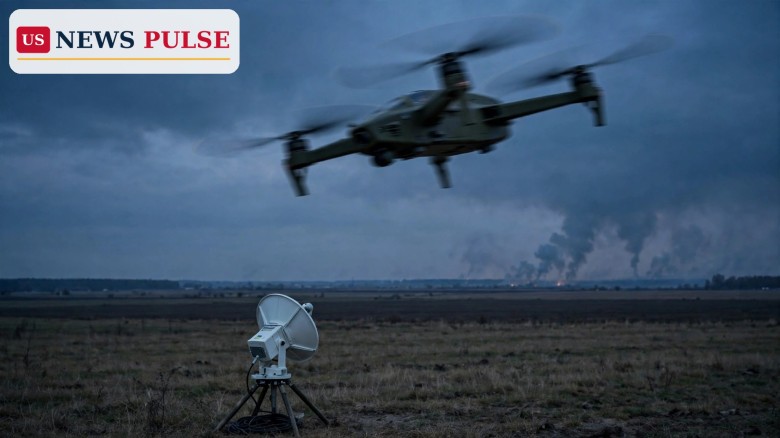
SpaceX says reports of a renewed speed limit on Starshield, the military version of its Starlink satellite network, are false — but Ukraine says its military has measured the restriction, mapped exactly where it applies, and watched Russian strikes get through because of it. On Friday, November 13, 2026, Kyiv escalated the dispute, with its Defence Ministry confirming the 161 km/h cap over all Russian-occupied territory.
Key Points
- SpaceX told Axios: "This is false. There has been no change," denying any renewed speed limit on Starshield.
- Ukraine's Defence Ministry said on Friday, November 13, that its specialists recorded a 161 km/h (100 mph) restriction over all Russian-occupied territory, and none in Ukrainian-controlled areas.
- An unnamed Ukrainian official told Axios that all affected Starshield drone missions in Ukraine are failing — a 100 percent failure rate.
- President Volodymyr Zelenskyy said the cap makes it "impossible" to use interceptor drones against Russian Shahed-type drones, and that some Russian strikes already got through.
- The bipartisan Congressional Ukraine Caucus, with 105 members, demanded a full accounting from the Trump administration and SpaceX and immediate restoration of full Starshield access.
What Happened
The dispute broke open on Thursday, November 12, when Zelenskyy said Ukrainian units had recorded significant Starshield disruptions for several days across Ukraine, and that military checks showed "these are not random errors but systematic speed restrictions." Read more in our report on Zelenskyy saying the Starshield speed cap is back.
SpaceX answered the same day, in two sentences to Axios: "This is false. There has been no change." SpaceX declined to comment to Reuters, and the Pentagon and the White House did not immediately respond. On Friday, November 13, Ukraine answered the denial with measurements: a Defence Ministry source told journalists that specialists had recorded a restriction of 161 km/h "over the entire territory of Ukraine temporarily occupied by the Russians," and that "restrictions on the territory controlled by Ukraine have not been recorded." Zelenskyy said the restrictions make it "impossible" to use interceptors against Shahed-type drones, adding: "Unfortunately, this is helping the Russians kill more Ukrainians and carry out more accurate strikes against Ukraine."
Background and Context
This is the second time in a month that Ukrainian forces have reported the same ceiling. The first cap ran from October 14 to 24, 2026, cutting drone links whenever a terminal moved above 161 km/h, before full service was restored on October 24. After that restoration, Ukraine's Defence Ministry reported stable connections above 400 km/h, so the return of the same 161 km/h limit — at the same speed, in the same places — is what Kyiv calls systematic rather than accidental.
The October episode triggered a political row in Washington and Kyiv. Zelenskyy later told the PBS NewsHour, in an interview aired on November 2, that he was "not sure that he could do it personally alone, without any representatives from American government" — referring to SpaceX chief Elon Musk and who ordered the slowdown. Read more in our report on Zelenskyy doubting Musk acted alone in the Starlink slowdown. Musk has said SpaceX enforced its own terms of service, while earlier saying the US military and "ultimately" the president decide such limits. No one has taken responsibility. The renewed cap surfaced a day after two days of US-mediated talks between Russia and Ukraine in Abu Dhabi ended without a ceasefire. Read more in our report on the Abu Dhabi talks ending without a ceasefire deal.
Starshield Speed Cap: What Ukraine Measured and What SpaceX Denies
The two sides are not arguing about a detail. They are describing different realities. Kyiv has named the speed, the area and the number of days, and says its military checked the readings before the president went public. A corps-level commander fighting in Donetsk Oblast told the Kyiv Independent, on condition of anonymity, that the 160 km/h limit was still in place and made Ukraine's mid-range strike drones easier for Russia to intercept or evade.
SpaceX has given two sentences, and the Pentagon, which buys the service, has said nothing about this week's reports. If SpaceX is right that nothing changed on its side, and Ukraine's units are right about what they measured, then the change came from somewhere else. A limit that switches on over occupied territory and switches off over Ukrainian-controlled territory looks like a geofence, a setting applied to a map, rather than a network fault. The stakes are measured in speed: Russia's jet-powered Geran-4 flies at up to 500 km/h, while an interceptor that loses its link at 161 km/h cannot chase it.
Reactions and Quotes
Zelenskyy's message over the two days was blunt: the disruptions are real, they are systematic, and they are already costing Ukraine interceptions and lives. He did not name who imposed the cap, but on Friday he instructed the foreign and defence ministries to intensify contacts with the US State Department, the Pentagon and SpaceX In Washington, the bipartisan Congressional Ukraine Caucus said on Thursday that it was "extremely alarmed" and demanded a full accounting from the Trump administration and SpaceX, along with the immediate restoration of full Starshield access.
Why It Matters
The renewed cap matters because it weakens Ukraine's cheapest and most flexible air defence at a moment when Russia is pressing its air campaign. Interceptor drones are far cheaper than missiles, they can be launched in large numbers, and they have become the backbone of the nightly battle against Russian drone waves. A speed limit that grounds them, in effect, hands Russia a free advantage without a single shot being fired. It also matters because the pattern is now repeating: one cap could be dismissed as a mistake, but a second cap, at the same speed, a fortnight after the first was lifted, looks like a policy
What Happens Next
Ukraine is seeking an explanation from the United States, and the answer it receives will shape what happens next. If the cap is lifted again, as it was on October 24, interceptor operations can return to full speed within days. If it stays, Ukrainian engineers will have to find workarounds while Russia keeps flying jet drones through the gap.
Frequently Asked Questions
What is the Starshield speed cap?
A limit of 161 km/h (100 mph) on Starshield satellite terminals. Terminals moving faster lose their connection, which affects terminals mounted on high-speed interceptor drones.
What did SpaceX say?
SpaceX told Axios on November 12: "This is false. There has been no change."
How is the cap affecting Ukraine?
It makes it much harder to intercept Russian jet-powered drones, which fly at up to 500 km/h. Zelenskyy said some Russian strikes already got through.
Has this happened before?
Yes. The same 161 km/h cap ran from October 14 to 24, 2026, before full service was restored. The November cap is the second such restriction in a month, and the first time SpaceX has denied one on the record.
Who imposed the cap?
That is not known. Ukraine is seeking an explanation from the United States, SpaceX denies any change, Defence Secretary Pete Hegseth has denied any US directive behind the October cap, and President Donald Trump denied ordering it.
Leave a Comment