
Supreme Court Lets California Implicit Bias Training Rule for Doctors Stand
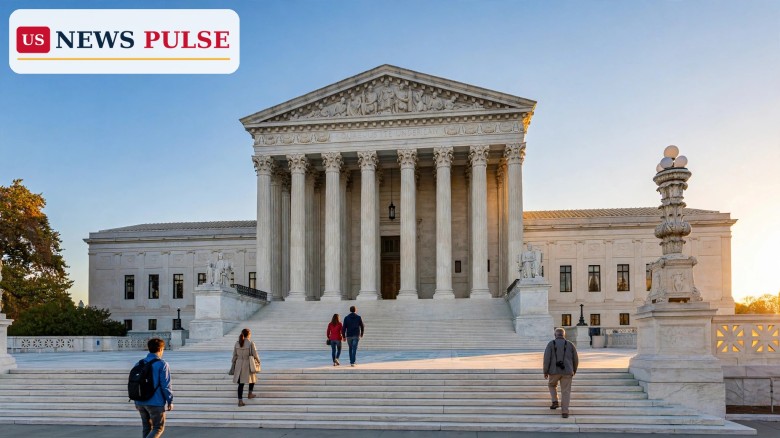
WASHINGTON — The Supreme Court on Monday declined to hear a First Amendment challenge to California's requirement that doctors complete training on implicit bias, leaving the state mandate in place. The justices turned away the case, Khatibi v. Yip, without comment, but three of the court's most conservative members said they would have taken it — one vote short of the four needed to grant review. California physicians must keep taking courses on unconscious prejudices that can shape patient care, while the question of when the government can compel professionals to speak remains unanswered.
Key Points
- The Supreme Court declined on Monday, November 16, 2026, to hear Khatibi v. Yip, a First Amendment challenge to California's implicit-bias training rule for doctors.
- Justices Clarence Thomas and Samuel Alito dissented from the denial, and Justice Neil Gorsuch also said he would have granted review — three votes, one short of the four required.
- The 2019 law requires physicians to complete 50 hours of continuing education every two years, including implicit-bias content.
- Challengers Dr. Azadeh Khatibi and the nonprofit Do No Harm argued the rule compels private speech; the Ninth Circuit ruled the courses count as government speech.
- The mandate stays in effect, and California keeps control of what counts as essential knowledge for licensed doctors.
What Happened
The decision came in the court's Monday orders list, with no explanation. Such denials are routine: the court turns away most petitions, and refusing to hear a case is not a ruling on the merits. What set it apart was the written dissent. Justice Clarence Thomas, joined by Justice Samuel Alito, said the court should have taken the case, writing that "A State cannot regulate its way out of First Amendment scrutiny." Justice Neil Gorsuch separately said he would also have granted review — three votes, one short of the four required.
Thomas argued the requirement "is not speech by any government actor; it is a requirement that private speakers communicate certain messages." "We should not permit the government-speech doctrine to be wielded as 'a cover for censorship' or a cloak for compelled speech," he wrote. The dissent decided nothing, but it put three justices on record: compelled speech in professional licensing deserves a hearing.
Background: The California Law and the Legal Fight
California lawmakers adopted the requirement in 2019, and it has been in force since January 1, 2022. The legislature said unconscious prejudices often contribute to unequal health care based on a patient's race, gender, age or disability. It cited research showing African Americans are often prescribed less pain medication than White patients, and women are less likely to survive a heart attack when treated by a male doctor. The rule folds the bias content into the 50 hours of approved continuing education California physicians must complete every two years to stay licensed.
The challenge was brought by Dr. Azadeh Khatibi, an ophthalmologist who teaches courses on retinal tumours and glaucoma, and the nonprofit Do No Harm. Khatibi's name means "freedom" in Farsi; her family fled Tehran when she was six. Her lawyers argued forcing doctors to teach and take such courses compels them to speak a message they do not accept. The 9th U.S. Circuit Court of Appeals upheld the dismissal in July 2025, ruling the classes are government speech, which the First Amendment does not regulate, and that California has long controlled medical practice under its "evolving judgment" of essential knowledge, "of which implicit bias is one."
Supreme Court Implicit Bias Training: Why Three Justices Wanted the Case
The dissenters' concern reaches beyond one California rule. If a state can label a message government speech simply because it requires private professionals to deliver it, Thomas argued, the First Amendment's protection against compelled speech would shrink wherever the state licenses work. Doctors, lawyers and teachers all take state-mandated courses; the question is where the line falls between professional standards and a private person's right not to be made to say something.
That one-vote gap matters. Had a fourth justice agreed, the court would have heard arguments and issued a decision that could have reshaped continuing-education rules in California and beyond. Instead, the Ninth Circuit's ruling stands across the western states it covers. The court has taken up compelled-speech disputes before, but never squarely decided whether a state may require licensed professionals to teach contested ideas to keep their licences.
Reactions and Quotes
Caleb Trotter, a senior attorney at the Pacific Legal Foundation who represented the challengers, said the training sends a damaging message. "It tells doctors that their colleagues harbor hidden racial prejudices that no amount of training can fully cure, and it tells minority patients that a white physician is likely to damage their health," Trotter said in a statement. "That's not medicine. It's compelled speech."
Supporters point to the legislature's findings and the health gaps the training is meant to close. Lawmakers cited evidence that unconscious bias contributes to unequal treatment — from pain relief to heart-attack survival — and argued that doctors who recognise those patterns can deliver better care. The court's refusal to intervene leaves that view in place, as in other recent cases where the justices declined to disturb lower-court rulings.
Why It Matters
The stakes are practical as well as constitutional. California licenses more than 100,000 physicians, and every one must keep completing the bias content. For patients, the law's defenders say the point is trust: if some patients receive different care because of who they are, naming the problem is a first step toward fixing it. For doctors who object, they must teach and sit through material they believe misstates their care, with their licence depending on compliance.
What Happens Next
Nothing changes for California doctors in the short term. The training requirement remains in force, and physicians will keep completing it as part of their two-year continuing-education cycle. The challengers have no further appeal here, though they could bring a fresh challenge if California changes the rule or another court reaches a conflicting result — a split among the appeals courts is often what finally persuades the Supreme Court to step in. See also the court's recent judiciary harassment ruling and its refusal of a bank's Fed account bid.
Frequently Asked Questions
What did the court decide?
The court declined to hear Khatibi v. Yip, a challenge to California's rule. A denial is not a ruling on the merits; it leaves the lower court's decision in place.
What is the California rule?
A 2019 law, in force since January 1, 2022, requires California physicians to complete 50 hours of continuing education every two years, including implicit-bias content.
Who challenged it?
Dr. Azadeh Khatibi and the nonprofit Do No Harm. They argued the rule forces doctors to communicate messages they do not accept.
Why did three justices dissent?
Justices Thomas, Alito and Gorsuch said the court should have heard the case. Thomas warned the doctrine should not become "a cover for censorship" or compelled speech.
Does it affect doctors elsewhere?
Not directly — it only leaves California's law in effect. But the Ninth Circuit's reasoning stands unreviewed, and other states may look to it for their own rules.
© 2026 US News Pulse. All rights reserved.
 Print
 Save