

 | Today's Date:


Supreme Court Declines Strickland Judiciary Harassment Case - US News Pulse
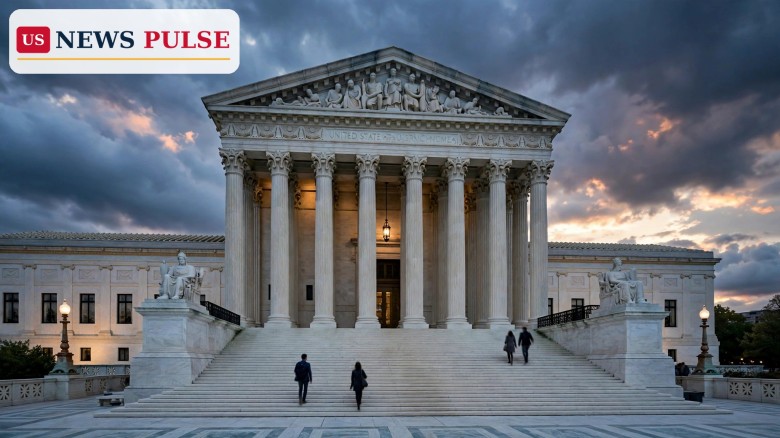
The US Supreme Court on Monday, November 16, 2026, declined to hear a case challenging how the federal judiciary handles workplace misconduct complaints, ending a former federal public defender's years-long legal fight over alleged sexual harassment by her supervisor. The justices turned away Caryn Strickland's appeal in Strickland v. United States, No. 25-1303, leaving in place a lower-court ruling that found she had failed to show her rights under the Fifth Amendment to equal protection and due process were violated. Her lawyer says the fight now moves to Congress.
Key Points
- The Supreme Court declined on Monday, November 16, 2026, to hear Strickland v. United States, No. 25-1303, a challenge to how the federal judiciary handles employee misconduct complaints.
- Caryn Strickland, a former federal public defender in the Western District of North Carolina (2017–2019), said her supervisor sexually harassed her.
- Lower courts found she failed to show her Fifth Amendment rights to equal protection and due process were violated by the judiciary's handling of her complaint.
- Her case led to a rare trial of the judiciary's internal complaint system for its roughly 30,000 employees, who lack the discrimination protections other federal workers have.
- Her lawyer, Emory law professor Paul Koster, called the decision disappointing and urged Congress to act.
What Happened
The justices declined her appeal without giving reasons, as the Court customarily does. The petition had asked them to review a 4th US Circuit Court of Appeals ruling that last year upheld a decision against Strickland by a Boston-based judge brought in because of conflicts in North Carolina, where she had worked.
Strickland sued in 2020, alleging her rights were violated by the mishandling of her complaint about her direct supervisor. She had worked from 2017 to 2019 in the Federal Public Defender's Office in the Western District of North Carolina, which provides lawyers for defendants who cannot afford one.
She cited a May 18, 2018, email her supervisor sent after they had drinks together, offering to help her career and saying he had a "plan" to raise her pay, adding, "just remember I deal in pay-for-stay :)." She alleged the district's top federal defender responded to her complaint with deliberate indifference, and that officials botched a complaint she pursued through the judiciary's internal employment dispute resolution (EDR) system, managed by the 4th Circuit.
Background: A Judiciary Outside the Usual Workplace Protections
The roughly 30,000 people who work for the federal judiciary are in an unusual position: unlike other federal workers, they are not covered by the statutes that protect employees against discrimination, so harassment complaints are handled through the judiciary's own internal system.
That system was the real subject of Strickland's case. After a non-jury trial, US District Judge William Young ruled against her in August 2024, while joining calls to reform the system: if "judges are serious about sexual harassment, we must own the process." A three-judge 4th Circuit panel then held that while judiciary employees "behaved imperfectly" and made "missteps" in the EDR process, the system was not so fundamentally unfair as to violate her rights.
Strickland was among former judiciary employees who testified to Congress in 2022 for legislation giving judicial employees greater rights. Her case was the subject of a rare trial examining how the judiciary handles workplace misconduct complaints.
Supreme Court Strickland Case: How Workplace Complaints Are Handled
In his petition, Koster argued the case gave the justices a chance "to clarify the role of the federal judiciary in ensuring a workplace free from harassment and discrimination for its employees," and that the 4th Circuit had wrongly upheld Judge Young's ruling.
Koster argued the judiciary cannot constitutionally force employees to use a complaint system lacking an independent decision-maker, meaningful safeguards and adequate remedies. "The federal judiciary has been aware of sexual harassment occurring within its workplace for decades," he wrote, yet "inadequate protection of its employees remains."
The Justice Department, which has represented the judiciary throughout the litigation, countered that the case was a poor vehicle for those arguments and that Strickland's claims were meritless. D. John Sauer represented the government.
Reactions and Quotes
Koster said in a statement that the Supreme Court's decision not to hear the case was disappointing, and he called on Congress to act. "Employment by the federal judiciary should not mean losing essential protections against workplace discrimination and harassment," he said.
The Administrative Office of the US Courts, the judiciary's administrative arm, did not respond to requests for comment on the Court's decision.
Why It Matters
The decision matters because of who it leaves without a remedy. About 30,000 people work for the federal judiciary — chambers staff, court clerks, probation officers and public defenders — and none has the statutory discrimination protections covering other federal employees. Their only route is that internal process.
It also matters because the institution being judged was judging itself. The judiciary designed the EDR system, staffed it and decided Strickland's complaint within it, and the reviewing courts declined to find that arrangement unconstitutional — the core problem, critics say, is that the branch deciding everyone else's rights decides its own employees' complaints behind closed doors.
What Happens Next
In the courts, Strickland's case is over: the refusal leaves the 4th Circuit ruling in place, with no further appeal available, and the judiciary's internal complaint system remains as it is, at least for now.
The next move, if there is one, belongs to Congress: Koster called on lawmakers to act, and Democratic lawmakers continue to pursue legislation giving judicial employees greater rights, the proposal Strickland backed in testimony in 2022. Whether it advances depends on a Congress that has heard these calls before.
The judiciary could also change its system without being ordered to. Judge Young's admonition — that judges must "own the process" if they are serious about sexual harassment — remains on the record, and the Administrative Office has not said whether it plans changes.
Frequently Asked Questions
What did the Supreme Court decide?
The Court declined on Monday, November 16, 2026, to hear Strickland v. United States, No. 25-1303, giving no reasons, as is customary.
Who is Caryn Strickland?
A former federal public defender in the Western District of North Carolina (2017–2019). She sued in 2020, saying her supervisor sexually harassed her and her complaint was mishandled.
What did she allege happened?
She cited a May 18, 2018, email in which her supervisor offered career help and wrote, "just remember I deal in pay-for-stay :)". She also alleged the district's top federal defender responded with deliberate indifference.
Why are judiciary employees treated differently?
The judiciary's roughly 30,000 employees are not covered by the statutes protecting other federal workers against discrimination. Their complaints go through the judiciary's own internal dispute resolution system instead.
What happens now?
The court case is over, with the 4th Circuit ruling left standing. Her lawyer has called on Congress to act, and Democratic lawmakers continue to pursue legislation giving judicial employees greater protections.
More from US News Pulse: Senate Votes 70-27 to Advance Permitting Bill in Second Cloture Test; Border Encounters Hit Record October Low as Zero-Release Streak Reaches 18 Months; Teva Settles Generic Drug Price-Fixing Case After a Decade.

The US News Pulse newsroom covers breaking news across the United States and the world, working from wire services, official statements and on-the-record sources. Every story is reviewed against our editorial standards before publication. Corrections and tips: info@usnewspulse.com
About our newsroomLeave a Comment