
Leukemia Vaccine Passes Key Phase 3 Trial, Cutting Death Risk 41% - US News Pulse
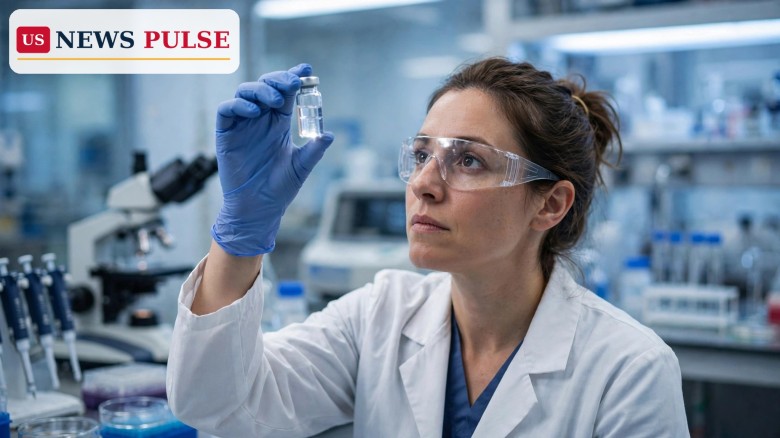
A first-of-its-kind leukemia vaccine has passed its pivotal Phase 3 trial, cutting the risk of death by 41% and giving patients with acute myeloid leukemia a median of 9.3 extra months of life, SELLAS Life Sciences announced on Tuesday, November 17, 2026.
The vaccine, galinpepimut-S (GPS), trains the immune system to hunt down leukaemia cells left after chemotherapy. In the REGAL trial, patients who received it lived a median of 24.0 months, against 14.7 months for best available treatment. SELLAS will now meet the US Food and Drug Administration about an accelerated filing, aiming to submit a licence application in the first half of 2027.
Key Points
- REGAL met its primary endpoint: GPS cut the risk of death by 41% (hazard ratio 0.59, p=0.035); median survival was 24.0 months versus 14.7 months.
- The trial enrolled 126 patients with acute myeloid leukemia in a second or later complete remission who could not have a stem-cell transplant.
- GPS is a WT1-targeting immunotherapeutic vaccine, licensed from Memorial Sloan Kettering Cancer Center and discovered in Dr. David A. Scheinberg's laboratory.
- It was generally well tolerated, with no new safety signals; side effects were mostly mild to moderate injection-site reactions.
- SELLAS will meet the FDA on an accelerated filing and aims to submit a Biologics License Application in the first half of 2027. Shares jumped about 157% to $19.17.
What Happened
SELLAS and Memorial Sloan Kettering announced the topline results on Tuesday, November 17, 2026. REGAL is a global, randomised, open-label trial testing GPS as maintenance therapy for patients in a second or later remission who cannot receive an allogeneic stem-cell transplant. The 126 patients were randomised one-to-one to GPS or the investigator's choice of best available treatment: observation, a hypomethylating agent, venetoclax, low-dose cytarabine, or a combination.
The analysis followed 80 deaths, as pre-specified. On safety, GPS was generally well tolerated, with no new safety signals and mostly mild to moderate injection-site reactions. SELLAS held a webcast at 7:45 a.m. Eastern Time on Tuesday to discuss the results.
Background: Why This Trial Matters for AML Patients
Acute myeloid leukemia is an aggressive blood and bone-marrow cancer in which the marrow makes abnormal white blood cells that crowd out healthy ones. It is the most common acute leukaemia in adults. Chemotherapy can induce remission, but the disease often returns, and each relapse is harder to treat.
A stem-cell transplant from a donor is the only realistic cure for many patients, but it is gruelling and out of reach for many because of age, health, or the lack of a donor. Maintenance therapy that keeps the cancer away has long been a major unmet need. That is the gap GPS aims to fill.
Leukemia Vaccine: How GPS Trains the Immune System
GPS targets WT1, a protein found in many blood cancers and solid tumours, including acute myeloid leukemia. It is made of four WT1-derived peptides that stimulate both arms of the T-cell response, CD4+ helper cells and CD8+ killer cells, teaching them to recognise WT1 and destroy residual leukaemia cells before they grow into a relapse.
It is a therapeutic vaccine, not a preventive one: it is given to people who already have the disease, after chemotherapy, to keep it in check. GPS is the first WT1-targeting vaccine to show a statistically significant survival benefit in a pivotal Phase 3 trial.
Reactions and Quotes
SELLAS president and chief executive Dr. Angelos Stergiou called it a defining moment for the company. "REGAL has delivered on its primary objective, demonstrating a statistically significant and clinically meaningful improvement in overall survival for patients with AML who have very limited options after achieving a second remission," he said. "The magnitude of the survival benefit observed with our investigational GPS immunotherapeutic cancer vaccine represents a defining milestone for SELLAS and provides Phase 3 validation of our WT1-targeted immunotherapeutic technology." He said the company looks forward to engaging with the FDA "with the goal of making this therapy available to patients as rapidly as possible."
The REGAL steering committee, led by Dr. Hagop M. Kantarjian of MD Anderson Cancer Center, said: "By training the immune system to target residual leukemia cells, GPS addresses a critical unmet need and has the potential to redefine the treatment paradigm in AML maintenance therapy." Investors reacted sharply: SELLAS shares surged about 157% on Tuesday, closing at $19.17 after ending Monday at $7.47.
Why It Matters
For patients in a second remission who cannot have a transplant, there has been no maintenance therapy proven to extend life, so a vaccine adding more than nine months of median survival would change what doctors can offer. It also validates a field that has seen more disappointment than success: a positive Phase 3 survival result for a WT1 vaccine is the evidence researchers have waited for, and WT1 appears in many other cancers too.
What Happens Next
The next step is the FDA meeting, where SELLAS will discuss an accelerated filing while preparing its Biologics License Application for the first half of 2027. Full secondary-endpoint results will be presented at a major medical conference and submitted to a peer-reviewed journal. Caution is warranted: these are topline results, the trial was open-label, the control arm received the investigator's choice of treatment rather than a placebo, and the FDA may not agree with an expedited review.
Frequently Asked Questions
What is the leukemia vaccine GPS?
GPS, or galinpepimut-S, is an investigational vaccine targeting the WT1 protein on leukaemia cells. It trains the immune system to attack residual cancer cells as maintenance therapy after remission.
How much longer did patients live in the trial?
A median of 24.0 months with GPS, against 14.7 months with the best available treatment, a difference of 9.3 months, with a 41% lower risk of death.
Who was in the REGAL trial?
126 patients with acute myeloid leukemia in a second or later complete remission who could not have an allogeneic stem-cell transplant, randomised one-to-one to GPS or best available treatment.
When could it become available?
SELLAS aims to submit a Biologics License Application in the first half of 2027 after meeting the FDA. It is not yet approved.
What were the side effects?
GPS was generally well tolerated, with no new safety signals. Side effects were mostly mild to moderate injection-site reactions.
Read more on US News Pulse: World's First Deceased-Donor Bone Marrow Transplant Cures Severe Aplastic Anemia, Voceryq FDA Approval: First DNA Medicine to Cut Surgeries for Rare Airway Disease, and US Measles Cases Surge Past 7,700 as 13 Deaths Reported in 2026.
© 2026 US News Pulse. All rights reserved.
 Print
 Save