

 | Today's Date:





World's First Deceased-Donor Bone Marrow Transplant Cures Severe Aplastic Anemia
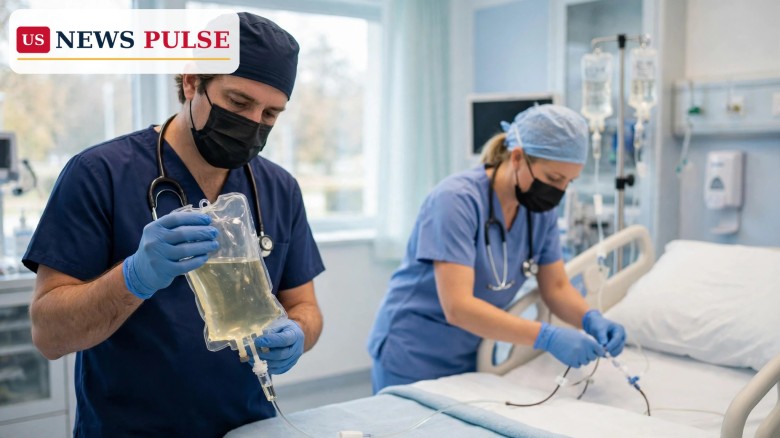
Doctors in Indiana have completed the world's first deceased-donor bone marrow transplant to treat a non-malignant disease, giving a 40-year-old woman with severe aplastic anemia a new blood-forming system from bone marrow recovered from a deceased organ donor.
Announced on Tuesday, November 10, 2026, six months after the transplant, it leaves the patient — ill for a decade — free of blood and platelet transfusions, her blood and immune system now produced entirely by the donor's stem cells.
Key Points
- Franciscan Health and Ossium Health announced on November 10, 2026 the world's first reported deceased-donor bone marrow transplant for a non-malignant disease.
- The patient, a 40-year-old woman diagnosed in 2015, received the transplant on April 18, 2026 at Franciscan Health in Indiana.
- She received 6.84 million CD34+ stem cells per kilogram after a reduced-intensity conditioning regimen.
- Six months later, she has durable engraftment, restored blood counts, full donor chimerism and no graft-versus-host disease.
- She is transfusion independent, and the approach could widen access to bone marrow for thousands of patients.
What Happened
The transplant took place on April 18, 2026 at Franciscan Health, using bone marrow supplied by Ossium Health. Diagnosed with aplastic anemia in 2015, the patient was stable for years before the disease progressed to severe aplastic anemia despite multiple lines of therapy, and serial biopsies showed it worsening.
When her disease stopped responding to medication, her care team decided a transplant was the only way to replace her failing marrow with healthy blood-forming stem cells. After a reduced-intensity conditioning regimen, she received 6.84 million CD34+ cells per kilogram from a deceased organ donor.
Six months later, the result was confirmed: the donor marrow has taken hold, her blood counts have recovered, and she has full donor chimerism — her blood and immune system are now produced entirely by the donor's stem cells. To date, she has not had graft-versus-host disease, in which donor immune cells attack the recipient's body.
Background: Severe Aplastic Anemia and the Donor Shortage
Aplastic anemia is a rare, serious condition in which the bone marrow stops making enough new blood cells, leaving patients facing severe anaemia, infection and dangerous bleeding. When drugs stop working, a bone marrow transplant is often the only potentially curative treatment.
For non-malignant conditions such as severe aplastic anemia, sickle cell disease and beta thalassemia, bone marrow is the preferred stem cell source over peripheral blood stem cells. The goal is durable engraftment with the lowest risk of chronic graft-versus-host disease, and bone marrow grafts contain fewer T cells, the immune cells that drive it, so rates are significantly lower.
Yet bone marrow is scarce. Most unrelated living donors give peripheral blood stem cells, not bone marrow, which needs surgery and a longer recovery. Ossium recovers bone marrow from deceased organ donors and banks it, so no living donor must undergo surgery.
Deceased Donor Bone Marrow Transplant: How the Procedure Works
The procedure followed the established path of a bone marrow transplant, with one key difference: the graft came from bone marrow recovered from a deceased organ donor, supplied by Ossium Health, instead of marrow drawn from a living donor under anaesthesia.
Before the infusion, she received a reduced-intensity conditioning regimen to suppress her immune system and make room for the new marrow, then 6.84 million CD34+ cells per kilogram — the blood-forming stem cells that produce red cells, white cells and platelets.
Doctors then watched for engraftment, when donor cells take hold and start producing blood. Six months on, engraftment was durable, her blood counts had recovered, and full donor chimerism confirmed her blood and immune system were entirely donor-derived, with no graft-versus-host disease.
Reactions and Quotes
Dr Felix Mensah, the treating physician at Franciscan Health, said:
"Bone marrow transplantation for severe aplastic anemia has been performed since the 1970s using living related and unrelated donors. To our knowledge, this is the first reported transplant of deceased organ donor bone marrow for severe aplastic anemia," Mensah said. "This case shows why continued innovation in transplant medicine matters, and why we need more donor options, so that every patient with a life-threatening bone marrow failure disorder has access to potentially curative therapy."
Kevin Caldwell, Ossium's chief executive, called it a defining moment:
"Reaching the first non-malignant transplant is a defining moment," Caldwell said. "Bone marrow has long been recognized as the optimal graft source for diseases like severe aplastic anemia, sickle cell disease, and beta thalassemia, yet it has remained difficult to access. By recovering and banking bone marrow from organ donors, we can consistently deliver a high cell dose from the preferred graft source to optimize treatment outcomes."
It builds on Ossium's June 2024 milestone, when the first blood cancer patient was treated with the company's organ donor bone marrow.
Why It Matters
Bone marrow failure disorders affect thousands of Americans, and for many a transplant is the only cure. Sickle cell disease alone affects about 100,000 people in the United States, and beta thalassemia and severe aplastic anemia add thousands more.
For those patients, the donor shortage has been a hard limit. A matched sibling donor is available for only a minority, and unrelated living donors often give peripheral blood stem cells instead of bone marrow. Deceased organ donors are a large, untapped source.
If it proves reliable at scale, patients who wait months for a matched donor — or never find one — could receive a high cell dose from a banked supply, years earlier for children and young adults, and with fewer cases of chronic graft-versus-host disease.
What Happens Next
Ossium said it plans to treat more patients with malignant and non-malignant diseases this year through its HOPE Program, expanding access to deceased donor bone marrow.
Doctors will continue to follow the 40-year-old patient closely. Six months is encouraging, but transplant physicians watch for late complications, including chronic graft-versus-host disease, for years. Longer follow-up, and results in more patients, will show whether the durable engraftment seen here holds across different diseases and ages.
Frequently Asked Questions
What is severe aplastic anemia?
A rare condition in which the bone marrow fails to produce enough blood cells. Patients face severe anaemia, infections and bleeding, and when drugs stop working, a transplant is often the only cure.
What makes this transplant a world first?
It is the first reported transplant for a non-malignant disease using bone marrow from a deceased organ donor. Earlier transplants used living donors; Ossium's first deceased-donor transplant, in June 2024, treated a blood cancer patient.
What is deceased-donor bone marrow?
Bone marrow recovered from a person who has died and donated their organs. Ossium recovers and banks it for use as a stem cell graft, so no living donor must undergo surgery under anaesthesia.
Why is bone marrow preferred over peripheral blood stem cells for non-malignant disease?
Bone marrow grafts contain fewer T cells, the immune cells that drive graft-versus-host disease, so chronic cases are significantly less common. For non-malignant disease, the goal is durable engraftment with the lowest possible risk.
More from US News Pulse: Omalizumab eases red meat allergy, study finds; Costco recalls Kirkland whipped cream in 12 states; 9/11 illness death claims top 10,000.

The US News Pulse newsroom covers breaking news across the United States and the world, working from wire services, official statements and on-the-record sources. Every story is reviewed against our editorial standards before publication. Corrections and tips: info@usnewspulse.com
About our newsroomLeave a Comment