
Chiquita Canyon Methane Geyser Sends Six Workers to Hospital in California
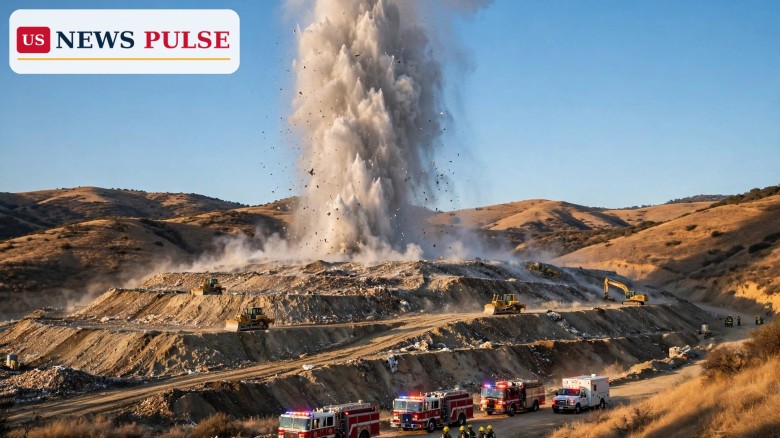
A drilling crew at the Chiquita Canyon Landfill in Castaic, California, struck a pressurised pocket of methane gas about 150 feet underground on Monday afternoon, sending a geyser of debris and gas roughly 500 feet into the air and putting six workers in hospital.
The eruption happened at 4:04 p.m. PT on Monday, November 16, 2026, triggering a hazardous-materials response and evacuation warnings for nearby areas, including Val Verde and Hasley. The leak was capped by 11 p.m. the same night. Officials later clarified there was no explosion or fire, and said air-monitoring readings stayed within acceptable limits.
Key Points
- A drilling operation at Chiquita Canyon Landfill struck a pressurised pocket of methane about 150 feet underground at 4:04 p.m. PT on Monday, November 16, 2026, sending a geyser of debris and gas about 500 feet into the air.
- Six landfill workers were taken to hospital with minor injuries, according to the Los Angeles Times, citing a county fire spokesperson; county fire officials separately said four workers were transported for evaluation.
- The leak was capped at 11 p.m. on Monday, and officials said there was no explosion or fire and air-monitoring readings stayed within acceptable limits.
- On Tuesday, November 17, the Los Angeles County Department of Public Health directed operator Waste Connections to offer immediate relocation to affected residents — hotel stays, air purifiers and transport help — with Environmental Protection Agency representatives at the scene.
- Waste Connections shares closed down 8% on Tuesday, November 17, and Los Angeles County Supervisor Kathryn Barger called the eruption and methane plume "unacceptable" and demanded accountability.
What Happened
Crews were carrying out drilling work at the landfill when the drill struck the trapped pocket of gas. The pressure threw a column of debris and methane high above the site, visible for miles around Castaic. County fire crews and hazardous-materials teams were sent to the scene, and evacuation warnings went out to nearby zones, including Val Verde and Hasley, as a precaution.
The workers caught up in the eruption were taken to hospital with minor injuries. The Los Angeles Times, citing a county fire spokesperson, reported six workers hospitalised, while county fire officials separately said four workers were transported for evaluation. No further detail about their conditions has been released. The leak was sealed by 11 p.m. on Monday, and officials stressed that, despite the force of the eruption, there was no explosion and no fire at the site.
Background and Context
Chiquita Canyon is a large municipal landfill in Castaic, taking waste from across the Los Angeles region. As buried waste breaks down, it produces methane, a flammable gas landfills normally collect and control. When gas is trapped underground, pressure can build until drilling or shifting waste releases it suddenly, which is what appears to have happened here. A column about 500 feet high is far beyond routine gas venting.
The site was already under scrutiny. A month earlier, the California Attorney General's office sued Waste Connections, alleging that it mismanaged toxic waste at the facility and harmed nearby residents. That lawsuit, combined with a county-ordered relocation of residents after this week's eruption, puts the operator's management of the landfill firmly under the spotlight.
Chiquita Canyon Methane Geyser: What Officials Know So Far
Confirmed so far: the time and place, the depth of the gas pocket, the height of the plume, the hospitalisations, the 11 p.m. capping, and the county's relocation directive the next day. Officials have not yet said what allowed pressure to build to that level, or how much gas escaped before the leak was sealed — questions that go to whether the gas was properly monitored and controlled.
The distinction officials drew between this event and an explosion also matters. A methane eruption can throw debris and gas into the air without igniting, and in this case it did not. That is why the county could say air-monitoring readings stayed within acceptable limits, even as it ordered relocations for residents living closest to the site.
Reactions and Quotes
Los Angeles County Supervisor Kathryn Barger called the eruption and the methane plume "unacceptable" and demanded accountability from the operator. Her response set the tone for the county's handling of the incident: swift action for residents first, and questions about responsibility to follow.
The county's Department of Public Health moved the next day, directing Waste Connections to offer immediate relocation to affected residents, including hotel stays, air purifiers and transport assistance. Representatives from the Environmental Protection Agency were at the scene as the response continued. County fire officials, meanwhile, reassured nearby communities that air-monitoring readings had stayed within acceptable limits and that there had been no explosion or fire.
Why It Matters
Six workers were hospitalised, and residents living near the landfill were told to leave their homes, some of them to hotels paid for by the operator. For the families in Val Verde and nearby areas, this was not a distant industrial incident but a direct disruption to their lives, coming on top of the concerns already raised in the Attorney General's lawsuit about toxic waste at the site.
It also matters beyond Castaic. Methane is a far more potent greenhouse gas than carbon dioxide over the short term, so a large uncontrolled release is an environmental event as well as a local accident. And the market noticed: Waste Connections shares fell 8% on Tuesday, a sign that investors are pricing in the regulatory and legal risk now facing the operator.
What Happens Next
The relocation offers are now rolling out to affected residents, with hotel stays, air purifiers and transport help on the table. Air monitoring will continue while the site is stabilised, and county health officials will say whether any further precautions are needed for people living near the landfill.
Investigators will also examine what caused the gas pocket to become so pressurised and whether the landfill's gas controls were working as they should. County and federal regulators will decide what enforcement action, if any, follows, and Waste Connections will face questions about how it manages gas at one of the region's largest landfills.
Frequently Asked Questions
Where did the methane geyser happen?
At the Chiquita Canyon Landfill in Castaic, Los Angeles County, California.
When did it happen?
At 4:04 p.m. PT on Monday, November 16, 2026. The leak was capped by 11 p.m. the same night.
How many people were hurt?
Six workers were taken to hospital with minor injuries.
Was there an explosion or fire?
No. Officials clarified that there was neither an explosion nor a fire, and air-monitoring readings stayed within acceptable limits.
What help is available for nearby residents?
The county ordered Waste Connections to offer immediate relocation, including hotel stays, air purifiers and transport assistance.
For more on industrial accidents in the United States, read our report on the explosion and fire at the Clean Harbors plant near Houston, and for more California news, read our story on prosecutors suing to block Governor Newsom's death-row commutation of 548 inmates.
© 2026 US News Pulse. All rights reserved.
 Print
 Save