
Kushner Says Russia Agreed to Multilateral Ukraine Talks, POWs Head Home
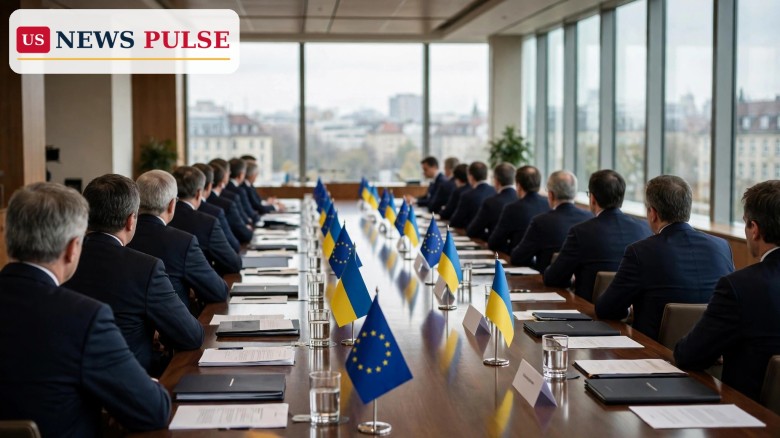
US special envoy Jared Kushner said late on Thursday, November 19, 2026, that Russia has agreed to join multilateral Ukraine talks that bring European countries into the negotiation, and that thousands of prisoners of war will return to their families in the coming weeks. The announcement, made after a Coalition of the Willing meeting in Berlin, marks the first time Moscow has accepted a format that puts European governments at the table alongside Washington, Kyiv and Moscow. President Volodymyr Zelenskyy pressed the United States to organise the first meeting at team level as soon as possible.
Key Points
- US envoy Jared Kushner said Russia has agreed to a multilateral negotiating format on Ukraine including European countries, after the Berlin Coalition of the Willing meeting late on Thursday, November 19, 2026.
- Thousands of prisoners of war will go home to their families in the coming weeks, Kushner said, in what would be one of the largest prisoner returns of the war.
- Ukrainian President Volodymyr Zelenskyy urged the US to organise the first multilateral meeting at team level, with full European participation, as soon as possible.
- Kushner said: "President Trump wants to make a deal with Europe by his side. He's not looking to impose anything unilaterally."
- Caution remains: on Friday, November 20, Russian Deputy Foreign Minister Sergei Ryabkov said inviting European officials to Moscow did not mean accepting them into the US-brokered format, and the Kremlin has not commented.
What Happened
The announcement came after a Coalition of the Willing meeting in Berlin with British Prime Minister Andy Burnham, German Chancellor Friedrich Merz and French President Emmanuel Macron, plus US envoys Kushner and Steve Witkoff and President Zelenskyy. President Donald Trump phoned in from Air Force One after the Shenzhen trilateral talks.
The prisoner announcement was the most concrete part of the day. Kushner said thousands of prisoners of war will go home in the coming weeks, building on an agreement in principle reached at the Abu Dhabi talks earlier in November. No date, number or list of names has been published yet.
Background and Context
The Berlin announcement follows weeks of shuttle diplomacy. On November 10-11, the first direct Russia-Ukraine talks in nine months took place in Abu Dhabi, ending without a ceasefire but with an agreement in principle on a large-scale prisoner exchange. Kushner and Witkoff then travelled to Moscow to meet President Vladimir Putin for about two and a half hours at the Kremlin on November 12, and to Dublin to meet Zelenskyy. On November 13, Kushner wrote on X that Washington was working toward "the largest prisoner exchange of the war, potentially reuniting thousands of people with their families".
At the same Berlin meeting, Kushner also said Russia is "comfortable" with NATO-like security guarantees for postwar Ukraine, covered in a separate report. The two announcements together describe a negotiation widening on two fronts at once: who sits at the table, and what guarantees Ukraine gets when the fighting stops. European governments have argued since the war began that no settlement can hold without them.
Multilateral Ukraine Talks: What Was Agreed in Berlin
The format Kushner described goes beyond the bilateral US-Russia channel that has dominated the peace effort. A multilateral format means European governments take part in the negotiation itself, not as observers briefed afterwards, and Zelenskyy wants the first meeting at team level, with officials from all sides working through the details, held as soon as possible. He called it a first-of-its-kind meeting, and the wording matters: until now, Europe's role has been to endorse or react to proposals shaped elsewhere.
Kushner's framing of the American approach was deliberate. "President Trump wants to make a deal with Europe by his side. He's not looking to impose anything unilaterally," he said, a message aimed as much at European capitals as at Moscow. Trump phoning in from Air Force One underlined that the Ukraine effort is run from the top of the administration.
Reactions and Statements
Zelenskyy's push for speed was the clearest Ukrainian reaction: organise the first multilateral meeting at team level, with full European participation, as soon as possible. For Kyiv, the format is itself a safeguard: a deal negotiated only between Washington and Moscow could trade away Ukrainian interests. Having Europe in the room at working level is how Kyiv wants the detail of any settlement tested.
The Russian response, so far, has been guarded. Deputy Foreign Minister Sergei Ryabkov said on Friday that inviting European officials to Moscow did not mean accepting them into the US-brokered format, leaving open whether Moscow sees the multilateral format as a new table or an add-on. The Kremlin itself has not commented, and no Russian official has confirmed the prisoner timetable.
Why It Matters
If the format holds, it changes the shape of the negotiation. Europe has been the party most affected by the war after Ukraine itself, through energy prices, refugee flows and defence spending, yet it has had no seat at the table where the terms are set. A multilateral format gives European governments a say in the guarantees, the territory questions and the sanctions relief that any settlement would involve.
The prisoner announcement matters on its own terms. Thousands of families have waited years for news of captured relatives, and a return on that scale would be the largest humanitarian step of the war. Prisoner exchanges have kept working even when talks stalled, and a big exchange now would build trust for the harder questions that follow.
What Happens Next
The first test is whether the team-level meeting Zelenskyy asked for is actually scheduled. Washington will need to turn Kushner's announcement into a date, a venue and an agenda, and to settle with Moscow whether the Europeans are joining the existing format or a new one. A Kremlin statement, or a Russian confirmation of the prisoner timetable, would be the next signal to watch.
Frequently Asked Questions
What did Kushner announce in Berlin?
He said Russia has agreed to a multilateral negotiating format on Ukraine that includes European countries, and that thousands of prisoners of war will go home in the coming weeks.
What is the multilateral format?
It brings European governments into the talks alongside the United States, Ukraine and Russia, rather than leaving the peace effort to a bilateral US-Russia channel.
When will the prisoners go home?
Kushner said in the coming weeks. No date or list of names has been published yet, and neither Moscow nor Kyiv has confirmed the timetable.
Has Russia confirmed it?
Not clearly. Deputy Foreign Minister Sergei Ryabkov said an invitation for European officials to visit Moscow did not mean they had been accepted into the US-brokered format, and the Kremlin has not commented.
Who was at the Berlin meeting?
Prime Minister Andy Burnham, Chancellor Friedrich Merz, President Emmanuel Macron, President Volodymyr Zelenskyy, and envoys Jared Kushner and Steve Witkoff, with President Donald Trump phoning in from Air Force One.
Read more: Kushner Says Russia 'Comfortable' With Article 5 Ukraine Guarantees | Kushner Says US Working Toward Largest Prisoner Exchange of Ukraine War | Europe Wins a Seat at Ukraine Peace Talks as EU Agrees E5 Team
© 2026 US News Pulse. All rights reserved.
 Print
 Save