
Adnoc Runs Risky Wartime Oil Shuttle Through Strait of Hormuz Under US Protection
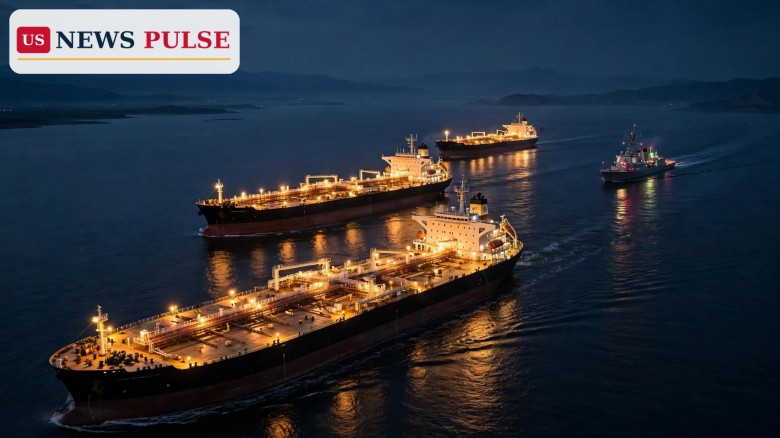
DUBAI — The United Arab Emirates' state oil company has quietly become the driving force keeping crude oil moving through the Strait of Hormuz, running a risky wartime shuttle of tankers through the world's most dangerous shipping lane under American military protection.
The Adnoc Hormuz oil shuttle, described by The Wall Street Journal on Saturday, November 21, 2026, works like this: company tankers load Emirati or Iraqi crude inside the Persian Gulf, cross the strait at night in convoys coordinated with US and Emirati military authorities, and then transfer their cargo to other tankers outside the strait.
Key Points
- Abu Dhabi National Oil Company, known as Adnoc, has quietly become the driving force behind oil shipments through the Strait of Hormuz, The Wall Street Journal reported on Saturday, November 21, 2026.
- Adnoc tankers load Emirati or Iraqi crude inside the Persian Gulf and cross the strait at night in convoys coordinated with US and Emirati military and security authorities, under American military protection from Iranian missiles and drones.
- More than 70 percent of the crude that passed through Hormuz in August was later transferred offshore near hubs off the UAE and Oman used by Adnoc's shuttle.
- More than 20 Adnoc vessels have been hit since April, and on Tuesday, November 17, a vessel operated by Adnoc was struck, leaving 11 crew members injured and one missing.
- Adnoc also buys Iraqi crude at a discount and resells it to buyers outside the strait, while the UAE pumped around 3.4 million barrels of crude a day in 2025.
What Happened
The Journal's report, published on Saturday, lifts the lid on an operation Adnoc has run largely out of public view. While most commercial shippers have pulled back since the war escalated, the UAE's state oil giant has gone the other way, ramping up its tanker fleet and accepting the risk of Iranian attacks to keep crude flowing.
The shuttle runs on a simple but dangerous routine. Adnoc tankers take on Emirati or Iraqi crude inside the Persian Gulf, then make the crossing at night in convoys coordinated with American and Emirati military and security authorities, sailing under American military protection. Once clear of the strait, the cargo is transferred to other tankers for onward delivery.
Background: A Strait Under Fire
The Strait of Hormuz, the narrow waterway between Iran and Oman, normally carries roughly a fifth of the world's seaborne oil. It has been a battleground for months in the war that began with American and Israeli strikes on Iran in February 2026, with tankers hit by missiles, drones and mines.
The danger to Adnoc's own fleet is not theoretical: more than 20 of its vessels have been hit since April. The most recent strike came on Tuesday, November 17, when a vessel operated by Adnoc was hit, leaving 11 crew members injured and one still missing. The UAE broke with OPEC this spring after years of friction over production limits.
Adnoc Hormuz Oil Shuttle: How the Night Convoys Work
The night crossings are the heart of the operation. Darkness makes the tankers harder to target, and the convoys sail in coordination with US and Emirati military and security authorities, with warships and surveillance watching the waterway. The protection is American, and it is the difference between a voyage and a gamble no insurer would touch.
Once outside the strait, the cargo is transferred to other tankers near offshore hubs off the UAE and Oman, while shuttle vessels cycle back for another load. Adnoc also buys Iraqi crude at a discount and resells it to buyers outside the strait, adding a trading profit to the transport business.
Reactions: A Gamble the Market Is Watching
The International Energy Agency has warned that the strait's traffic may never fully recover. It says Hormuz traffic could fall from about 20 million barrels a day before the war to 8.5 million by 2030, and under 2 million by 2035, if the strait stays severely disrupted. Against that forecast, Adnoc's shuttle looks less like a workaround and more like the new shape of Gulf oil trade.
The rest of the shipping industry has responded by staying away. Other operators fear to sail the route, and their absence is what has left Adnoc carrying so much of the traffic. Around 7 million barrels a day of new pipeline capacity is under construction or consideration, at a cost of roughly 40 billion dollars, as producers look for ways to bypass the strait.
Why It Matters
It matters because the strait is still the world's oil chokepoint, and the shuttle is what is keeping it open. If Adnoc's tankers stopped sailing, the crude that still flows through Hormuz would largely stop with them, and global oil prices would face a fresh shock.
It also matters because the operation ties the UAE ever closer to the American war effort. The convoys sail under American military protection, coordinated with US and Emirati authorities, which makes Adnoc's fleet part of the military picture in the Gulf — and also a target.
What Happens Next
The immediate question is whether the shuttle can keep absorbing the attacks. Each strike tests the willingness of crews to sail, insurers to cover the voyages, and the company to keep paying the price. The November 17 attack, with 11 crew injured and one missing, showed the risk is paid in lives as well as hulls.
The longer question is the one the International Energy Agency has raised: whether Hormuz traffic will ever return to its pre-war level of about 20 million barrels a day. If the strait stays severely disrupted, traffic could fall to 8.5 million barrels a day by 2030 and under 2 million by 2035. Until then, the night convoys will keep running.
Frequently Asked Questions
What is Adnoc's Hormuz oil shuttle?
It is Adnoc's system: its tankers load Emirati or Iraqi crude inside the Persian Gulf, cross the Strait of Hormuz at night in convoys under US military protection, and transfer the cargo to other tankers outside the strait.
How much oil moves through the shuttle?
More than 70 percent of the crude that passed through Hormuz in August was later transferred offshore near hubs off the UAE and Oman used by Adnoc's shuttle, according to The Wall Street Journal.
How dangerous is the operation?
More than 20 Adnoc vessels have been hit since April. On Tuesday, November 17, a vessel operated by Adnoc was struck, leaving 11 crew members injured and one missing.
What happens to Hormuz oil traffic in the long term?
The International Energy Agency says traffic could fall from about 20 million barrels a day before the war to 8.5 million by 2030 and under 2 million by 2035 if the strait stays severely disrupted.
Read our full report on the Adnoc vessel attacked in the Strait of Hormuz, leaving one crew member missing and two tankers hit by projectiles in the Strait of Hormuz in new Saturday attacks, and our earlier report on four tankers hit by explosions in the Strait of Hormuz.
© 2026 US News Pulse. All rights reserved.
 Print
 Save