
Witkoff, Kushner Meet Qatari Mediators in Berlin as Iran Talks Stall Again
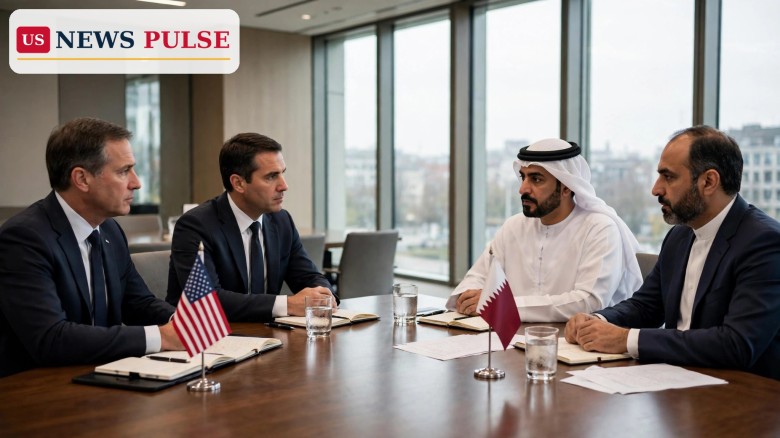
US envoys Steve Witkoff and Jared Kushner met senior Qatari mediators in Berlin on Thursday, November 19, 2026, in the latest attempt to find a way back to a ceasefire between the United States and Iran — but the Witkoff Kushner Berlin Iran talks ended without significant progress, and President Donald Trump has now said he will not decide his next step in the war until the new year.
Key Points
- US envoys Steve Witkoff and Jared Kushner met senior Qatari officials in Berlin on Thursday, November 19, 2026, to discuss mediation between the United States and Iran, Axios reported on Friday, citing two sources.
- Qatar was represented by Prime Minister Sheikh Mohammed bin Abdulrahman Al Thani and his envoy Ali al-Thawadi.
- Sources told Axios that no significant progress has been made toward a deal to resume the ceasefire, restart nuclear negotiations and prevent a return to war.
- President Donald Trump told Axios in a brief phone interview on Thursday that he would not decide his next step until the new year.
- Separately, a Qatari delegation arrived in Tehran on Friday night for two hours of consultations with Iranian officials.
What Happened
The Berlin meeting was first reported by Axios on Friday, November 20, citing two sources with knowledge of the discussions. Witkoff, Trump's special envoy, and Kushner, his son-in-law and senior adviser, sat down with Qatar's prime minister and his envoy Ali al-Thawadi to talk about how mediation between Washington and Tehran might move forward.
The meeting came at the end of a busy week of diplomacy. A low-level Iranian delegation held talks with Qatari counterparts in Doha earlier in the week, and the Qatari prime minister visited Washington last week, where he met Trump and Vice President JD Vance. The Berlin session was the next step — a direct conversation between Trump's envoys and the mediators carrying messages between the two sides.
But the effort produced no breakthrough. Sources told Axios that no significant progress has been made, and neither side has publicly described what was discussed. Trump signalled no decision is imminent, telling Axios: "I am not rushing into any decision [on Iran]. We will see what happens after the beginning of the year."
Background: Qatar's Role as Mediator
Qatar has become the main mediator between Washington and Tehran, and it has spent weeks trying to reach a deal that would resume the ceasefire, restart nuclear negotiations and prevent a return to war. The Gulf state is one of the few actors that maintains working relationships with both sides, and it has hosted or facilitated round after round of indirect talks since the fighting stopped.
The stakes are high. A ceasefire is in place but fragile, and the nuclear question — the core of the long-running dispute — remains unresolved. Any deal would need to cover both a durable halt to the fighting and a path back to negotiations over Iran's nuclear programme, and so far the two sides have not agreed on the terms for either.
Witkoff Kushner Berlin Iran Talks: What Was on the Table
The Berlin discussion centred on the same three questions that have defined the mediation for weeks: how to resume the ceasefire on a firmer footing, how to restart nuclear negotiations, and how to prevent a return to war. None of those questions has an agreed answer yet, and the Axios report suggests the Berlin meeting did not bring one closer.
Witkoff and Kushner are central figures in Trump's foreign policy team — Witkoff as special envoy across several sensitive negotiations, Kushner as a senior adviser who worked on Middle East diplomacy in Trump's first term. Their joint presence in Berlin underlined how seriously the White House takes the mediation, even as the result showed its limits.
Reactions and Quotes
Trump's own words set the tone. Asked by Axios on Thursday about his next move, the president made clear he is in no hurry. "I am not rushing into any decision [on Iran]. We will see what happens after the beginning of the year," he said.
The assessment from people familiar with the Berlin meeting was blunter: despite the flurry of meetings, no significant progress has been made. Neither the White House nor the Qatari government has issued a public statement about the meeting. The absence of any official readout is itself a signal — when talks go well, the parties usually say so.
Why It Matters
The Berlin meeting shows both the persistence and the limits of the mediation. That Trump's two most trusted envoys flew to Berlin shows the White House still wants a diplomatic path. The lack of progress after a full week of meetings in three capitals shows how far apart the two sides remain.
Trump's decision to wait until the new year removes the pressure of an imminent deadline, which could give diplomacy more room — but it also extends a period of uncertainty in which the ceasefire remains fragile and the nuclear dispute unresolved. For the wider region, a return to war would affect shipping through the Strait of Hormuz, energy markets and Gulf security, while a deal would remove the most immediate danger.
What Happens Next
The immediate next step is the follow-up from Qatar's consultations in Tehran. What the Qatari delegation heard from Iranian officials on Friday night will shape whether another round of talks is worth arranging — and what, if anything, has changed since Berlin.
Beyond that, the calendar is now the story. Trump has said he will not decide until after the beginning of the year, so the mediation is likely to continue in a holding pattern through the holidays, with Qatar expected to keep working the channel.
Frequently Asked Questions
Who are Steve Witkoff and Jared Kushner?
Steve Witkoff is President Donald Trump's special envoy, involved in several of the administration's most sensitive negotiations. Jared Kushner is Trump's son-in-law and a senior adviser who worked on Middle East diplomacy in Trump's first term.
What was the Berlin meeting about?
Witkoff and Kushner met Qatari Prime Minister Sheikh Mohammed bin Abdulrahman Al Thani and his envoy Ali al-Thawadi in Berlin on Thursday, November 19, 2026, to discuss Qatari mediation between the United States and Iran.
Did the Berlin meeting make progress?
No. Sources familiar with the talks told Axios that no significant progress has been made, despite a week of meetings in Doha, Washington and Berlin.
When will Trump decide his next step on Iran?
Trump told Axios he would not decide until the new year: "I am not rushing into any decision [on Iran]. We will see what happens after the beginning of the year."
What is Qatar's role in the Iran talks?
Qatar is the main mediator between Washington and Tehran, working for weeks on a deal to resume the ceasefire, restart nuclear negotiations and prevent a return to war.
Related coverage: Adnoc Runs Risky Wartime Oil Shuttle Through Strait of Hormuz Under US Protection and Iran Strikes Civilian Facility in Bahrain, Sparking Fire and CENTCOM Denies Iran's Claim It Hit a US F-16 Over the Gulf.
© 2026 US News Pulse. All rights reserved.
 Print
 Save