

 | Today's Date:





CENTCOM Denies Iran's Claim It Hit a US F-16 Fighter Jet Over the Gulf
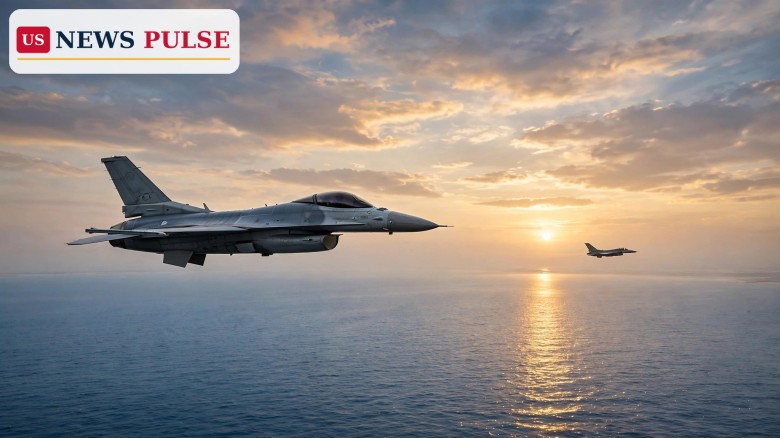
WASHINGTON — US Central Command on Saturday, November 21, 2026, flatly denied Iran's claim that its air defences had damaged an American F-16 fighter jet over the Persian Gulf, insisting that no US warplane was attacked at all. The blunt denial, posted on X, added a fresh flashpoint to the nine-month-old war, on a day two oil tankers were also hit in the nearby Strait of Hormuz. Iran's army had said its forces fired a missile at the jet on Friday evening, damaging it and forcing an emergency landing, which Washington says never happened.
Key Points
- Iran's army said on Saturday that its air defences fired a missile at a US F-16 over the Persian Gulf on Friday evening, November 20, damaging it and forcing an emergency landing.
- US Central Command (CENTCOM) denied the claim outright in a statement on X, calling it "FALSE" and saying Iran did not attack a US F-16 "at all".
- CENTCOM added that all US military fighter jets in the Middle East are "safe and accounted for".
- The exchange came on the same day UK maritime officials reported two tankers hit by projectiles near Khasab, Oman, in the Strait of Hormuz.
- The dispute lands as Israel and administration hawks press President Trump to resume major strikes on Iran.
What Happened
Iranian state media reported on Saturday that Iran's army had fired a missile at a US F-16 fighter jet over the Persian Gulf, in the area of the Strait of Hormuz, on Friday evening. According to the Iranian account, carried by state news agency IRNA, the missile damaged the aircraft and forced an emergency landing at a nearby airport. The report gave no detail about where the jet supposedly landed or how the claim was verified.
Within hours, US Central Command responded in direct language. "Iran's Islamic Revolutionary Guard Corps claims it targeted and damaged a U.S. F-16 fighter aircraft yesterday, forcing an emergency landing. This is FALSE," CENTCOM said in a statement posted on X. The command went further in a second sentence: "Iran did not attack a U.S. F-16 fighter aircraft yesterday — at all. All US military fighter jets in the Middle East are safe and accounted for."
The denial was notable for its speed and tone: commands usually decline to comment on adversary claims, but CENTCOM issued a categorical rebuttal within hours.
Iran F-16 Claim: What Each Side Is Saying
The two accounts cannot both be true, and neither side has offered evidence the public can check. Iran's claim rests on an army statement, relayed by state media, that its defences engaged an American jet and forced it down. No photographs or details of the supposed landing have been published, and officials have not named the airport.
The American account is a blanket denial backed by an inventory claim: every US fighter jet in the Middle East is safe and accounted for. A damaged jet would leave a maintenance and medical trail that would be difficult to hide.
Background: Nine Months of War in the Gulf
The claim and the denial come in the ninth month of the war between the United States, Israel and Iran, which began on February 28, 2026, through phases of airstrikes, missile exchanges, tanker attacks and an oil-export blockade.
The Persian Gulf and the Strait of Hormuz sit at the centre of the fighting: roughly a fifth of the world's seaborne oil passes through the strait, the narrow passage between Iran and Oman. The same day, UK Maritime Trade Operations reported two tankers hit by projectiles near Khasab, Oman, a day after another tanker was set ablaze nearby. Earlier in the week, the LPG tanker Tara Gas was struck twice off Oman, forcing its crew to abandon ship.
Reactions: Pressure Builds on Trump
The F-16 dispute arrived as the debate in Washington over the next step intensified. Israel and administration hawks are pressing President Trump to resume major strikes on Iran, arguing that the attacks on shipping — and now the claim of a hit on an American jet — show Tehran is escalating.
Trump has so far resisted that pressure. On Friday, he said Iran wants a deal "but they don't want to make a deal that's acceptable to me", and repeated his longstanding pledge that "Iran will never have a nuclear weapon ever". He has delayed any decision on new strikes until after the new year, keeping a diplomatic path open. Others warn new strikes would widen a war already nine months old, with American forces and Gulf allies exposed.
Why It Matters
The claim matters first because of what it would mean if it were true. A US fighter jet damaged by Iranian air defences would be Iran's biggest success against American air power in the war so far, raising questions about the safety of US aircraft across the Middle East. It would also hand Tehran a propaganda victory while its oil exports are under blockade.
It matters second because of what the denial reveals about the information war. In a conflict where both sides routinely announce victories the other side denies, the truth often emerges only slowly, if at all. CENTCOM's unusually forceful wording suggests Washington judged that this claim could not be left unanswered. And it matters third because of timing: the claim came on the same day as fresh attacks on shipping, while the decision on new strikes against Iran is still open.
What Happens Next
The immediate question is whether either side produces evidence: radar data or imagery from Tehran, flight records from Washington. Neither has done so. The wider question is whether the dispute changes the course of the war. The decision on new strikes is not expected until after the new year, and the denied F-16 claim is unlikely on its own to move that timetable.
Frequently Asked Questions
What did Iran claim about a US F-16?
Iran's army said its air defences fired a missile at a US F-16 over the Persian Gulf on Friday evening, November 20, 2026, damaging it and forcing an emergency landing.
What did US Central Command say?
CENTCOM denied the claim outright, saying the Revolutionary Guard's claim that it damaged a US F-16 was "FALSE", that Iran did not attack a US F-16 "at all", and that all US fighter jets in the Middle East are "safe and accounted for".
Is there any evidence either way?
Neither side has published evidence the public can check: no photos of the supposed landing, no flight records.
Why did this happen now?
The claim came in the ninth month of the war, on the same day two tankers were hit in the Strait of Hormuz, as hawks press President Trump to resume major strikes on Iran.
What does this mean for the war?
If true, it would be Iran's most serious success against US air power in the war. As denied, it is the latest round in an information war. Either way, it adds pressure to the decision on new strikes, delayed until after the new year.
Related: Two Tankers Hit by Projectiles in Strait of Hormuz in New Saturday Attacks • Esper Warns Iran War Could Last Until 2029 as Blockade Squeezes Tehran

The US News Pulse newsroom covers breaking news across the United States and the world, working from wire services, official statements and on-the-record sources. Every story is reviewed against our editorial standards before publication. Corrections and tips: info@usnewspulse.com
About our newsroomLeave a Comment