
Abdul El-Sayed to Take Senate Oath on Quran in Historic First for US Senate
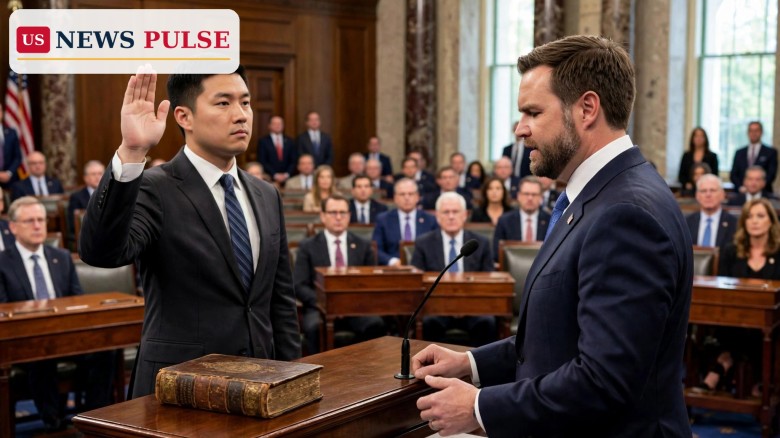
WASHINGTON. — Abdul El-Sayed, the Michigan Democrat who won election to the United States Senate on Nov. 3, 2026, says he will likely take his oath of office on a Quran when the new Congress convenes in January 2027. No senator in American history has ever been sworn in on a Quran, so the ceremony would be a first — and for El-Sayed, the first Muslim ever elected to the Senate, the choice means more than the book itself.
Key Points
- El-Sayed told NPR he will "likely swear on a Quran" when he takes office in January 2027.
- No US senator has ever taken the oath of office on a Quran; El-Sayed would be the first.
- He has not yet chosen a copy: Thomas Jefferson's Quran, or a very old Quran held by the University of Michigan.
- Jefferson's Quran was used by Rep. Keith Ellison when he was sworn into the House of Representatives in 2007.
- New senators are sworn in by Vice President JD Vance; El-Sayed called it a "delicious irony".
What Happened
El-Sayed revealed his thinking in an interview with NPR host Leila Fadel, released on Thursday, Nov. 12, 2026. Asked about the oath he will take when the new Congress convenes in January, he said he will "likely swear on a Quran" — wording that leaves the decision open, but one that would make history all the same. It came nine days after he beat Republican Mike Rogers in Michigan on Nov. 3, becoming the first Muslim ever elected to the US Senate.
The choice of book is ceremonial, not legal. The Constitution requires every senator to take an oath to support it, but it says nothing about which book, if any, a senator must place a hand on. Senators have traditionally sworn on Bibles, and some have used family Bibles, historic Bibles or no book at all. El-Sayed's point was that the book is a symbol of the oath, not its substance. "It's not the book that you swear on. It's the book you swear allegiance to," he said — meaning the Constitution.
Background and Context
El-Sayed won one of the most closely watched Senate races of the 2026 midterms. His victory over Rogers gave Democrats a high-profile new voice in a chamber they are set to control from January, and it was celebrated by Muslim American communities across the country, above all in Michigan, home to one of the largest Muslim American populations in the United States.
The campaign was fought, in part, over his faith. President Donald Trump accused him of "a record of support for jihadists", and Rogers questioned alleged ties to the Muslim Brotherhood. El-Sayed repeatedly denied both claims. His planned oath puts those attacks in a new light: the first Muslim senator will swear on the book of his faith while pledging loyalty to the same Constitution as every senator before him.
When the new Congress convenes in January 2027, the vice president, as president of the Senate, will administer the oath to the newly elected senators — meaning Vice President JD Vance will swear El-Sayed in. El-Sayed noted the "delicious irony" of that arrangement: the ceremony is governed by the Constitution, not by the politics of the moment.
El-Sayed Quran Oath: Jefferson's Copy or Michigan's Oldest
El-Sayed has not decided which Quran he will use, and the two options he named each carry their own history. One is Jefferson's Quran, the same copy Ellison used in 2007. The other is a very old Quran held by the University of Michigan, which El-Sayed described as the first Quran in the state of Michigan. Either choice would tie his oath to a longer American story.
There is a precedent in Congress, though not in the Senate. In January 2007, Rep. Keith Ellison of Minnesota, the first Muslim elected to Congress, took his ceremonial oath on Thomas Jefferson's Quran, a 1764 London edition of George Sale's English translation. Jefferson had acquired the two-volume work in 1765, while studying law, and it is now held by the Library of Congress.
Reactions
The announcement drew a swift response from Florida Governor Ron DeSantis, who weighed in on Nov. 16, four days after the NPR interview was released. DeSantis, a leading Republican voice on cultural issues, added a critical note to a moment El-Sayed had framed as personal faith and constitutional principle.
The response showed how fast a ceremonial choice can become a political flashpoint. His supporters argue the controversy says more about his critics than about him: the Constitution, in Article VI, bars any religious test for public office, and the oath is a pledge to the Constitution itself. El-Sayed has kept his emphasis there. "It's not the book that you swear on. It's the book you swear allegiance to," he told NPR.
Why It Matters
The oath matters because it is a visible test of a principle the United States has claimed since its founding: that public office is open to Americans of every faith, and that no religious test can be imposed. The Constitution says so in Article VI, but the principle is lived out in ceremonies like this one, where the choice of book is left to the individual.
It also matters for representation. El-Sayed is the first Muslim senator, and his election was a milestone for Muslim Americans, long underrepresented in Congress. His oath will be watched by Muslim American families across the country, and by young Americans of every faith who will see that the Senate belongs to all of them.
What Happens Next
El-Sayed has until January to decide which Quran to use, and the decision will be announced before the swearing-in ceremony. When the new Congress convenes in January 2027, Vice President JD Vance will administer the oath to the incoming senators, including El-Sayed, on the Senate floor. The moment will be televised, and the image of the oath is likely to circulate widely.
Beyond the ceremony, El-Sayed will take his seat as Michigan's junior senator in a chamber Democrats are set to control.
Frequently Asked Questions
Will El-Sayed definitely take his oath on a Quran?
Not yet. He told NPR he will "likely swear on a Quran" in January 2027, leaving the decision open. He has not made a final choice.
Has any US senator ever sworn on a Quran before?
No. If El-Sayed goes ahead, he will be the first senator in American history to take the oath on a Quran.
Which Quran might he use?
Two: Thomas Jefferson's Quran, a 1764 London edition of George Sale's English translation, and a very old Quran held by the University of Michigan.
Is a senator required to swear on a Bible?
No. The Constitution requires an oath to support the Constitution, but says nothing about which book a senator must use, and Article VI bars any religious test. The book is ceremonial.
Who will swear El-Sayed in?
Vice President JD Vance, as president of the Senate, will administer the oath when the new Congress convenes in January 2027.
Related coverage: Abdul El-Sayed wins Michigan Senate race, making history as first Muslim senator and Trump brands Michigan Democrat El-Sayed a jihadist at Dubuque rally before midterms.
© 2026 US News Pulse. All rights reserved.
 Print
 Save