


 | Today's Date:
Trump Brands Michigan Democrat El-Sayed a 'Jihadist' at Dubuque Rally Before Midterms
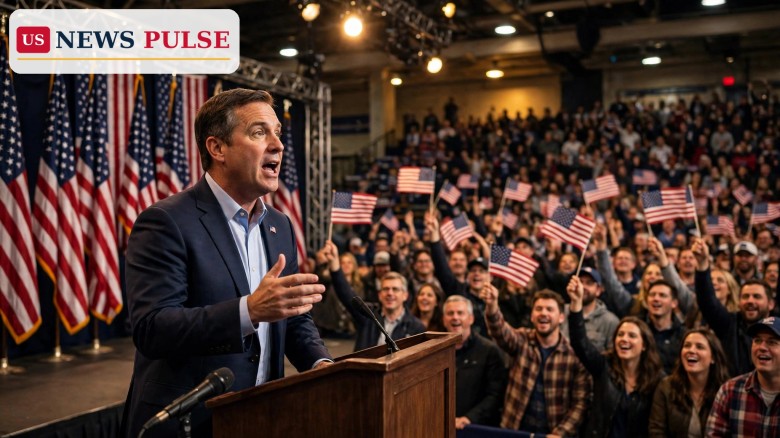
President Donald Trump branded Michigan Democratic Senate candidate Abdul El-Sayed a "jihadist" and a "Muslim Brotherhood guy" at his campaign rally in Dubuque, Iowa, on Sunday, November 1, 2026, two days before the midterm elections, in his sharpest attack yet in a Michigan race that has become one of the closest watched battles for control of the Senate.
Key Points
- President Donald Trump called Michigan Democrat Abdul El-Sayed a "jihadist" and a "Muslim Brotherhood guy" at his Dubuque, Iowa rally on November 1, 2026.
- Trump praised Democratic Representative Haley Stevens for endorsing Republican Mike Rogers in Michigan, calling her "very brave" and saying she should join the Republican Party.
- Trump told reporters after landing in Dubuque that the United States and Canada have the "concept" of a new trade deal, after speaking with Prime Minister Mark Carney.
- Trump campaigned in Dubuque for Republican Senate nominee Ashley Hinson, who faces Democrat Josh Turek for the seat being vacated by retiring Senator Joni Ernst.
- Trump is due to rally next in Salina, Kansas, on Sunday evening, and will speak at the Reflecting Pool near the Lincoln Memorial on Monday, hours before polls open.
What Happened
Trump spoke to reporters on the airport tarmac in Dubuque before heading to the Five Flags Center, where his remarks were scheduled for 3 p.m. Central Time. Standing alongside House Speaker Mike Johnson and Interior Secretary Doug Burgum, he praised Stevens' endorsement of Rogers, calling her courageous and suggesting she could face threats because of her decision.
"They're jihadists. He's jihadist. He's a Muslim Brotherhood guy," Trump said of El-Sayed, according to Newsmax's report of the exchange. He added of Stevens: "Yeah, I'd say she's in danger. She was very brave doing it. And she did it for the people of Michigan. I have great respect for her."
At the rally itself, Trump returned to the theme. The Wall Street Journal reported that he described El-Sayed, who is Muslim, as a "jihadist" and said "we're going to have to get a special metal detector for Abdul." He praised Stevens again, telling the crowd: "I don't know Haley, I've never met Haley, but Haley said what few people are willing to say." The crowd cheered. He also called Rogers "apple pie."
Trump told reporters he had contacted Stevens to thank her, told her "she did the right thing," and said he would love to have her join the Republican Party. Johnson, who joined Trump during the exchange with reporters, said he had spoken with Stevens after her endorsement and told her how courageous she was and how much he appreciated it.
Background: Trump Dubuque Rally and the Michigan Senate Race
The Michigan Senate race is one of the tightest contests in a midterm election that will decide control of Congress for Trump's final two years in office. All 435 House seats and 35 Senate seats are on the ballot on Tuesday, November 3, 2026. Republicans currently hold a 53-47 Senate majority and a narrow edge in the House, and Democrats need a net gain of at least four seats to take the Senate.
Stevens, a Democrat who represents areas outside Detroit, stunned her party by endorsing Rogers, the Republican nominee, after appearing with him at a Detroit-area church service on Sunday. She rescinded her backing of El-Sayed, the Democratic nominee, just two days before Election Day. Senate Minority Leader Chuck Schumer called the move a "despicable betrayal" on Sunday, and Stevens' own staff began resigning after the endorsement, in a story already covered in detail on this site.
Trump has repeatedly accused El-Sayed of having ties to the Muslim Brotherhood, including at an October 25 campaign rally in Port Huron, Michigan, where he warned that El-Sayed could gain access to sensitive national security information if elected. No evidence for the Muslim Brotherhood claim was presented in the reports of Sunday's remarks; the claim is reported here as Trump's attack, not as an established fact about El-Sayed. Much of Trump's message on the midterms this year has focused on portraying Democrats as out of touch, and at Dubuque he played a video of Democratic candidates across the country talking about abolishing Immigration and Customs Enforcement, law enforcement issues and care for trans children.
Trump Dubuque Rally: Hinson, Canada and the Final Push
The Dubuque rally was also a campaign stop for Iowa Republicans. Trump began his rally by talking about Hinson's weight loss since she was first elected to the House in 2020, the Wall Street Journal reported. "I knew Ashley for a long time and she was a little bit heavier… she knew the weight that was on her, really literally the weight and she knew the importance of what she was doing," he said. He said she had lost weight "the old-fashioned way, too — not you know, give me a shot — the old-fashioned way," and said it showed her commitment to running for office. USA TODAY's live updates noted the same moment, reporting Trump said Hinson knew "the weight was on her, literally," and had lost it without medication, for Iowa voters.
On trade, Trump told reporters after deplaning in Dubuque that he had spoken with Canadian Prime Minister Mark Carney on trade in recent days. "I spoke to him again yesterday, and we have the concept of a deal that's going to be great for our farmers, great for our country, and we'll be fine for that," he said, according to Reuters. He declined to offer details. The remark builds on Carney's own statement, covered in an earlier post on this site, that he had a "good conversation" with Trump about the future of Canada-U.S. trade.
The Dubuque stop was the first of two rallies on Sunday. The appearances had been briefly cancelled on Thursday, when the Republican National Committee announced a "72-hour sprint" of tele-rallies instead, before being restored on Friday. Trump had earlier dismissed suggestions that health concerns prompted the change, saying: "You've been following me for two weeks. I feel perfect." From Dubuque he was due to head to Salina, Kansas, where remarks were scheduled for 7 p.m. Central Time in support of Republican Senator Roger Marshall, who faces an unexpectedly close challenge from Democrat Adam Hamilton, a prominent pastor.
Reactions
The reaction to Sunday's remarks split along the lines the Michigan race has already drawn. Trump and Johnson framed Stevens' endorsement as an act of courage, with Trump saying she "did the right thing" and Johnson saying he had thanked her and encouraged her to "stay safe." The crowd in Dubuque cheered when Trump praised Stevens and attacked El-Sayed.
Democrats reacted very differently. Schumer's "despicable betrayal" comment, made on Sunday, captured the anger inside the party at a defection two days before Election Day, and the Stevens endorsement has already cost her senior staff, with her chief of staff among those resigning. El-Sayed's campaign has not, in the reports of Sunday's remarks, been quoted responding to the "jihadist" label, and the reports present the attack as Trump's closing argument in a race where he has used the same charge before.
The wider reaction will be measured on Tuesday. Michigan is one of a handful of states that will decide whether Republicans keep the Senate, and a Democratic defection of this kind, amplified by a presidential rally two days out, is the sort of event that can move a close race — or harden the divisions it exposes.
Why It Matters
It matters because the language used two days before an election is rarely accidental. Calling a Muslim candidate a "jihadist" on a rally stage, and linking him to the Muslim Brotherhood without presenting evidence in the reports, is a deliberate escalation in a race Trump has already made a test of his closing message. Whether voters hear it as a warning or as an overreach will help decide Michigan, and with it, the Senate.
It matters because Stevens' endorsement is itself historic: a sitting Democratic representative backing the Republican nominee in her own state's Senate race, two days before voting, is almost unheard of. Trump's embrace of that endorsement — and his suggestion that Stevens join his party — turns a Michigan story into a national one, and gives Republicans a talking point in every close race in the final 48 hours.
It matters for Iowa and Kansas too. The restored Dubuque and Salina rallies are Trump's final in-person push in states he won by double digits in 2024, now facing unexpectedly competitive Senate races. If Republicans are having to fight this hard in Iowa and Kansas, the map is tighter than the party would like, and the final rallies are a sign of that anxiety as much as of confidence.
What Happens Next
Trump's next stop is Salina, Kansas, on Sunday evening, where he will campaign for Marshall against Hamilton. On Monday, hours before voters head to the polls, he will deliver remarks at the Reflecting Pool near the Lincoln Memorial in Washington, according to a White House official quoted by USA TODAY on Sunday.
Tuesday, November 3, is Election Day. More than 52 million Americans have already voted in person or by mail, according to the University of Florida's Election Lab — a record for a midterm, up from nearly 46 million before Election Day in 2022. Early voting in Iowa ends on October 30, and the final results in Michigan, Iowa, Kansas and the other battlegrounds will determine whether Republicans hold the Senate or Democrats gain the four net seats they need.
For El-Sayed and Rogers, the final hours will be about turnout. For Stevens, the question is what comes after an endorsement that has already cost her staff and drawn her party leader's fury. And for Trump, the Dubuque rally was the opening act of a final weekend in which every word, including the harshest, is aimed at Tuesday.
Frequently Asked Questions
What did Trump say about Abdul El-Sayed at Dubuque?
Trump called El-Sayed, the Democratic Senate candidate in Michigan, a "jihadist" and a "Muslim Brotherhood guy," both to reporters at Dubuque airport and at the rally itself, according to Newsmax and the Wall Street Journal.
Why did Trump praise Haley Stevens?
Stevens, a Democratic representative, endorsed Republican Mike Rogers in Michigan's Senate race on Sunday, rescinding her backing of El-Sayed two days before Election Day. Trump called her "very brave" and said she did the right thing.
What did Trump say about Canada at Dubuque?
Trump told reporters he had spoken with Prime Minister Mark Carney again and that the United States and Canada have the "concept" of a new trade deal, but he declined to offer details.
Who is Trump campaigning for in Iowa?
In Dubuque, Trump campaigned for Republican Senate nominee Ashley Hinson, who faces Democrat Josh Turek for the seat being vacated by retiring Senator Joni Ernst.
What happens next before Election Day?
Trump rallies in Salina, Kansas, on Sunday evening, then speaks at the Reflecting Pool near the Lincoln Memorial on Monday, hours before voters cast ballots on Tuesday, November 3.
Related coverage: Democrat Haley Stevens endorses Republican Mike Rogers in Michigan Senate race; Judge dismisses Alaska Senate lawsuit in blow to Trump bid to block certification; Canada-US trade deal fresh push as Carney says good conversation with Trump.
Sources: Reuters via WBOW, Newsmax, the Wall Street Journal and USA TODAY live election updates, November 1, 2026. The featured image is an illustrative generated scene, not an actual rally photograph. Claims about El-Sayed are reported as President Trump's statements.
Leave a Comment