
US Army to Detonate Toxic Iowa Lead Azide by Tuesday Under Emergency Powers
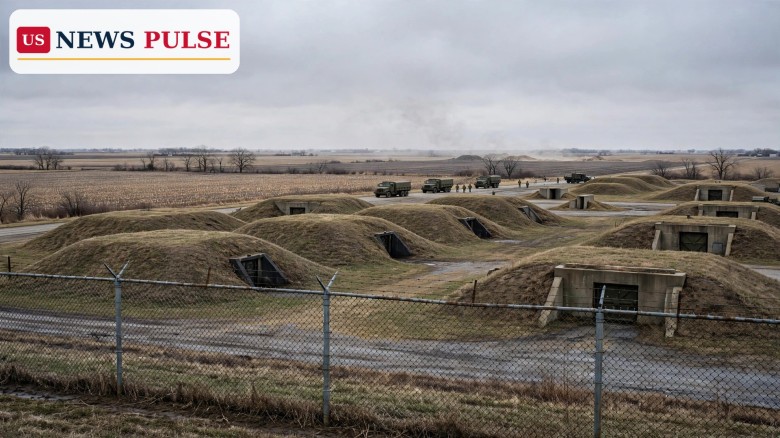
The Iowa lead azide detonation will go ahead by Tuesday, the US Army has told a federal appeals court, even though judges froze the permit that authorised it. In a filing late on Saturday, the Justice Department said the Army will destroy 68 barrels of the unstable explosive at the Iowa Army Ammunition Plant in Middletown under emergency legal powers that need no permit at all, setting up a direct clash with the court that tried to stop the blast.
Key Points
- The Justice Department told the 8th Circuit late Saturday that the Army will detonate 68 barrels of lead azide by Tuesday, November 24.
- The Army invoked an emergency munitions exception, arguing it can act without the EPA permit the court froze on Thursday.
- The 9,500-pound stockpile has been stored for roughly 20 years and could explode on its own as temperatures drop below 30 degrees.
- Governor Kim Reynolds activated the State Emergency Operations Center, and Illinois officials are warning residents about lead dust crossing the state line.
- The groups that sued say the plume could carry toxic lead dust up to 100 miles; the EPA says there is no safe level of lead exposure.
What Happened
The filing landed two days after the 8th Circuit halted the detonation by freezing the EPA's emergency permit, issued on November 13. The Iowa Environmental Council and the Sierra Club Iowa Chapter, represented by Earthjustice, had sued to challenge that permit.
The filing argues the stay changes nothing. It says the court's order “does not enjoin or otherwise prohibit the Army from acting under a separate legal authority”, and cites an emergency munitions exception. Army officials say the danger is immediate: the lead azide has recrystallised over two decades and become too sensitive to move, and blast doors removed in preparation for the original blast cannot be replaced. With a cold snap approaching, the filing warned that “the real choice... is between a planned and mitigated detonation and an unplanned and unmitigated explosion”.
Background: How the Iowa Lead Azide Standoff Reached This Point
The Army first announced the plan in mid-November: two controlled blasts at about noon on Friday, November 20. Residents near the Middletown plant were asked to leave their homes between 8 a.m. and 2 p.m., and the Army's plume modelling showed lead dust could drift between Iowa City, Cedar Rapids, Clinton and Davenport, reaching as far north as Maquoketa.
The two groups sued on Thursday, November 19, arguing the EPA skipped required steps and failed to weigh the health risks or disposal alternatives. That evening, Acting Army Secretary Adam Telle postponed the blast until Monday, November 23, calling it “the latest possible moment prior to a forecasted temperature drop”. Hours later, the 8th Circuit imposed its stay at 9:04 p.m., freezing the EPA permit. That uncertainty is now gone: the Army says it will proceed anyway, under a different legal authority, by Tuesday at the latest.
Iowa Lead Azide Detonation: The Emergency Powers Argument
At the heart of the dispute: can the military sidestep a judge's order by switching the legal basis for the same action? The Justice Department says yes: the EPA permit and the emergency munitions authority are two independent paths to the same blast, so freezing one does not block the other.
Environmental lawyers are expected to argue the opposite: if the Army can detonate the stockpile before judges decide whether the permit was lawful, the lawsuit becomes academic, because the lead will already be in the air. The plaintiffs have also pointed to a cleaner alternative the Army rejected, a chemical-neutralisation contract with MuniRem Environmental. The Army says time has run out: the material is degrading, the weather is turning, and the magazines cannot be made safe again.
Reactions and Quotes
Governor Kim Reynolds activated the State Emergency Operations Center on Friday, putting state agencies on standby to coordinate evacuations, air monitoring and public messaging. Officials in Illinois, just across the Mississippi River, are warning their own residents about lead dust spilling over the state line.
Criticism has been sharp. Governor-elect Rob Sand called the communication around the plan an “unacceptable lack of communication and clarity”, noting that the governor's office only learned of the plan on November 16. Senator-elect Josh Turek called for a delay until the health risks are better understood. The EPA admits there is no safe level of lead exposure, and the CDC states no safe blood lead level has been identified in children.
Why It Matters
The Iowa case matters well beyond Middletown because it tests the limits of emergency power. If the Army can proceed after a court froze its permit, simply by invoking a separate authority, the outcome could shape the next hazardous-stockpile case.
It also matters for the thousands of people living downwind. Lead is a cumulative poison, and children are the most vulnerable. A controlled blast may be safer than an accidental explosion, as the Army argues, but it still sends toxic dust over homes, schools and farms in two states, and residents have had days, not weeks, to prepare.
What Happens Next
The Army says the detonation will happen by Tuesday, November 24. Before then, the plaintiffs are expected to ask the 8th Circuit to clarify whether its stay covers the emergency-powers route as well — any new ruling would have to come within hours.
Meanwhile, Iowa's emergency operations centre remains active, and residents near the plant should expect evacuation and shelter guidance to be updated as the date approaches. For now, the blast is on: unless a judge intervenes again, the 68 barrels will be destroyed in a controlled detonation by Tuesday, and the court case will continue over a plume that has already dispersed.
Frequently Asked Questions
What is lead azide and why is it dangerous?
Lead azide is a primary explosive used in detonators, highly sensitive to shock, friction and temperature change, and it grows more unstable as it ages. The Iowa stockpile has recrystallised over about 20 years, making it too dangerous to move, and it contains lead, a toxic metal with no safe exposure level.
Why is the Army detonating it instead of removing it?
The Army says the 68 barrels, weighing about 9,500 pounds, are too unstable to transport safely. It rejected chemical neutralisation in favour of a controlled blast, arguing a planned detonation is safer than waiting for the material to explode on its own as temperatures fall below 30 degrees.
What did the court actually block?
The 8th Circuit froze the EPA's November 13 emergency permit on Thursday, November 19. The Army now says it will proceed under a separate emergency munitions authority that needs no permit, so the court's order does not stop the blast.
How far could the lead dust travel?
The Army's plume modelling shows toxic lead dust could travel up to 100 miles, moving north-east between Iowa City, Cedar Rapids, Clinton and Davenport, and potentially reaching Wapello, Iowa, and New Boston, Illinois. The dust could linger in the air for up to an hour.
Related coverage: Iowa Lead Azide Detonation Plan; Iowa Lead Azide Detonation Postponed; Eighth Circuit Blocks Iowa Lead Azide Detonation.
© 2026 US News Pulse. All rights reserved.
 Print
 Save