

 | Today's Date:





US Army to Detonate 68 Barrels of Unstable Lead Azide in Iowa on Friday
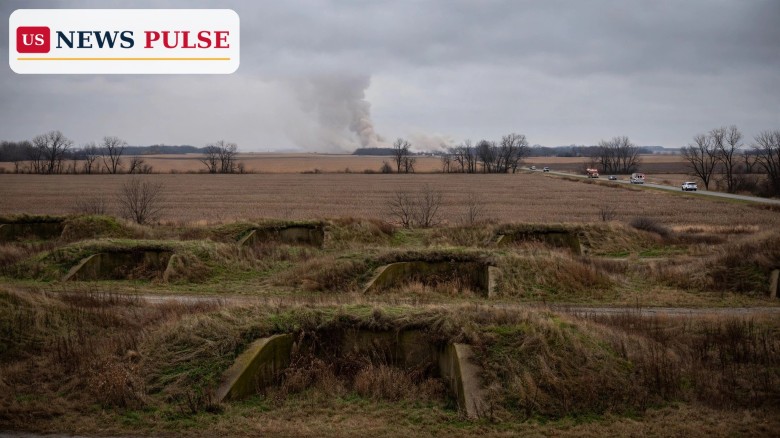
The United States Army will deliberately destroy 68 barrels of unstable lead azide at the Iowa Army Ammunition Plant in Middletown, Iowa, on Friday, because the ageing explosive has become too dangerous to move. Two controlled detonations, set for about noon on Friday, November 20, will blow up the stockpile inside its earth-covered magazines, and the blasts are expected to throw up a plume of dust containing lead over nearby communities. Residents have been asked to leave the area between 8 a.m. and 2 p.m., and the Army has warned the explosions will be loud, will shake the ground and be visible for miles.
Key Points
- Two controlled detonations are set for about noon on Friday, November 20, 2026, at the Iowa Army Ammunition Plant in Middletown, Iowa.
- The blasts will destroy 68 barrels of degraded lead azide stored for about 20 years in two earth-covered magazines.
- Residents are asked to vacate from 8 a.m. to 2 p.m. local time; the Army says the dust plume will contain some lead and may linger for up to an hour.
- A plume model released November 15 showed lead dust moving through a corridor between Iowa City, Cedar Rapids, Clinton and Davenport, as far north as Maquoketa.
- The Environmental Protection Agency issued an emergency hazardous-waste permit for the operation on November 13.
What Happened
The plant, a government-owned ammunition production site in southeastern Iowa, holds 68 barrels of lead azide in two earth-covered magazines. Lead azide is a primary explosive, the sensitive compound used to set off larger charges in detonators and primers. It is useful precisely because it explodes easily, and that is what has made this stockpile a problem.
A survey in March found the ethanol and water bath that kept the material stable had evaporated, and the lead azide had recrystallised. In that state it is too sensitive to friction and shock to be moved safely, so the Army will destroy it where it sits. The evacuation is precautionary: the Army has reported no leak or accident, and the operation is a planned disposal, not an emergency response.
Background: Why the Explosive Cannot Be Moved
Lead azide has been used in military and commercial detonators for more than a century. It is a primary explosive, meaning a small shock, spark or friction can set it off, and it is used in tiny amounts to trigger a much larger secondary charge. That sensitivity is its job, but it also makes old, degraded stocks among the most dangerous materials an ammunition plant can hold.
The Middletown stockpile was kept stable in a bath of ethanol and water, which dampens the crystals and keeps them from reacting to knocks and friction. Over about 20 years in storage, that bath evaporated, leaving the material dry and highly sensitive. Moving it by road or rail would mean carrying an explosive that could go off from a jolt, so the Army ruled transport out.
Lead Azide Detonation in Iowa: What the Plume Model Shows
The part of the plan that has drawn the most attention is the dust. When the magazines are detonated, the blast will throw soil, debris and chemical residue into the air, and because the material contains lead, some of that dust will carry the metal with it. Lead is a toxic heavy metal, and the plume is the reason residents are being asked to leave for the day.
A first plume model, released on November 15, mapped where the dust could go. It showed lead-containing dust moving through a corridor between Iowa City, Cedar Rapids, Clinton and Davenport, reaching as far north as Maquoketa, depending on the wind. The model is a forecast, not a guarantee: the actual path will depend on wind speed and direction on Friday, and the Army says the dust may linger for up to about an hour.
Reactions and Safety Advice
The Environmental Protection Agency issued an emergency hazardous-waste permit for the operation on November 13, under the Resource Conservation and Recovery Act, the federal hazardous-waste law. The permit is the legal basis for the Army to destroy the material by open detonation, and it reflects the regulator's view that there is no safer way to deal with this stockpile.
The health question at the centre of the operation is lead exposure. The Centers for Disease Control and Prevention states that no safe level of lead in children's blood has been identified, and that even low levels can affect a child's development. Lead dust can be breathed in or swallowed, and it can settle on soil, surfaces and gardens, so the concern is not only the hour of the blast but what the dust leaves behind.
Why It Matters
The Middletown detonation matters for three reasons. First, it is a direct risk to the people living around the plant, asked to leave their homes for a day because of a plume they cannot control. Second, it is a test of how the military handles ageing explosives that have become too dangerous to move, a problem at ammunition sites across the country. Third, it is a public health event: lead does not break down in soil, and what settles on Friday will stay in the ground unless it is cleaned up.
What Happens Next
The two detonations are scheduled for about noon on Friday, November 20, with the evacuation running from 8 a.m. to 2 p.m. local time. The Army will carry out the blasts and monitor the air around the plant. Residents will be told when it is safe to return, and the monitoring results should show how far the lead dust travelled and whether any cleanup is needed.
Frequently Asked Questions
When will the detonations happen? Two controlled detonations are scheduled for about noon on Friday, November 20, 2026, at the Iowa Army Ammunition Plant in Middletown, Iowa. Residents are asked to vacate from 8 a.m. to 2 p.m. local time.
What is lead azide? Lead azide is a primary explosive used in detonators and primers to set off larger charges. It is extremely sensitive to friction, shock and sparks, which makes it useful in small amounts and dangerous in old, degraded stocks.
Why is the Army detonating the material instead of moving it? The stockpile, stored for about 20 years, recrystallised after the ethanol and water bath keeping it stable evaporated. A March survey found it too sensitive to friction and shock to transport safely, so the Army is destroying it where it sits.
Which towns could be affected by the dust plume? A plume model released on November 15 showed lead dust moving through a corridor between Iowa City, Cedar Rapids, Clinton and Davenport, reaching as far north as Maquoketa.
Is lead dust dangerous? The Centers for Disease Control and Prevention states that no safe level of lead in children's blood has been identified. Lead dust can be breathed in or swallowed and can settle on soil and surfaces.
Related coverage: Des Moines post office shooting wounds two colleagues in Iowa, US Army officer handed to US custody after UK arrest in Russia spy case, Democrats flip all three contested Iowa House seats in 2026 midterm sweep.

The US News Pulse newsroom covers breaking news across the United States and the world, working from wire services, official statements and on-the-record sources. Every story is reviewed against our editorial standards before publication. Corrections and tips: info@usnewspulse.com
About our newsroomLeave a Comment