
Western New York Fireball: NASA Says 65-Pound Asteroid Chunk Lit Up Sky
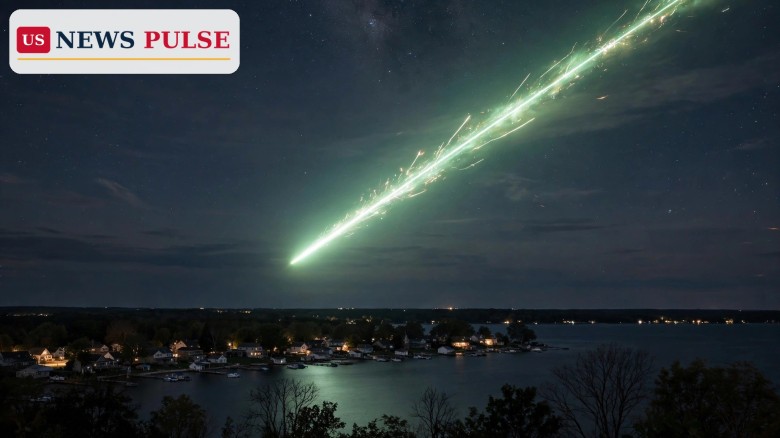
Hundreds of people across western New York watched the night sky light up on Friday evening when a brilliant fireball streaked overhead. NASA now says the visitor was a piece of an asteroid about a foot across and weighing roughly 65 pounds. Cameras picked it up 52 miles above Lake Erie, moving southeast at 38,500 miles per hour, before it broke apart 20 miles above Eldred, Pennsylvania. Seven cameras in the United States and Canada captured it at 7:27 p.m. EST on Friday, November 20 — and NASA says it had nothing to do with the Leonid meteor shower.
Key Points
- Hundreds of people reported a bright fireball over western New York at 7:27 p.m. EST on Friday, November 20, 2026.
- NASA says the fireball was a piece of an asteroid about a foot across, weighing roughly 65 pounds.
- Cameras detected it 52 miles above Lake Erie at 38,500 mph; it broke apart 20 miles above Eldred, Pennsylvania.
- Three NASA all-sky meteor cameras and four cameras from the Southern Ontario Meteor Network captured it.
- NASA says the fireball was unrelated to the Leonid meteor shower.
What Happened
It was an ordinary Friday evening in western New York when the sky suddenly turned extraordinary. At 7:27 p.m. EST, a bright fireball cut across the darkness over Lake Erie, glowing green-white as it plunged through the atmosphere. Within minutes, hundreds had reported seeing it, and videos spread online.
NASA's analysis, based on video from seven cameras, pieced together the object's short, violent journey. The cameras first detected it 52 miles above Lake Erie, moving southeast at 38,500 miles per hour — roughly 50 times the speed of sound. It crossed the sky in seconds, heating up as it slammed into ever-thicker air until it broke apart 20 miles above Eldred, Pennsylvania. It disintegrated high in the atmosphere, with no reports of damage or injuries.
Background and Context
A fireball is a meteor bright enough to outshine the planets — the term astronomers use for the most spectacular shooting stars. Most meteors are specks of dust or pebbles that burn up unnoticed. A fireball comes from something bigger: a chunk of rock, often an asteroid fragment, large enough to blaze as it tears through the air.
NASA tracks these events with its All-Sky Fireball Network, a chain of cameras that records bright meteors automatically. The three NASA cameras that caught this fireball work with partner networks, including the Southern Ontario Meteor Network, whose four cameras in Canada added crucial angles. Combining views from different places lets scientists work out an object's path, speed and altitude.
November is a busy month for meteors, and the Leonid meteor shower was still active when the fireball appeared. NASA was clear, however, that this fireball was unrelated to the Leonids. Read more: Leonid Meteor Shower Peaks Tonight, Up to 15 Meteors an Hour in Dark Skies.
Western New York Fireball: How NASA Traced a 65-Pound Asteroid
The numbers NASA released tell the story of a rock that was small by space standards and enormous by human ones. About a foot across — roughly 30 centimetres — and weighing about 65 pounds, nearly 30 kilograms, it was about the size of a bowling ball and as heavy as a large dog. It was moving at 38,500 miles per hour, about 17 kilometres per second, when the cameras first spotted it 52 miles up.
At that speed, the air in front of the rock could not get out of the way fast enough. The pressure heated its surface until it glowed white-hot, shedding sparks and fragments as it fell — the brilliant trail witnesses saw. By the time it reached 20 miles above Eldred, the stress was too much and the rock broke apart, its pieces burning up above Pennsylvania.
Reactions
The first sign of what had happened came from the witnesses themselves. Hundreds of people across western New York reported the fireball within minutes of it appearing, and the reports kept coming as videos spread across social media on Friday night. For many, it was the brightest meteor they had ever seen.
NASA's Meteoroid Environment Office followed up with its analysis of the camera footage, confirming the object was a piece of an asteroid and publishing the key figures: the 65-pound weight, the 38,500 mph speed and the breakup 20 miles above Eldred. The Southern Ontario Meteor Network, whose cameras in Canada captured the fireball from the north, added a view that helped pin down the trajectory.
Why It Matters
Fireballs like this one are more than a pretty sight. Every one NASA's cameras record adds to a catalogue of the small rocks that share Earth's neighbourhood, and each trajectory helps scientists understand where they come from — most are chips off asteroids in the main belt between Mars and Jupiter, knocked loose by ancient collisions.
The event is also a reminder of how much of the sky NASA now watches. A decade ago, a fireball like this would have been a handful of eyewitness accounts and guesswork. Today, cameras on both sides of the border can measure a rock's size, weight, speed and path within days — the same techniques scientists use to track far larger objects that could one day pose a real threat. Read more: Earth Has a Temporary Second Moon as Tiny Asteroid 2026 QQ8 Loops in Orbit.
What Happens Next
NASA's analysis of the fireball is now part of the public record, and skywatchers will be watching for news of any fragments. When a rock breaks apart 20 miles up, small pieces can occasionally survive the fall, and meteorite hunters sometimes search the ground beneath a breakup point. Whether anything reached the ground near Eldred is not yet known. The Leonid shower, meanwhile, continues to wind down. For anyone who missed Friday's show, the next bright fireball is never far away — NASA's network records hundreds each year. Read more: Harvard's Avi Loeb Says Mystery Object 1998 KY26 Is Not an Asteroid After All.
Frequently Asked Questions
What was the fireball over western New York?
NASA says it was a piece of an asteroid about a foot across, weighing roughly 65 pounds. It entered the atmosphere over Lake Erie on Friday, November 20, 2026, and broke apart above Pennsylvania.
When did the fireball appear?
At 7:27 p.m. EST on Friday, November 20, 2026. Hundreds of people reported seeing it, and seven cameras in the United States and Canada captured it.
How fast was the asteroid fragment moving?
About 38,500 miles per hour, or roughly 17 kilometres per second — around 50 times the speed of sound — as it moved southeast over Lake Erie.
Was the fireball part of the Leonid meteor shower?
No. NASA says the fireball was unrelated to the Leonid meteor shower, even though the shower was active at the time.
Did anything hit the ground?
It broke apart 20 miles above Eldred, Pennsylvania, with no reports of damage or injuries. Rocks of this size almost always burn up in the atmosphere.
© 2026 US News Pulse. All rights reserved.
 Print
 Save