

 | Today's Date:





Harvard's Avi Loeb Says Mystery Object 1998 KY26 Is 'Not an Asteroid' After All
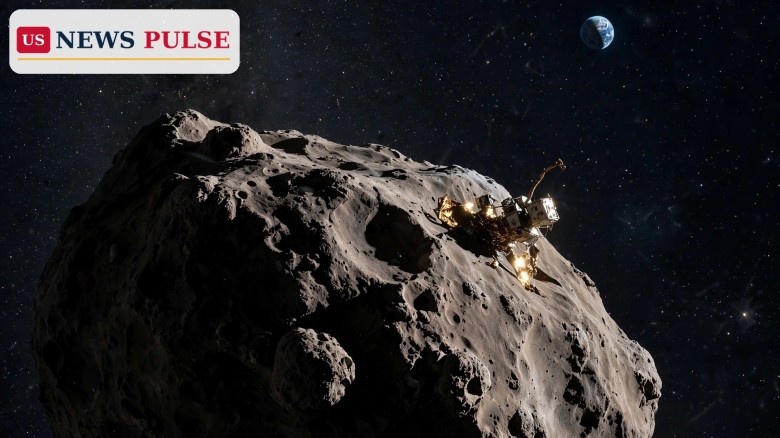
A Harvard astrophysicist has challenged NASA's top official over a small, mysterious object near Earth, arguing that 1998 KY26 is "not an asteroid" — and that it may instead be a lost Soviet spacecraft that has circled the Sun silently for nearly four decades. Avi Loeb, Harvard University professor, said the roughly 36-foot-wide object moves in a way no plain rock should, and raised the possibility that it is Phobos 1, the Soviet probe that fell silent on its way to Mars in 1988.
Key Points
- Harvard astrophysicist Avi Loeb said in a Fox News Digital interview on Friday, November 13, 2026, that near-Earth object 1998 KY26 is "not an asteroid".
- The roughly 36-foot-wide object shows non-gravitational acceleration — a push that gravity alone cannot explain, Loeb said.
- Loeb and colleagues have explored whether it could be Phobos 1, the Soviet probe lost en route to Mars in 1988, noting its trajectory closely matches the failed mission's path.
- NASA Administrator Jared Isaacman said on Thursday, November 12, that he had "not seen any evidence to suggest this is…anything other than an asteroid".
- The question could be settled in 2031, when Japan's Hayabusa2 spacecraft is expected to rendezvous with 1998 KY26.
What Happened
Loeb made his case in a Fox News Digital interview published on Friday, November 13, 2026, pushing back on the NASA chief's assessment. His argument turns on a single observation: 1998 KY26 is accelerating in a way gravity alone does not explain. "It's being pushed by some force other than gravity, and asteroids are just rocks," Loeb said. A rock should follow gravity's rules.
The object is only about 36 feet wide — roughly the size of a city bus — and is generally classified as a near-Earth asteroid. But that label rests on how it looks and where it travels, not on a close inspection. Isaacman addressed the same object a day earlier, on Thursday, November 12, on "Fox & Friends", saying he had "not seen any evidence to suggest this is…anything other than an asteroid". His position reflects the mainstream view: odd behaviour is not proof of anything extraordinary.
Background: A 36-Foot Mystery With a Soviet Shadow
The Phobos 1 idea is not a guess made in the dark. Phobos 1 was a Soviet probe launched in 1988 to study Mars and its moon Phobos, which lost contact on its way to the Red Planet. Loeb and his colleagues have noted that the trajectory of 1998 KY26 closely matches the path the failed Soviet mission was following.
Sunlight carries momentum, and when it strikes a light, reflective surface — the panels and metal skin of a spacecraft — it pushes gently but steadily. That push, known as solar radiation pressure, could account for the acceleration astronomers have measured, if the object is a hollow, reflective piece of human hardware rather than a solid lump of rock. Japan's Hayabusa2, which already visited the asteroid Ryugu, is on an extended mission expected to bring it to 1998 KY26 in 2031.
1998 KY26: Why Loeb Says It Is Not an Asteroid
The heart of Loeb's argument is the difference between a rock and a machine. Asteroids are, in his words, "just rocks" — solid, dense and dark, following the Sun's gravity. When an asteroid's path bends in a way gravity cannot explain, astronomers normally look for outgassing: hidden ice warming in sunlight and venting gas, which acts like a tiny thruster.
That explanation has a name here — a "dark comet", a body that behaves like a comet but shows no visible tail. Yet Loeb pointed out that "we don't see a cometary tail" around 1998 KY26, and no outgassing has been observed. Georgia Tech research has also cast doubt on whether an object this small could have held on to enough ice to produce the push. If there is no ice and no tail, the comet explanation starts to look thin — and a defunct spacecraft, with reflective panels and low density, would respond to sunlight exactly the way 1998 KY26 appears to.
Reactions and Quotes
The exchange has set up a clean public disagreement between two kinds of authority. Loeb, the Harvard theorist, argues from the data that something is off. Isaacman, the NASA administrator, defends the consensus view that the object is natural until proven otherwise. Neither man is backing down, and the argument is now playing out in public.
Loeb's most vivid line was his prediction of what the 2031 rendezvous will find. "When they land on it, instead of seeing an iceberg, they will find the label 'Made in the USSR'," he said — not a lump of ancient ice, but Cold War hardware, still flying nearly forty years after its builders lost contact with it.
Why It Matters
The stakes are larger than one small object. If 1998 KY26 turns out to be Phobos 1, it would be a remarkable piece of space archaeology — a Soviet spacecraft, lost since 1988, found again by its own motion. It would also warn how easily a human-made object can be mistaken for a natural one, and vice versa.
If it turns out to be a dark comet, the result matters just as much, for the opposite reason. It would mean there is a class of small bodies that look like asteroids, move like comets and hide their ice — a discovery that would change how astronomers classify the near-Earth objects they track. There is also a practical side: a hollow spacecraft and a solid rock behave very differently if you try to land on one, deflect one or mine one.
What Happens Next
Astronomers will keep watching 1998 KY26, measuring its acceleration, brightness and colour, and looking for any sign of a tail, a gas jet or a glint that betrays a manufactured surface. The decisive moment is already scheduled: Hayabusa2 is expected to reach the object in 2031, and when it does, the argument will end in a single photograph — ice or metal, rock or machine.
Frequently Asked Questions
What is 1998 KY26?
A roughly 36-foot-wide near-Earth object, generally classified as an asteroid, discovered in 1998. Japan's Hayabusa2 is expected to reach it in 2031.
Why does Avi Loeb say it is not an asteroid?
Loeb says the object shows non-gravitational acceleration — a push gravity alone cannot explain. "Asteroids are just rocks," he said.
What is Phobos 1?
A Soviet probe launched in 1988 to study Mars and its moon Phobos, which lost contact on its way there. Loeb notes 1998 KY26's trajectory closely matches the failed mission's path.
What does NASA say about 1998 KY26?
NASA Administrator Jared Isaacman said on November 12, 2026, that he had "not seen any evidence to suggest this is…anything other than an asteroid".
When will we know for sure what 1998 KY26 is?
Japan's Hayabusa2 is expected to reach it in 2031. A close-up look should settle whether it is a natural body or human-made hardware. Loeb predicted the mission will find "the label 'Made in the USSR'".
Read more: SpaceX catches Ship 42 in first-ever tower catch | ULA Vulcan anomaly ends Amazon Leo launch | SpaceX Tesla merger talks advance

The US News Pulse newsroom covers breaking news across the United States and the world, working from wire services, official statements and on-the-record sources. Every story is reviewed against our editorial standards before publication. Corrections and tips: info@usnewspulse.com
About our newsroomLeave a Comment